Head-to-Head Comparisons & Performance Tests
Best French Press for Coffee: Anaerobic & Carbonic Tested
6th Jun•13 min read
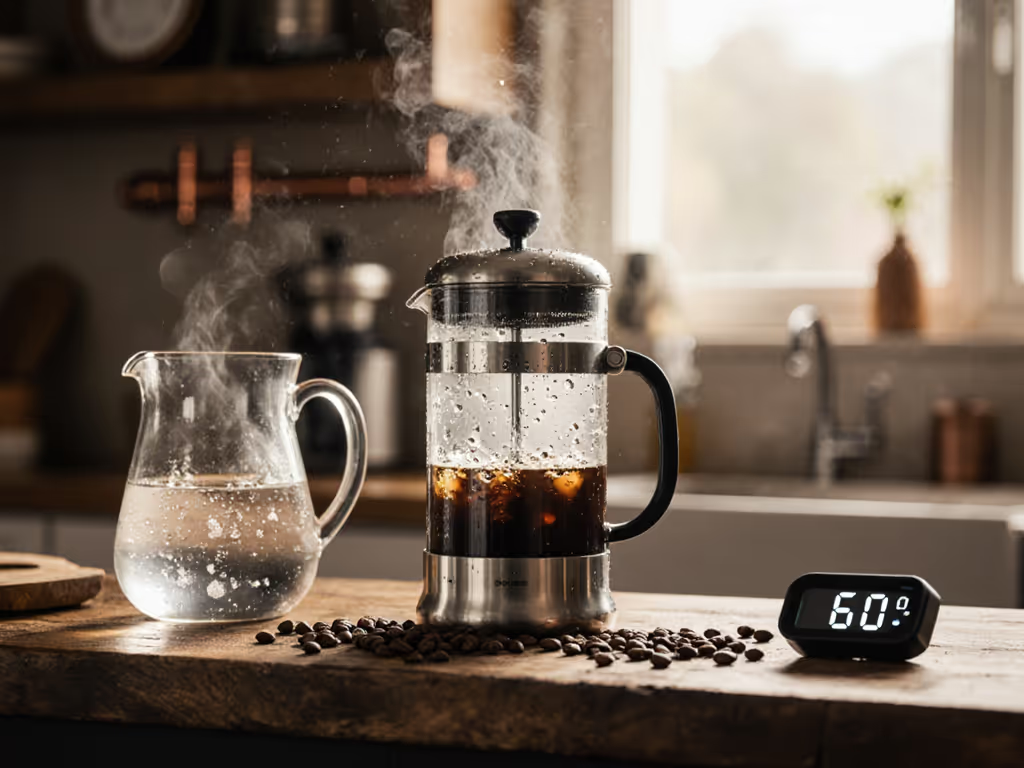
French press for coffee has become synonymous with ritualistic morning brewing, but if you're brewing with hard water, you know the frustration: mineral deposits cling to your non-glass French press, bitterness creeps into cups, and durability feels more like a countdown than an investment. The truth is that hard water doesn't just affect flavor, it also tests your press's longevity in ways that show up as scale buildup, sticky filters, and the slow erosion of the ritual you're trying to protect.
Water minerals are the overlooked variable in almost every French press troubleshooting checklist. Yet they deserve their own investigation, separate from grind size or brew time. This guide walks you through the hard-water landscape, the material choices that actually endure, and the minimal adjustments that turn inconsistency into predictability.
Hard water (typically above 150 parts per million (ppm) of calcium carbonate) creates unique problems in immersion brewing that don't show up the same way in drip or espresso. In a French press, grounds sit in contact with water for a full four minutes or more, and hard water accelerates both extraction and scale formation.
Calcium dominance is the primary culprit. For a deeper dive into calcium/magnesium balance and how to fix bitter cups, read our water mineral balance guide. High calcium creates a chalky mouthfeel and masks the subtle sweetness you're chasing. Over time, calcium deposits bond to your filter mesh and internal metal components, slowly reducing heat retention and making the plunger harder to move. In regions like London (370 ppm) or hard-water U.S. cities, this isn't theoretical (it's a weekly cleanup battle).
Magnesium imbalance adds a second layer. Magnesium should enhance extraction and bring out fruitier acidity (ideal for light roasts), but hard water often tilts toward calcium while magnesium lags behind. This imbalance pushes extraction into overextraction territory, even with coarse grinds. You get bitterness before your timer hits four minutes, and no amount of grind adjustment fixes it alone.
Conversely, if you've opted for heavily filtered or distilled water thinking "pure is better," you've hit the soft-water trap. Water below 75 ppm lacks the mineral "force" to pull oils properly, leaving your cup thin and sour. Basic carbon filters (like standard Brita pitchers) often strip magnesium critical for flavor depth.
The silent lesson: Your tap water isn't bad; it just needs tailored adjustments, and that adjustment can be as simple as one measurement per brew.
Start with sensory observation before testing strips. During the first 30 seconds of bloom, weak or absent aroma often signals underextraction from soft water (<75 ppm). Between two and three minutes into your steep, if sludge clings aggressively to the mesh, you're seeing the fingerprint of hard-water overextraction amplifying bitterness.
If you're uncertain whether your tap is hard, many municipalities post water reports online. Search "[your city] water hardness" or contact your local water authority. If you're renting or the info isn't available, basic water-testing strips (€3-€5) from grocery stores confirm the ppm range within a few seconds. Then apply our regional hard-water adjustments tailored to your area's typical mineral profile. Once you have that number, you have a baseline to adjust from.
Glass French presses are beautiful, and fragile. They absorb and release heat rapidly, making them prone to thermal shock when rinsed under cold water after a hot brew. Office environments worsen this: rushed users rinsing boiling-hot carafes under tap water create perfect conditions for cracks. If you're brewing for a team or live in a high-traffic household, repeated replacements aren't sustainability, they're friction.
Stainless steel presses (modern models like Espro and Secura lines) solve two problems at once: they won't shatter, and their double-walled construction preserves heat through an entire mug or meeting. For a data-backed comparison, see our glass vs stainless steel test. More importantly for hard water users, steel frames don't suffer the cosmetic scaling that discolors glass over weeks of mineral buildup.
This doesn't mean steel is immune to scale. But steel maintenance is predictable: a vinegar soak once weekly (not daily) dissolves calcium deposits without damaging the carafe. Glass requires the same maintenance but with higher breakage risk during the process.
Thermal retention bonus: Steel presses keep coffee roughly 15-20 degrees Fahrenheit warmer at the five-minute mark compared to glass, a fact confirmed by testers comparing identical recipes. For slow mornings or office settings, this is the difference between a satisfying sip and reheating.
The rubber or silicone gaskets that create an airtight seal degrade faster in hard-water environments due to repeated mineral exposure and the vinegar descaling required to maintain them. Budget €8-€15 for a replacement gasket set; check whether your press model supports easy replacement before buying.
Mesh filters clogged with scale don't just reduce flow; they create micro-pressure pockets during plunging that can bend the frame or cause the plunger to stick, turning cleanup into a wrestling match. This is where one preventive addition changes everything.
This is the moment to reset expectations. You're not replacing your press. You're not buying special water. You're making one targeted change, observing the result, then deciding whether to adjust further.
Time investment: 10 seconds per brew.
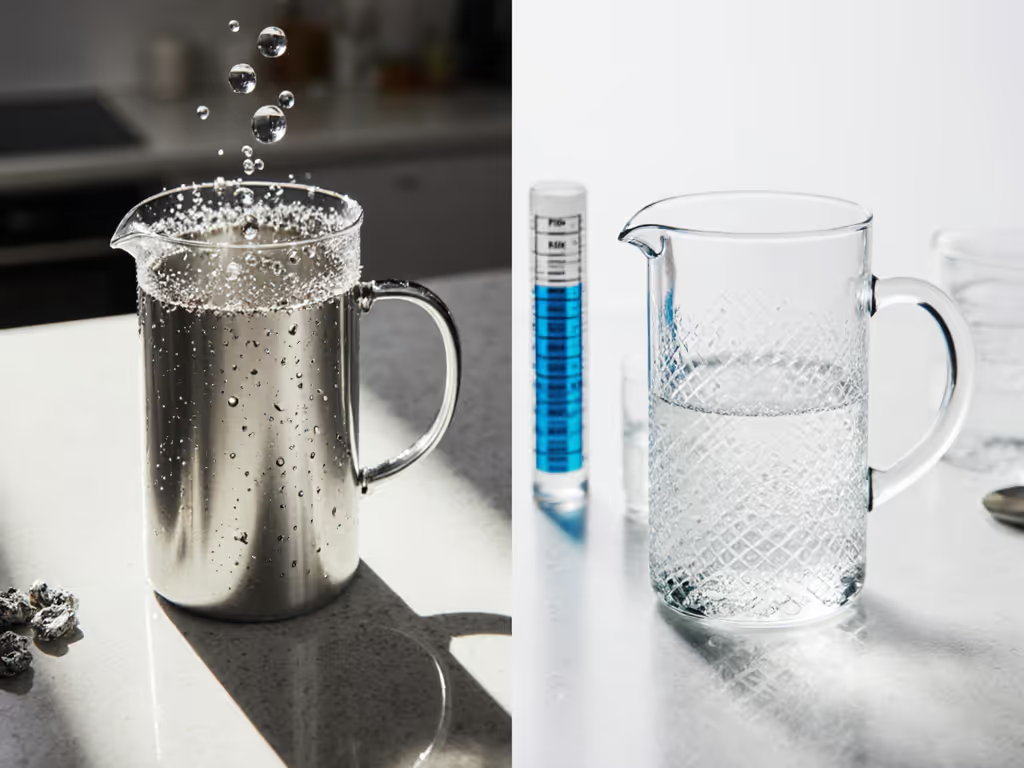
Use a standard filtered-water pitcher to reduce scale-forming calcium. But here's the guardrail: don't use filtered water alone. Add a pinch of food-grade Epsom salts (magnesium sulfate) to restore the mineral balance your beans need. One 1/16 teaspoon per liter boosts fruity notes without altering texture.
Pre-measure salt portions into small labeled jars (mark them "Mg+") and stash them at your brewing station. No scales needed, no math during the morning rush. This mirrors the sensory discipline I've watched emerge when someone commits to one change: a friend once chased perfection by tweaking grind, dose, and water simultaneously, then couldn't identify which shift caused a bitter cup. We reset to a single ratio, one grinder click adjustment, and honest tasting notes written on a sticky pad. Two brews later, their sweet spot emerged (because we started with one knob).
Time investment: 2 minutes weekly; zero effort daily.
If tap water is too aggressive (common in hard-water Midwest regions), bypass it for morning brews:
Office adaptation: store concentrate in gallon jugs with timestamped lids. New hires grab, pour, done, and they never touch grounds.
Time investment: 5 seconds per use; saves ~2 minutes weekly in cleanup.
Hard water deposits calcium on metal filters, causing gritty sludge that survives a standard rinse. Line your press filter with a reusable stainless steel tea strainer (~€3 on Amazon). It traps micro-sludge before it hits your cup and shields the mesh from scale buildup. Rinse both in 10 seconds post-brew.
These anchor your experiments. If your cup tastes off, you adjust one variable from this baseline, brew again, and taste purposefully.
| Mug Size | Coffee (grams) | Water (grams) | Water ppm Target | Grind | Steep |
|---|---|---|---|---|---|
| 12 oz (355 ml) | 24 | 350 | 100-150 | Coarse sea salt | 4 min |
| 18 oz (530 ml) | 36 | 520 | 100-150 | Coarse sea salt | 4 min |
| 34 oz (1000 ml) / shared pot | 68 | 1000 | 100-150 | Coarse sea salt | 4 min |
These ratios work across bean types; coarse grind is non-negotiable for four-minute immersion. If your tap water sits between 100-150 ppm, brew as-is. If it's >200 ppm, use Adjustment #1 (filtered + Epsom salts). If it's <75 ppm, use filtered water and skip the salt addition, then brew normally.
Cleanliness preserves durability. A grimy press accelerates gasket deterioration and makes every plunge harder.
Immediately after brewing:
Visualize this sequence as a sequence, not a checklist. It takes 45-55 seconds. On weekends, a five-minute descale with equal parts vinegar and water banishes accumulated scale. For step-by-step maintenance, including disassembly and filter care, follow our French press cleaning guide to stop sludge and rust.
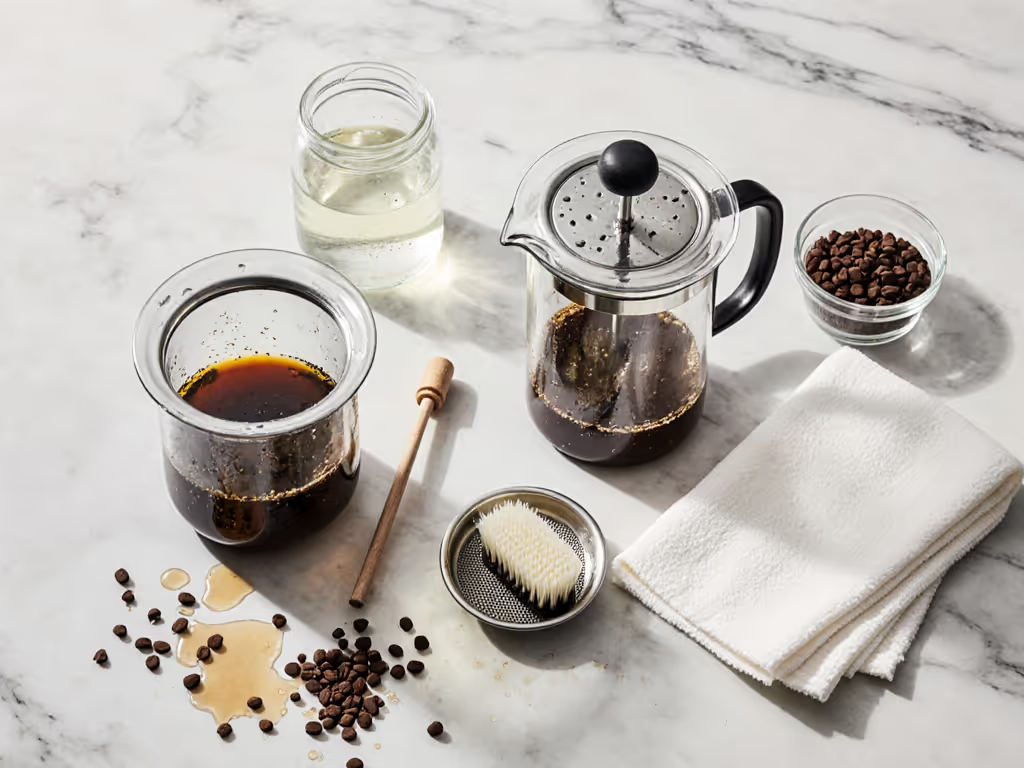
Scale buildup on the rod or inside the cylinder reduces the seal. Soak the disassembled plunger and rod in equal parts white vinegar and water for 30 minutes, scrub gently with a soft brush, rinse, and dry completely. If sticking persists, the gasket may be worn, so replace it for ~€10.
Yes, but it's wasteful long-term and defeats the durability value you're seeking. Spring water typically runs 100-250 ppm (varies by source). A single filter pitcher + Epsom salt adjustment costs €15 and serves 50+ brews. If you're traveling or in a crisis (burst main), bottled water works, but make it a workaround, not a habit. For side-by-side results with everyday sources, check our filtered vs spring water taste test.
A quality stainless steel press with basic care (weekly vinegar soak, gasket replacement every 2-3 years, mesh guard use) lasts 7-10 years. Glass presses, if lucky and handled gently, reach 5-6 years before a thermal-shock crack appears. The real variable is your local water and discipline around weekly descaling.
Isolate one variable. Bitter + filtered water usually points to overextraction from grind size or steep time, not minerals. Move your grind one click coarser on your burr grinder and brew again. If that doesn't shift it, drop steep time to 3:45 and taste. Once you confirm the grind/time pairing, then revisit water if needed. Start with one knob, turn it slowly, taste on purpose.
A limescale-resistant coffee maker isn't a category, it's a discipline. You can't escape hard water if it's your regional reality, but you can architect consistency around it. A stainless steel press, a weekly vinegar ritual, one mineral adjustment, and a mesh guard transform hard water from a frustration into a known quantity.
The payoff isn't just durability. It's the mornings when your press behaves exactly as it did yesterday. It's the office coffeepot that doesn't chip or crack under shared use. It's the confidence to dial in a new bean knowing you've controlled the variables that matter most.
Start here: Test your tap water hardness this week (either with an online search for your municipality's report or with a €3 test strip). Once you have that ppm number, apply the corresponding adjustment from the blueprint above and brew twice with the same beans. Write one sensory note (aroma, body, finish) after each cup. Notice what shifted. That's your baseline.
If you're using a French press for coffee in a hard-water region and haven't descaled in weeks, do that first: soak the press in vinegar for 30 minutes, rinse thoroughly, and brew a test cup. You might find the press isn't failing; it's just scaled.
From there, one adjustment per week. That's how mastery emerges: not from replacing your press or chasing guru methods, but from honest tasting notes and deliberate small moves. Your mug size guides your recipe. Your water hardness guides your first tweak. Your sensory memory guides the rest.