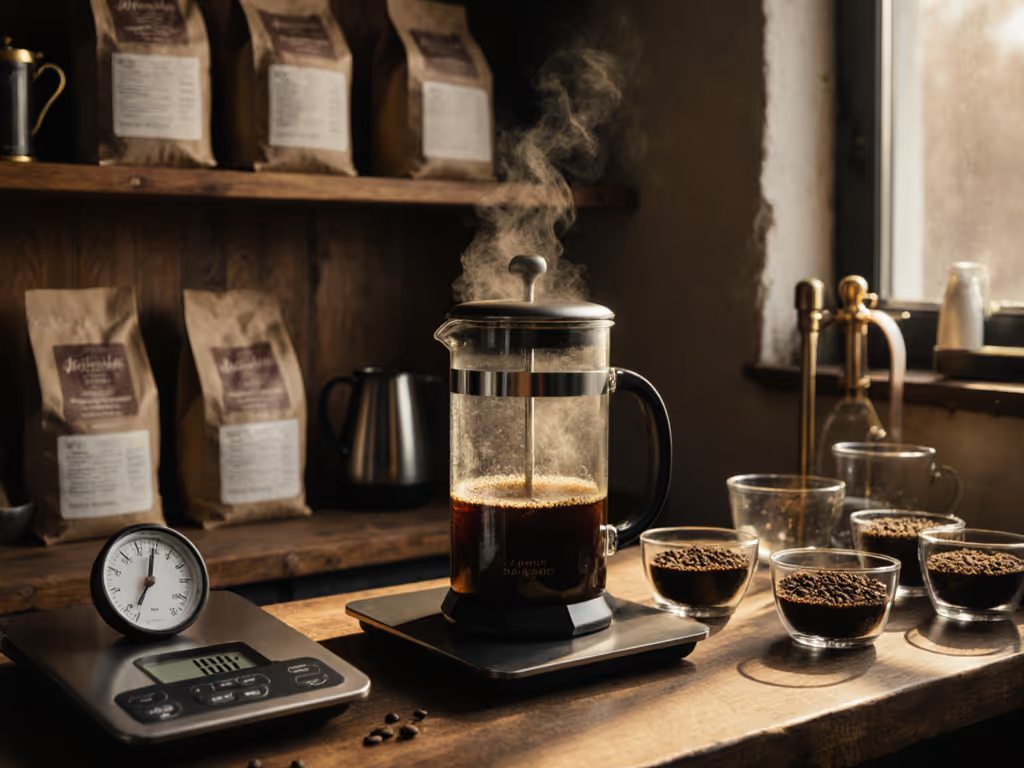
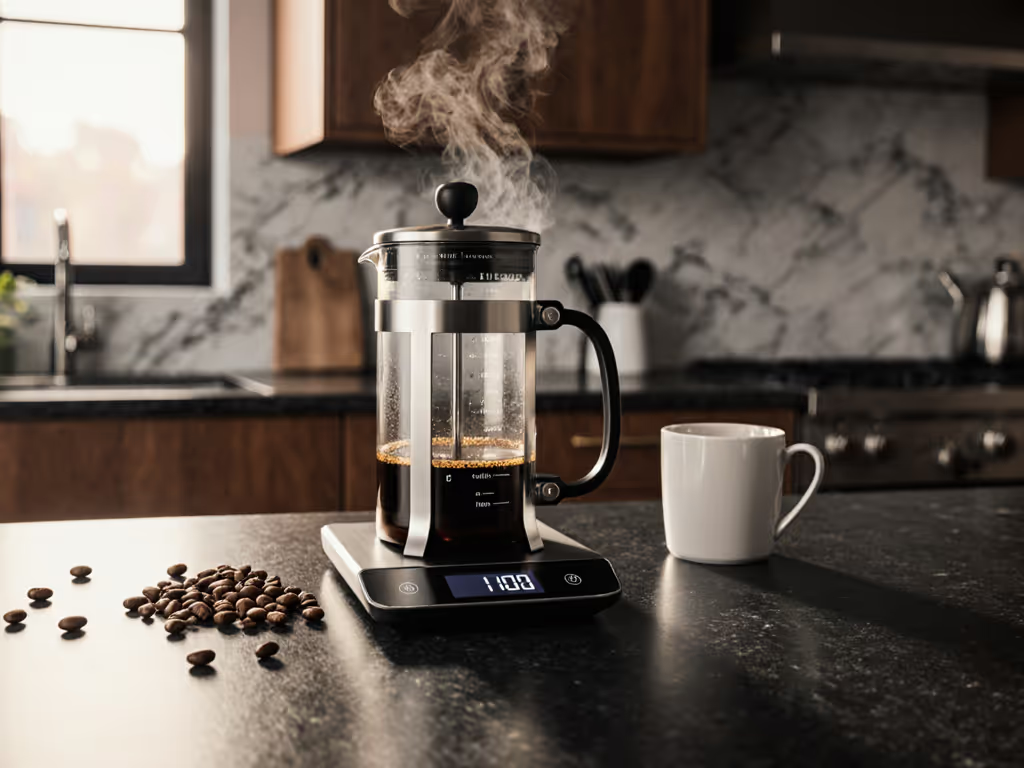
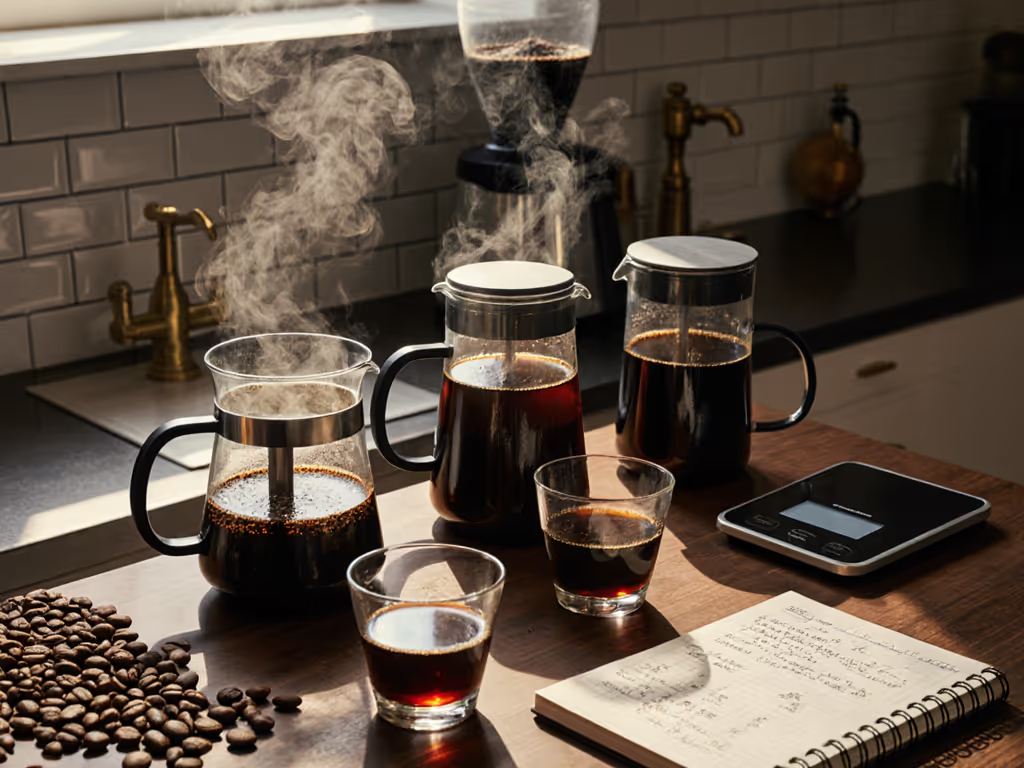
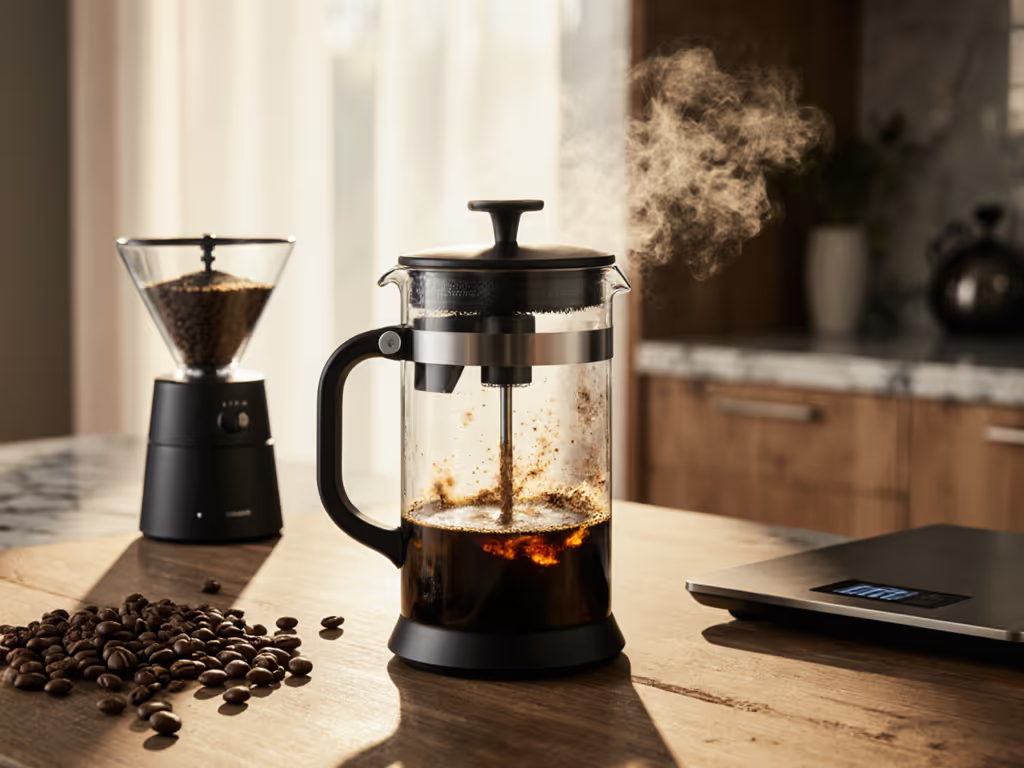
A modern French press paired with a smart coffee scale is one of the simplest ways to get cafe-level, repeatable cups at home without turning your counter into a lab. This guide walks you through how to choose a small French press or larger modern press, how to pair it with a scale, and how to dial in consistent, clean-tasting brews with minimal fuss.
Why French press feels inconsistent (and how modern gear fixes it)
If your French press history includes sludge, bitterness, and "great one day, dull the next," you are not alone.
Most people struggle with:
- Guessing the amount of coffee and water
- Changing grind size without realizing it
- Using different water each day
- Heat loss in thin glass carafes
- Filters that let fines sneak into the cup
A modern French press coffee maker plus a smart coffee scale tackles those issues in a very low-drama way:
- The press gives better heat retention, tougher materials, and cleaner filtration.
- The scale quietly standardizes your dose, water volume, and timing.
You still get the rich, full-bodied immersion coffee that makes a French press feel like the best coffee press for cozy mornings (just without the roulette). If you are new to brewing by weight, start with our French press coffee ratio guide.
Start with one knob, turn it slowly, taste on purpose.
That single habit change does more for consistency than any exotic gadget.
FAQ: Modern French Press + Smart Scale Basics
What makes a modern French press different from the old-school ones?
Classic presses were mostly thin glass + simple mesh filter. They work, but they lose heat fast and chip or shatter easily.
A modern French press typically improves on three fronts:
- Materials & durability
- Double-wall stainless steel to keep coffee hot and survive drops.
- Thicker, borosilicate glass with protective frames if you prefer seeing the brew.
- Food-safe, replaceable gaskets and filters.
- Filtration quality
- Multi-layer or fine-mesh filters that reduce sludge without losing body.
- Better-fitting plungers to reduce "bypass" (where grounds sneak around the sides).
- Heat and ergonomics
- Insulated walls and lids to hold temperature through a long mug or meeting.
- Stable bases, comfortable handles, and drip-resistant spouts.
- Some designs sit flat and stable on a scale, which matters if you are weighing your brew.
These tweaks do not demand new techniques; they just make it easier for your existing routine to succeed.
Do I really need a smart coffee scale for French press?
Need? No.
Want repeatable flavor with almost no extra mental load? Then yes, a smart coffee scale is one of the most powerful, low-clutter upgrades you can make.
A smart scale helps by:
- Nailing ratio: 18 g vs 21 g of coffee is a big sensory difference, but visually they look similar. The scale removes that guesswork.
- Keeping time: Many smart scales have a built-in timer, so your 4-minute brew does not quietly become 7.
- Logging and repeatability: Some models track your usual doses and times. You do not have to use the app features, but they are there when curiosity hits.
If you have ever had a day where your coffee was perfect and you had no idea why, a scale is your memory.
Start small, taste big. A scale lets you repeat small changes and clearly taste what each one does.
Is a small French press right for me?
A small French press (roughly 8-12 fl oz / 250-350 ml capacity) is ideal if:
- You usually drink one moderate-size mug at a time.
- You brew for yourself more often than for guests.
- You have a small kitchen or office setup and want minimal footprint.
- You like the idea of quickly rinsing one compact brewer instead of wrestling a big pot.
Choose a larger modern press (24-32 fl oz / 700-950 ml) if:
- You regularly brew for two people or want seconds without re-brewing.
- You host guests or colleagues and want a sharing pot on the table.
- You would sometimes like to brew a concentrate to dilute into multiple cups.
If you are unsure, a mid-size (around 24 fl oz) is a sweet spot (brew less on weekdays, more on weekends).
Comparing three modern French press setups
Here are three archetypes you will actually see when shopping. Think of them as three "builds" you can choose from.
Setup A: Compact insulated small French press (single-mug specialist)
This is a small French press with:
- 8-12 fl oz capacity
- Double-wall stainless steel
- Simple yet tight metal filter
Strengths
- Perfect for remote workers, students, and anyone brewing one mug at a time.
- Stays hot through a long Zoom call or study session.
- Compact footprint; easy to stash in an office drawer or van cabinet.
- Uses less coffee and water, which makes it ideal for experiments.
Trade-offs
- Not great for guests; two full mugs will push it beyond capacity.
- Harder to see the brew visually if you like watching the bloom.
Best for: Solo drinkers, tiny kitchens, vanlife setups, and people who want a quick, personal ritual.
Setup B: Mid-size modern French press (everyday household/office workhorse)
Here we are talking about a modern French press coffee maker in the 24-32 fl oz / 700-950 ml range.
Common features:
- Insulated stainless steel or thick glass with metal frame
- Multi-layer or fine-mesh filter
- Ergonomic handle and lid designed to pour without drips
Strengths
- Easily serves two large mugs, or three smaller cups.
- Great for offices or shared households: one brew, many people.
- With a good filter, you can get a rich cup with noticeably less sludge. To see how filter designs change sediment levels, check our single vs double filter test.
Trade-offs
- Slightly more coffee and water to measure and heat.
- Cleanup is a bit more volume, though the process is the same.
Best for: Couples, small teams, anyone who wants "one and done" brews that cover the table.
Setup C: Any solid press + dedicated smart coffee scale (the control freak's friend)
This setup assumes you already chose A or B, and now you add a smart coffee scale underneath.
Strengths
- Maximum repeatability: the same ratio and brew time every morning.
- Easy to run small experiments: one day 1:15 ratio, next day 1:16, and you know which is which.
- Helpful for multiple users (family or office): everyone can follow the same numbers.
Trade-offs
- One more object on the counter, and a battery to care about.
- Small learning curve if you have never weighed ingredients before, but it is easier than you think.
Best for: Curious tinkerers, the "coffee person" at home or in the office, and anyone tired of guessing.
Side-by-side comparison
| Setup | Capacity sweet spot | Heat retention | Cleanup effort | Best context |
|---|
| A: Small insulated press | 1 mug | Excellent | Fast | Solo home/office, van, dorm |
| B: Mid-size modern press | 2-3 mugs | Very good to excellent | Moderate | Couples, small teams, households |
| C: Press + smart scale | Depends on press | Same as A/B | Same as A/B | Anyone seeking repeatability & dial-in control |
Use this table as a lens: picture your mornings and meetings, then match the setup that reduces friction instead of adding it.
Dial-in blueprints: simple baselines for consistent cups
Let us move from gear to repeatable recipes. These are starting points, not laws. The goal is for you to tweak one thing at a time and note which direction your taste prefers.
Baseline recipe for one mug (small French press)
For an ~12 oz / 350 ml mug:
- Coffee: 20 g
- Water: 300 g (ml)
- Ratio: 1:15
- Grind: Medium-coarse (roughly like coarse sand / kosher salt)
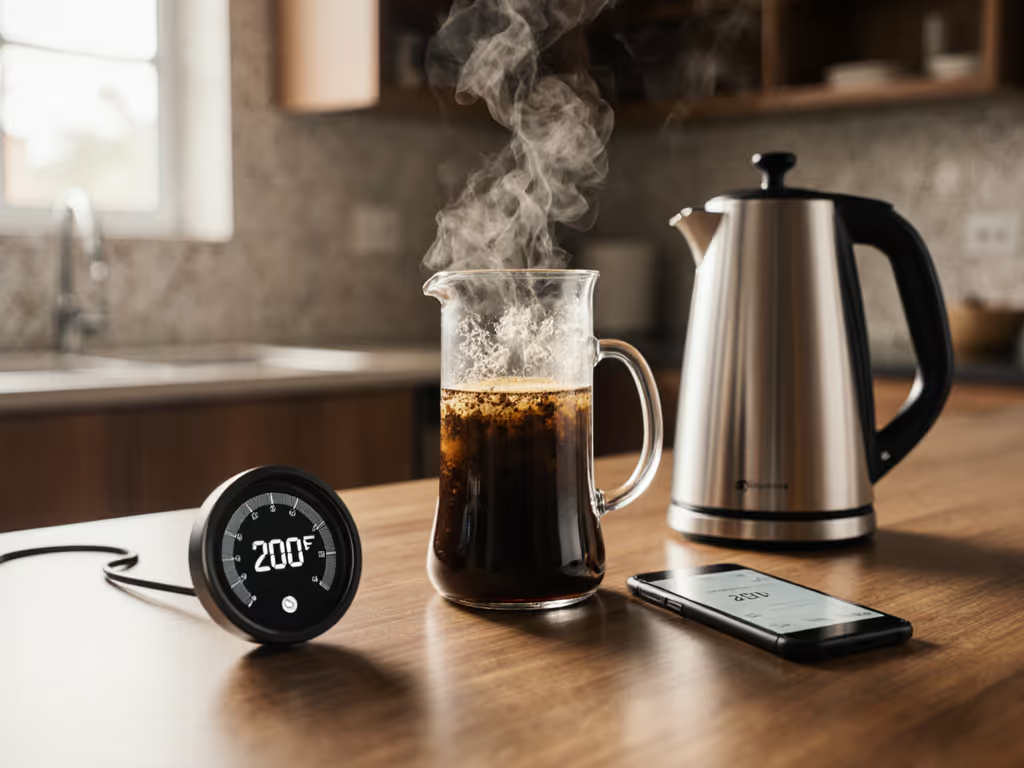
- Water temp: Just off boil (around 94 °C / 201 °F, but you can simply wait ~30 seconds after boiling)
- Brew time: 4 minutes
Steps
- Place your small French press on the smart scale and tare (zero it).
- Add 20 g of coffee, tare again.
- Start the timer and pour 300 g of hot water in a steady spiral.
- Gently stir once or twice to wet all grounds.
- Place the lid on, plunger pulled up; let steep until 4:00.
- At 4:00, gently press down over ~15 seconds.
- Serve immediately into your mug.
Taste notes to watch for:
- Too sour/thin → next time, grind slightly finer or increase dose to 21-22 g.
- Too bitter/heavy → grind slightly coarser or reduce dose to 18-19 g.
Change only one of those at a time so you know what caused the difference.
Baseline recipe for two mugs (mid-size modern French press)
For two ~12 oz / 350 ml mugs (or one generous carafe to share):
- Coffee: 40 g
- Water: 600 g (ml)
- Ratio: 1:15 again
- Grind: Medium-coarse
- Water temp: Same as above
- Brew time: 4 minutes
Procedure is the same; just double everything. With a modern French press that holds heat well, you can pour one mug immediately and keep the lid on for the second; it will still be hot.
Grinder calibration: one-variable-at-a-time method
Your grinder is one of the biggest sources of inconsistency, especially if multiple people adjust it.
For deeper tips on grinder types and grind consistency, see our French press grind guide. Here is a simple calibration ritual for your French press setup:
- Pick a baseline ratio and dose (for example, 20 g in / 300 g water). Stick to it.
- Brew three mornings with the same coffee, only touching grind size:
- Day 1: Your current guess.
- Day 2: One step finer.
- Day 3: One step coarser.
- Each day, jot down three words about taste (e.g., "bright, light body, tea-like" vs "round, sweet, heavy").
By Day 3 you will see a direction: do you like the sweetness and weight from slightly finer, or the clarity and snap from slightly coarser?
Start small, taste big: tiny grind shifts at a fixed ratio are the fastest way to find your sweet spot.
Once you find a grind you love, mark it: a tiny pencil line, tape, or a note in your phone. That is your "press grind."
Water, minerals, and heat (without chemistry overwhelm)
You do not need a lab to get water "right," but a few simple guardrails help.
- If your tap water tastes great on its own, try it filtered (basic carbon filter) for coffee.
- If it tastes flat, metallic, or very hard, consider a cheap pitcher filter and/or using low-mineral bottled water.
If you like numbers and measure water:
- Hardness around 60-90 mg/L as CaCO3 often gives good extraction.
- Alkalinity around 20-40 mg/L usually balances brightness and bitterness.
If you never want to think about mg/L again, that is fine (just pick one water source and keep it consistent while you dial everything else in). If you ever want the science behind why minerals matter for immersion brewing, read our water mineral balance guide.
Heat-wise:
- Preheat your press with a splash of hot water on colder days.
- Insulated modern presses lose heat much slower, which means more stable extractions and hotter coffee in the cup.
Cleanup, clarity, and context: more FAQs
How do I get a cleaner cup without losing French press body?
A classic complaint is "muddy" or silty cups. To reduce sludge while keeping that immersion richness, try:
- A better filter: Modern presses with fine or multi-layer mesh noticeably cut silt.
- No-stir finish: After plunging, avoid the last 1-2 cm of coffee at the bottom; that is where most fines settle.
- Slightly coarser grind: If you see mud-like residue in the cup, back coarser by one notch.
You can also experiment with a shorter brew time (3:30 instead of 4:00) if bitterness is creeping in.
What is the fastest cleanup routine that does not wreck my sink?
For home, office, or vanlife, here is a sub-60-second routine:
- Let the press cool a bit so you are not handling near-boiling metal.
- Add a little water, swirl to loosen grounds.
- Pour the slurry into a mesh strainer over the trash or compost bin.
- Tap the strainer into the bin; grounds go out, water goes down the drain later.
- Rinse the carafe and plunger with warm water; use a soft sponge and a tiny drop of soap if needed.
Weekly (or after heavy use), do a deeper clean:
- Disassemble the plunger.
- Rinse and gently scrub the mesh, plates, and gaskets.
- Let everything dry fully before reassembling.
This keeps shared gear from turning into "that gross office press" everyone avoids.
What makes a French press office-proof?
For offices or shared studios, look for:
- Stainless steel body: Survives knocks and keeps coffee hot through meetings.
- Simple, robust filter: Fewer tiny parts to lose; easy to explain and clean.
- Clear capacity markings inside or on the wall to guide recipes.
Then add two things:
- A laminated recipe card taped near the kettle: e.g., "For full pot: 40 g coffee, 600 g water, 4 min."
- A cleaning checklist: quick bullets for daily rinse and weekly deep clean.
Pairing the shared press with a smart coffee scale at the station makes training new users as simple as "fill to this number, press start, plunge when it beeps."
How about camping, vanlife, or travel?
Outdoorsy setups benefit from:
- Metal-bodied small or mid-size press (no glass to break).
- Insulation so you are not drinking lukewarm coffee in cold air.
- A design that is easy to clean with limited water.
You can:
- Scoop out most grounds with a spoon, wipe the rest with a bit of paper towel, then rinse with minimal water.
- Use your smart scale if you have power, or pre-measure coffee in labeled tubes or bags (e.g., 20 g per serving) so ratio stays consistent even without a scale.
For van setups, a small French press is often ideal: it is compact, tough, and does double duty as a durable travel mug if the lid seals well. See our picks for durable, leak-proof travel French presses to match your setup.
Bringing it all together: choosing your modern French press setup
If you have felt stuck between too many models and conflicting advice, here is a simple, guardrail-first path forward.
- Choose your size
- Mostly brew for one? Lean toward a small insulated French press.
- Brew for two or more? Pick a mid-size modern French press (24-32 fl oz).
- Pick materials for your context
- Clumsy office, camping, kids around? Stainless steel wins.
- Love seeing the brew and serving at the table? Thick glass with a sturdy frame is fine if you are careful.
- Add a smart coffee scale when you are ready
- If you are overwhelmed, start with the press alone using a scoop and a rough recipe.
- When you want more control, add the smart coffee scale so you can set and repeat your favorite ratio.
- Lock in one baseline recipe
- For one mug: 20 g coffee, 300 g water, 4 minutes.
- For two mugs: 40 g coffee, 600 g water, 4 minutes.
- Run a three-brew experiment
- Brew your baseline three days in a row.
- Change only one variable across those days (grind slightly finer one day, slightly coarser the next).
- Write three taste words per day.
You will be surprised how quickly a pattern emerges. I have watched people chase perfection by changing grind, dose, and water all at once, then blame the press. As soon as we simplified the routine to one ratio and one grinder click at a time, their "inconsistent" press suddenly had a very clear sweet spot.
From there, you can explore:
- Shorter or longer brew times for different beans.
- Slight ratio tweaks (1:15 vs 1:16) to match roast level.
- Alternate water sources if you are curious about flavor differences.
Always with the same rhythm: one knob at a time, honest notes, small deliberate changes.
If you treat your modern French press and smart coffee scale as partners in these tiny experiments instead of magical fixes, they will easily outlast trendy gadgets and help you serve reliably good coffee for years (at home, in the office, or in the middle of a quiet campsite).
Start small, taste big.