
French Press Water Adjustments for Hard Water Regions
By Linh Nguyen • 7th Feb
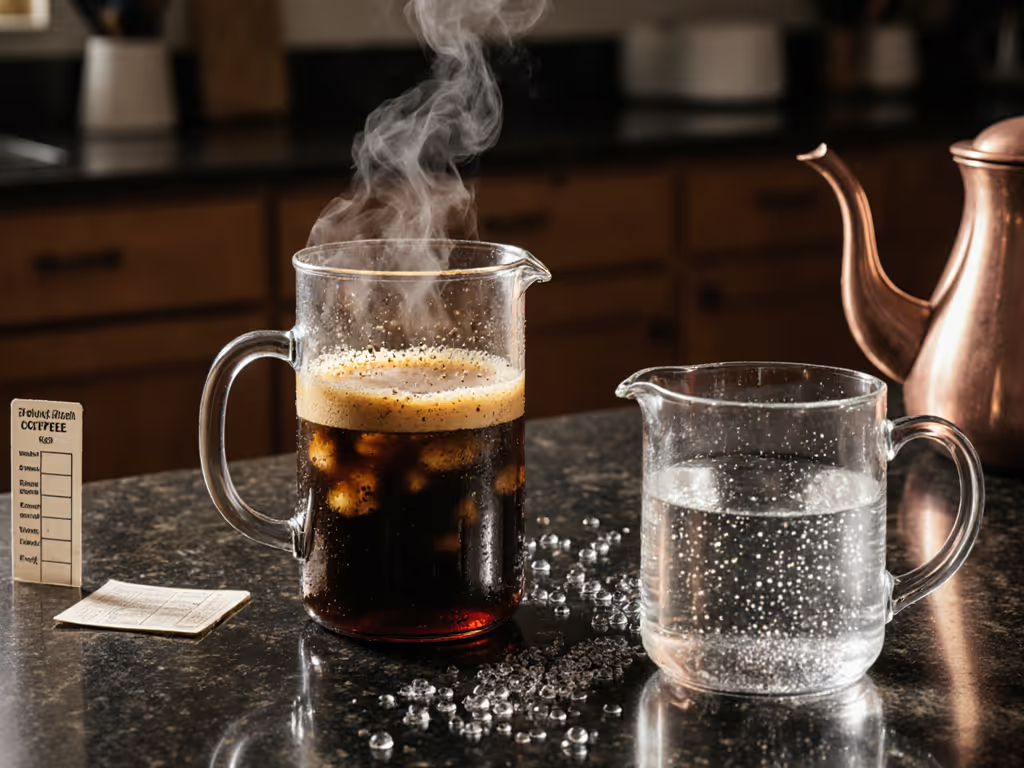
If your morning French press brew tastes unexpectedly bitter or flat despite perfect grind and timing, regional French press water is likely the hidden culprit. Water hardness French press interactions disrupt extraction in ways even seasoned coffee lovers overlook, especially in areas like London (370ppm) or hard-water U.S. cities. But here's the good news: you don't need a lab-grade filtration system. As someone who's designed French press stations for co-working spaces where Monday mornings demand ritual resilience, I'll show you how to adapt any regional water profile for clean, balanced coffee in under 90 seconds of adjustment time. It starts with understanding what your water mineral balance is actually doing to those precious coffee oils.
Why Hard Water Wrecks French Press Balance (And When It Helps)
French press immersion brewing interacts uniquely with water minerals compared to pour-over or espresso. Hard water (typically >150ppm calcium carbonate) contains high levels of magnesium and calcium, minerals that should enhance extraction but often backfire in press brewing:
- Calcium dominance: Creates chalky texture and masks delicate notes (as noted in Climpson & Sons' cupping trials). Common in limestone regions, it accelerates scale buildup in your press frame, subtly altering heat retention over time.
- Magnesium imbalance: While magnesium boosts fruitier acidity (ideal for light roasts), hard water often lacks its optimal ratio to calcium. This leads to over-extraction, with bitterness emerging before your 4-minute mark even with coarse grinds.
- The soft water trap: Below 75ppm, water lacks mineral "force" to pull oils properly. Result? Thin, sour coffee that tastes "flat," as Seven Miles' research confirms. Many assume filtered=soft=good, but basic carbon filters (like standard Brita) strip magnesium critical for flavor depth.
Critical insight: Immersion brewing like French press tolerates slightly higher mineral content than drip methods (up to 200ppm per SCA guidelines), but uneven mineral balance is the silent killer of consistency. Your tap water isn't "bad," it just needs tailored adjustments.
Spot Your Water's Impact in 30 Seconds
Skip expensive test strips. Conduct this daily ritual while your coffee steeps:
- 0:00-0:30: Smell the bloom. Weak aroma? Likely under-extracted due to soft water (<75ppm).
- 2:00-3:00: Stir gently. Does sludge cling aggressively to the mesh? Indicates over-extraction from hard water scale amplifying bitterness.
- Post-plunge: Taste at 4:00. Sharp/bitter? Too much calcium. Watery/sour? Missing magnesium. This diagnostic takes no extra time, just mindful observation during your existing routine. For a replicable at-home comparison of tap, filtered, and spring water, see our French press water taste test.
Four No-Gadget Water Adjustments for Any French Press
Forget reverse osmosis systems. Here's what actually works in real-world homes and offices, distilled from optimizing >50 shared brewing stations:
1. The Filter Pitcher Fix (For Hard Water >200ppm)
Time spent: 10 seconds per brew
Standard Brita-style pitchers do help by reducing scale-forming calcium, but they often strip magnesium. The fix: use filtered water but add a pinch of Epsom salts (food-grade magnesium sulfate). One 1/16 tsp per liter boosts fruity notes without altering texture. (Pro tip: Pre-measure salts into tiny jars labeled "Mg+" for office stations, no scoops needed.)
This mirrors Climpson & Sons' successful trial where targeted magnesium increased "sweetness and balance" in batch brew. They stopped dreading coffee duty when the ritual became predictable.
2. The Cold Brew Concentrate Hack (For Extreme Hardness >250ppm)
Time spent: 2 minutes weekly, zero daily effort
When tap water is too harsh (e.g., hard-water U.S. Midwest), bypass it entirely for morning brews:
- Make cold brew concentrate Sunday night: 1 cup coarse grounds + 4 cups filtered water, steep 12 hours.
- Dilute 1:1 with hot water each morning. Minerals in tap water won't touch your coffee, only the final dilution water matters.
- Office adaptation: Store concentrate in gallon jugs with time-stamped lids. New hires grab, pour, and never touch grounds.
3. The Rinse-Recycle Method (For Soft Water <50ppm)
Time spent: 15 seconds
Soft water users (common in the Pacific Northwest or coastal Europe): Don't discard your first pour! After blooming, remove 50ml of hot water and replace it with a splash of mineral-rich spring water (like Costco's Kirkland Signature at 150ppm). This injects extraction power without buying specialty water weekly.
4. The Mesh Guard for Scale-Prone Presses (All Water Types)
Time spent: 5 seconds per use, saves 2 minutes weekly in cleanup
Hard water leaves calcium deposits on metal filters, causing gritty sludge. Line your press filter with a reusable stainless steel tea strainer ($3 on Amazon). It catches micro-sludge before it hits your cup and shields the filter from scale buildup. For technique tweaks that further cut sediment, use our sludge-free French press guide. Rinse both in 10 seconds post-brew, no scrubbing.
Integrating Water Adjustments Into Your 90-Second Cleanup
Water adjustments fail when cleanup feels punitive. Here's the office-tested sequence that survives Mondays:
- 0:00-0:20: Pour grounds into compost (always use a dedicated kitchen pail, never sink!). Wipe carafe rim with sponge.
- 0:21-0:50: Rinse filter assembly under warm tap. If hard water area, scrub mesh with old toothbrush + vinegar weekly (not daily!). For full disassembly tips and descaling methods, see our French press cleaning guide.
- 0:51-1:30: Dry all parts with microfiber towel. Store disassembled to prevent odor traps.
Ergonomic note: Glass presses crack from thermal shock during rinsing. Switch to double-walled steel (modern French press models like Espro avoid this). Your hands won't burn, and rushed office users won't shatter it.
Reset the station; reset the mind as you return the empty press to its spot. This tiny ritual, taking less time than checking email, ensures the next brewer finds a clean, ready system. No shared sink resentment. No "who left grounds here?" passive aggression.
Your Next Step: Tonight's 5-Minute Water Audit
Don't overthink it. Before bed tonight:
- Check your city's water report (search "[your city] water quality report 2026"). Find "total hardness" in ppm.
- Brew two test batches tomorrow: One with tap, one with filtered water (+ Mg+ if hard). Note bitterness/sourness.
- Adjust accordingly: Hard water? Start with the pinch-of-salts fix. Soft? Try the rinse-recycle method.
Brew joy should survive Mondays and shared sinks without drama. Great coffee isn't about perfect water, it's about adaptable rituals that respect your time and space. Master these regional water adjustments, and your French press becomes the most reliable thing in your morning: no gadget bloat, no barista stress. Just repeatable, clean cups that honor both your bean's complexity and your busy life. Ready to reclaim your ritual? Grab that filter pitcher and Epsom salts, your consistently balanced brew starts tomorrow.
Related Articles

Brewing Guides & Techniques
French Press Sensory Evaluation: Home Cupping Protocol
11th Feb•5 min read