Head-to-Head Comparisons & Performance Tests
Modern French Press With Smart Scale: Best For Consistent Cups
29th May•15 min read
Choosing the best French press for coffee gets trickier when you're brewing high-clarity, high-aroma beans like anaerobic and carbonic maceration lots. These coffees can taste stunning or swampy depending on how your coffee using French press setup handles fines, heat loss, and extraction time. Variables first, story second.
Most guides lump all presses together. This one doesn't. Here, I'm ranking press types specifically on how they handle specialty coffee processing (with an eye on anaerobic fermentation extraction and carbonic maceration coffee), using the same repeatability, thermal stability, and component-durability rubric I use in the lab.
If you want the cleanest, most repeatable results with modern processed coffees, prioritize this order:
Across independent tests, reviewers consistently highlight heat retention, durability, and filtration quality as the variables that separate good and bad presses.[1][6][10] See our best presses for cleaner cups for lab-tested picks that excel on those metrics. Those are exactly the variables that matter most when you're chasing controlled extractions from volatile, fermentation-forward coffees.
If it can't repeat, it can't be my daily driver.
Short answer: They're more expressive, so they punish sloppy extractions.
What's different:
Processing:
Anaerobic fermentation coffee is fermented in low-oxygen environments (sealed tanks) before drying.
Carbonic maceration coffee uses a CO2-rich environment similar to natural-wine methods.
Both methods push fruitiness, complexity, and sometimes funk; small extraction shifts are more obvious in the cup.
Roast & density: These lots are often roasted lighter, which means:
Higher density beans
Slower extraction at a given grind size
Easier to under-extract (sour, sharp) or over-extract (bitter, drying) if your brew temp or time drifts.
Why the press amplifies issues:
Immersion brewing extracts everything in contact with water; there's no paper filter correcting for fines or over-extracted particles.
Any temperature sag or bypass at the filter shows up as inconsistency from cup to cup.
This is why a French press that's "fine" for a dark supermarket blend can fail spectacularly with a delicate carbonic maceration coffee.
I rank presses for these coffees on three dimensions:
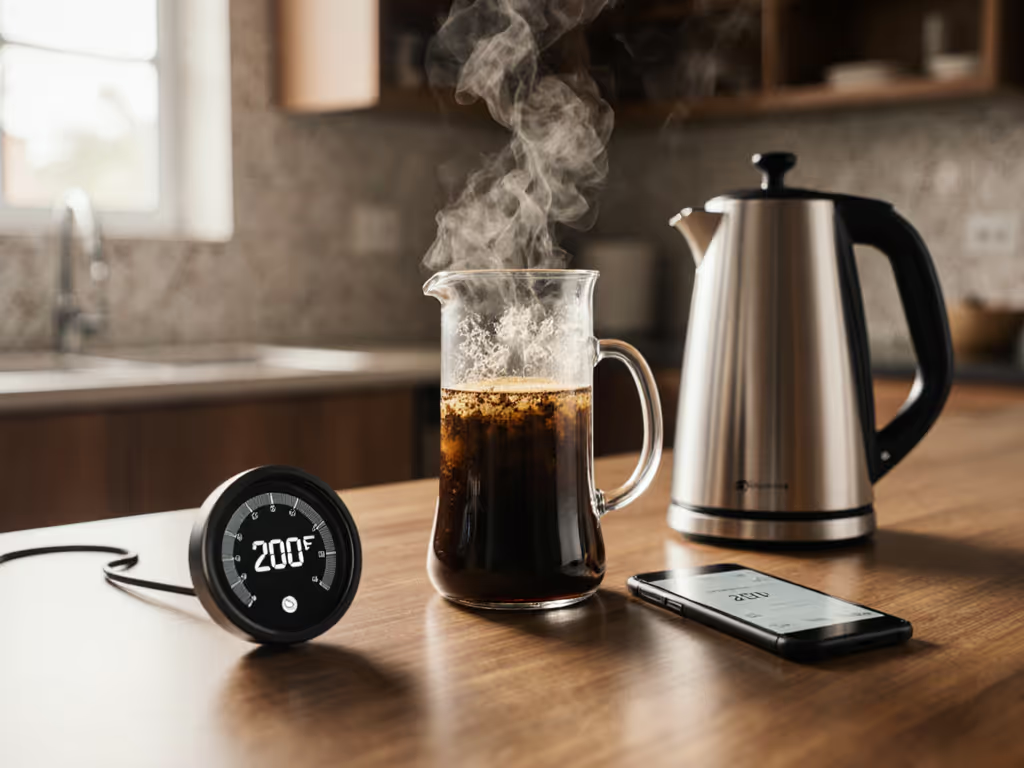
For anaerobic and carbonic lots, I look for brews that stay above 85 °C for the first 4 minutes inside the slurry. Detailed temperature data is in our heat retention comparison. Thin glass often dips below that faster, especially in cool kitchens or offices.[1][6]
Reviewers who tested micro-filter presses consistently report cleaner cups with less mud compared to basic mesh screens, even when using the same grind.[4][10] That's a strong match for fermentation-heavy coffees where clarity matters.
Many "best French press" roundups now explicitly score durability and replacement-part availability, not just flavor.[1][6][10] That's aligned with a low-waste, buy-once mindset.
Here's how the main categories compare when the beans are anaerobic or carbonic.
| Press type | Thermal stability | Sludge level | Durability | Best use case with anaerobic / carbonic |
|---|---|---|---|---|
| Thin glass, basic mesh | Low | High | Fragile | Occasional use, careful home users |
| Thick glass in metal frame | Moderate | Moderate to High | Medium | Home use where visibility of bloom matters |
| Double-wall stainless | High | Moderate | High | Daily driver, home or office; best all-rounder |
| Micro-filter / dual-filter | High | Low | High | Clean cup focus, light-roast & fermentation-forward coffees |
Independent tests frequently recommend double-wall stainless as the most practical long-term choice due to heat retention and toughness, while micro-filter designs are highlighted for their superior cup clarity.[1][4][6][10] For anaerobic / carbonic lots, that combination (thermal mass + fine filtration) is ideal.
You don't need to abandon immersion brewing to get a cleaner cup. You need to control three things:
This reduces the proportion of ultra-fines that drive mud and over-extraction.
Even if your press is basic:
Dual or micro-filter systems (one nested inside another) have been shown to substantially reduce sludge relative to single-layer mesh in product tests, while still delivering fuller body than paper-filter methods.[4][10] Our single vs double filter test quantifies the sludge reduction and flavor impact.
This simple change (gentle plunge, partial press, full decant) cuts sludge and bitterness without sacrificing the tactile weight people expect from a french press coffee press.
This baseline is tuned for a single-wall glass or double-wall steel 500–700 ml press. Scale linearly.
Anaerobic Fermentation Extraction Baseline
Steps:
Tuning notes:
Because anaerobic coffees can emphasize fermenty, winey notes, I bias toward slightly higher extraction yields to "round" the profile without overdoing bitterness. For dial-in details, follow our French press ratio guide.
Carbonic maceration coffees can be very aromatic but also fragile. I treat them more gently.
Carbonic Maceration Baseline
Steps: Same as above, with two changes:
Reasoning:
If your press has excellent filtration (micro-filter), you can grind a bit finer without turning the last sip into sludge.[4] This is where better hardware unlocks better cups. For a deeper dive, see brewing carbonic maceration coffee with the French press.
Yes. Size affects thermal stability, extraction consistency, and how practical brewing is for your routine.
Single (350-500 ml):
Faster heat loss but easy to preheat thoroughly.
Great for one person; repeatable if you lock in the recipe.
Medium (700–1000 ml):
Good compromise for 1–3 cups.
More thermal mass; better for longer meetings or slow breakfasts.
Large (1.3-1.5 L):
Best for offices or guests.
Harder to maintain even extraction if water is poured slowly; use a kettle with strong, steady flow.
In lab-style tests, larger double-wall presses outperformed smaller glass models for heat retention over 15-30 minutes, which directly supports more stable extraction curves.[1][6][10] If you regularly brew anaerobic or carbonic lots for more than one person, a medium insulated press hits the sweet spot.
Your environment sets the constraints.
Reviewers often note that stainless presses survive shared-office use better than glass, which is prone to cracking and chipping.[1][6][10]
Performance drifts when oils accumulate and components warp. The fix is simple and fast.
After every brew (30–60 seconds):
Dump grounds into compost or trash (use a spatula, not the sink).
Rinse body and filter under hot water.
Do 3–4 "water plunges" to flush mesh.
Weekly (5 minutes):
Disassemble plunger stack.
Soak mesh and metal parts in hot water with a drop of unscented detergent.
Rinse thoroughly and air dry.
Monthly or when needed:
Replace bent or fraying mesh screens.
Check that the spring around the edge is still round and snug.
Several testing panels explicitly call out how old, bent screens let more sediment through and make plunging harder over time.[1][6][10] Spending a few dollars on replacement screens every year preserves both cup quality and user experience.
Across one especially rainy week, I logged 60 brews across three presses, tracking TDS and temperature every minute. The scuffed, serviceable press with fresh screens outperformed the prettier one with a tired filter stack. That's when I locked in this service-first bias.
Use this quick decision tree for fermentation-forward coffees:
If you're still stuck between two models, choose the one with:
In other words: buy the tool that protects your variables.
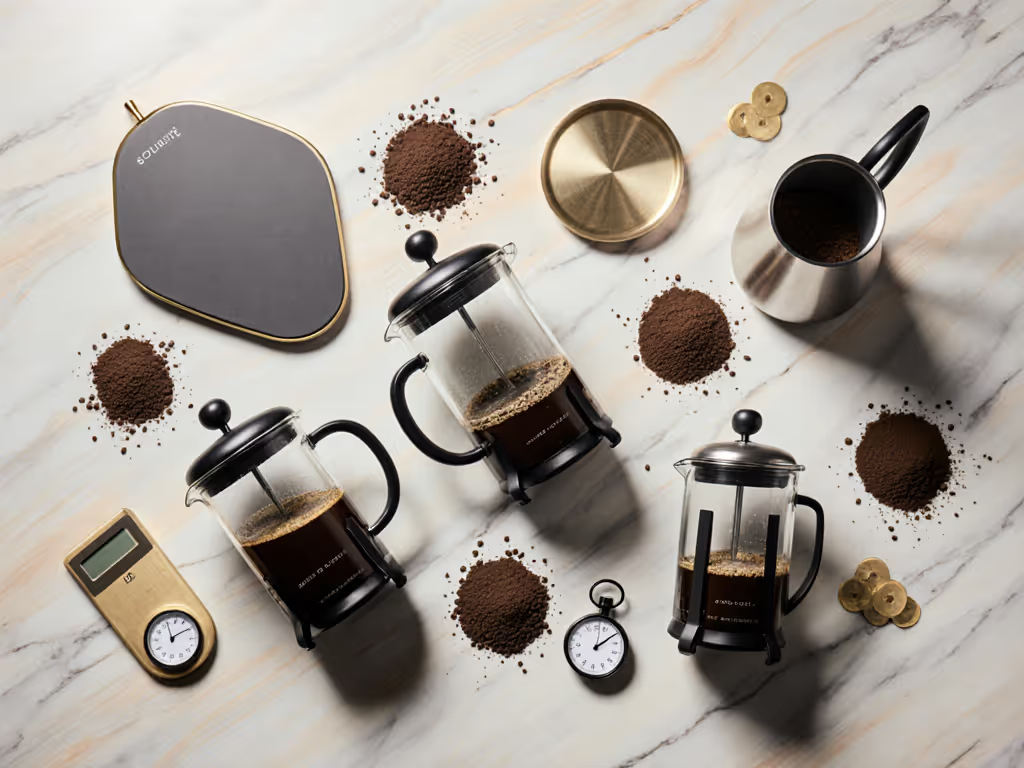
To turn this from theory into muscle memory, set up a simple experiment with whichever presses you can access (even two is fine):
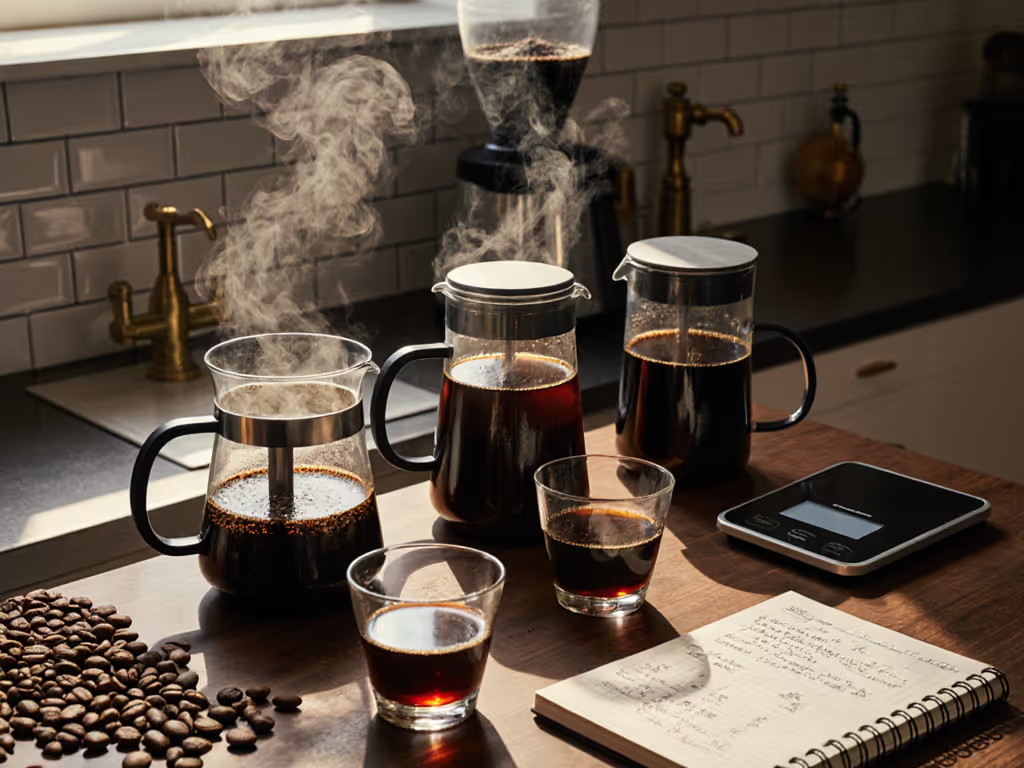
The press that wins on stability + cleanliness + ease with your beans is your best French press for coffee, regardless of brand logo. Once you've found it, lock in your recipe, note it on a card next to the kettle, and enjoy reliable coffee using French press even with the wildest specialty coffee processing.
Variables first, story second. That's how a ritual becomes repeatable.