French Press Herbal Tea: Steep Times & Temps
By Sanaa Al-Hassan • 23rd Feb
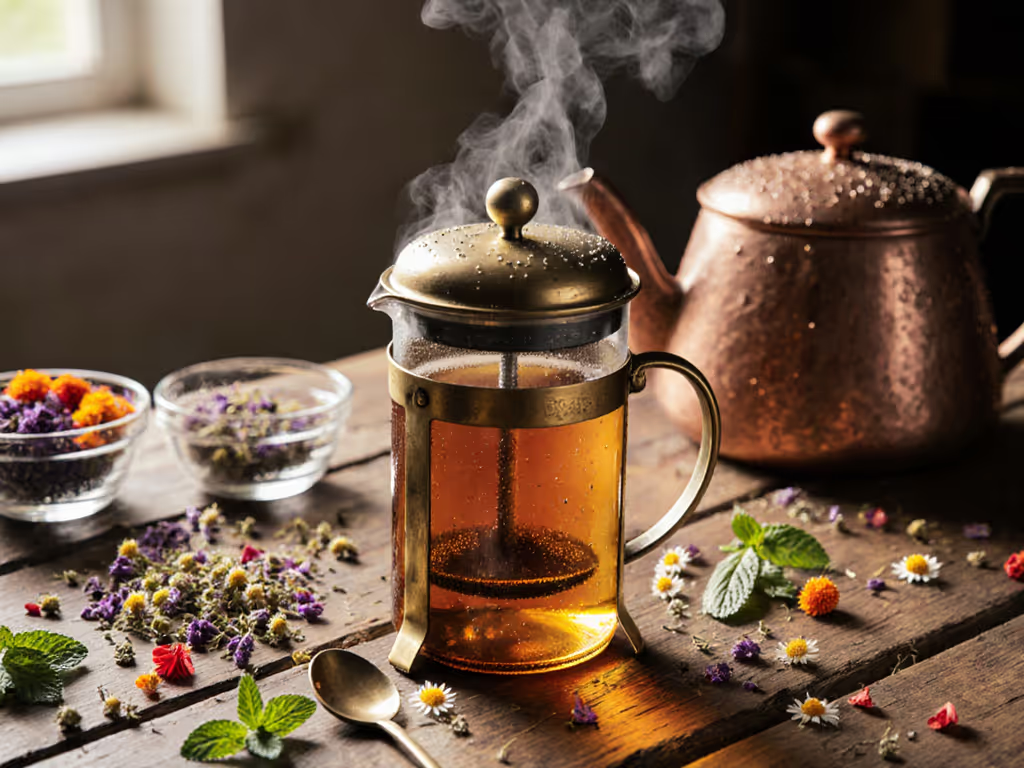
French press loose tea brewing delivers full botanical flavor with precision control, once you lock down water temperature and steeping duration for each herb type. Whether you're steeping chamomile at your desk or nettle on an alpine ledge, the same immersion-chamber logic applies: leaf contact time, water heat, and leaf quantity determine extraction. This guide walks the numbers and method to dial in herbal infusions consistently.
Why the French Press Excels for Herbal Tea
A French press infusion guide starts with one mechanical truth: the press's flat-bottomed chamber and full-depth submersion create uniform heat exposure and even extraction. Unlike drip or pour-over, every leaf sits in hot water for the exact duration you control. For herbs especially (where you want bold flavor without bitterness, this predictability matters.
Herbal botanicals (chamomile, peppermint, nettle, rooibos) are forgiving compared to delicate tea leaves. They tolerate boiling water and longer steeps without scorching. That resilience makes the press an ideal tool for field brewing and batch prep. No filters to clog, no paper waste, no guesswork about whether the bloom has released enough flavor. You watch, time, and press when ready.
From a durability perspective, I learned this through failure. A plastic-framed press I carried on high ridges cracked mid-plunge one dawn at 5 a.m., when a cup of tea was morale-critical. The replacement (stainless steel with silicone bumpers) has survived sand, snow, and rocky truck tailgates. If it fails cold dawns, it's camp art, not gear. That shift taught me to value botanical extraction French press tools built for actual conditions, not just kitchen counters.
Temperature & Timing Fundamentals
Herbal teas differ from Camellia sinensis tea (black, green, white) in one key way: they are nearly impossible to over-extract. Boiling water (212°F / 100°C) is standard. Most herbals steep 5-15 minutes depending on leaf size and desired potency. Delicate flowers steep shorter; woody herbs like nettle brew longer.
Here's the core framework:
- Full boil required: Herbal teas are not tea plants. Boil your water fully before pouring.
- Steeping window: 5-15 minutes, with finer leaf or soft botanicals trending shorter, dense roots or barks trending longer.
- Strength control: Increase either brew time (by 2-3 min increments) or leaf quantity (by ¼ to ½ teaspoon) to taste.
If it fails cold dawns, it's camp art, not gear.
Field logs with temps and wind notes matter when you're testing at elevation or in cold. For altitude-specific adjustments to water temperature and timing, see our high-altitude French press guide. Boiling water cools predictably: roughly 200°F after 1 minute, 185°F after 2-3 minutes. If your remote camp runs cold or windy, a preheated press (rinse with hot water before brewing) preserves thermal mass.
Step-by-Step: Herbal Tea Preparation with a French Press
Step 1: Measure and Prep Loose Leaf
Use French press loose tea at a ratio of 1-2 teaspoons per 8 oz of water. Adjust upward if brewing a larger batch (a 34 oz press might use 4-5 teaspoons). Loose whole herbs infuse more evenly than broken leaf; they expand and curl as they hydrate, maximizing surface area. Store dried herbs in airtight containers away from light and heat to preserve volatile oils.
Step 2: Heat Water to a Full Boil
Use filtered water when possible to avoid mineral off-flavors. Curious how different waters taste in the cup? Check our filtered vs spring water test. Boil in a kettle (stovetop or electric). For field brewing, a camp stove kettle or insulated pot works. Avoid microwaving; boiling ensures even heat and proper extraction.
Step 3: Rinse and Preheat the Press
Pour a splash of hot water into the empty press, swirl, and discard. This step (often skipped) raises internal temperature and stabilizes the brew. It matters on cold mornings or when pressing outdoors. In offices or on expeditions where spare parts weigh less than ruined equipment, this 30-second ritual prevents thermal shock to the glass (if used) or temperature collapse mid-steep.
Step 4: Add Leaves and Pour Water
Place dried herbs in the bottom of the press. Pour 8 oz of boiling water over them in a slow circular motion, ensuring all leaves are submerged and hydrated. Do not plunge yet. Place the lid on top without pressing down; the lid traps steam and volatile oils, crucial for herbal aroma. Leave the plunger raised.
Step 5: Steep for Time and Herb Type
Refer to this steeping chart:
| Herb Type | Amount (per 8 oz) | Water Temp | Steep Time |
|---|---|---|---|
| Chamomile | 1-2 tsp | 212°F / 100°C | 5-10 min |
| Peppermint / Spearmint | 1-2 tsp | 212°F / 100°C | 5-7 min |
| Nettle | 1-2 tsp | 212°F / 100°C | 7-10 min |
| Rooibos | 1-2 tsp | 212°F / 100°C | 5-15 min |
| Herbal blend (mixed) | 1-2 tsp | 212°F / 100°C | 5-10 min |
For strong tea, extend time by 2-3 minutes rather than doubling leaf quantity; you'll avoid excessive tannins or cloudiness. In field conditions, set a timer or phone alarm; minutes blur on a cold dawn.
Step 6: Press and Pour
When the timer sounds, press the plunger down slowly and steadily. This moves leaf matter to the bottom and clears the brew into your cup or vessel. Adjust the lid so the spout openings align with the pour channel. Pour carefully to avoid sediment splash. If any fine particles enter your cup, it's not a flaw (herbal particles are edible and add body), but most prefer a cleaner cup. A fine-mesh strainer placed over your mug catches ultrafine debris if desired.
Step 7: Cool and Sip
Allow tea to cool to a comfortable drinking temperature before enjoying. Herbal teas hold heat well; no rush. On trails, sipping slowly extends the morale boost of a hot drink and lets you pair it with a snack or note-taking.
Consistency Hacks & Field Tips
Glove-friendly design matters outdoors. A press with a wide, rubberized handle stays graspable in winter or damp conditions. Test your grip before committing to a model.
Pre-measure leaf packets. For trips, portion dried herbs into small paper envelopes or reusable pouches labeled with brew time and water amount. Multi-use bags cut pack weight and eliminate guessing at 5 a.m.
Use filtered or bottled water on trips. Mineral content varies wildly by source and affects extraction and flavor. Tap water at base camp may be perfect; mountain stream water might add iron notes. Carry filtration or plan for bottled supplies.
Batch brewing scales easily. A 34 oz press brews 3-4 cups; use 3-4 teaspoons leaf and steep the same duration as a single serving. Divide into insulated mugs to maintain heat.
Clean immediately after steeping. Get disassembly tips and best practices in our French press cleaning guide. Compost spent leaf matter or scatter it (follow leave-no-trace rules on trails). Rinse the press with hot water while warm; dried herb oils stick otherwise. No harsh chemicals needed: hot water, a soft brush, and air dry complete the task in under two minutes.
Cold-Brew Alternative
For iced herbal tea, cold-brew in the press. For more variations and techniques, see our tea and cold brew guide. Add tea and cold water, then refrigerate 4-8 hours. Press and pour over ice. This method is gentler and delivers clean, smooth flavor; it sidesteps bitterness risk and works well for mint or chamomile blends during office afternoons.
Durability & Gear Notes
Choose stainless steel or borosilicate glass for rugged use. Stainless steel resists thermal shock and handles grit; borosilicate glass survives temperature swings better than standard glass, though it's still fragile. Avoid bare plastic frames if you'll press outdoors; they crack under thermal or impact stress. Silicone gaskets should be food-safe and replaceable; they retain odors over time and may need swapping annually if heavily used.
For office or group settings, label the press clearly, post a photo of your filled-press-to-cup ratio on a break room card, and include a simple cleanup checklist. Shared gear survives when expectations are explicit.
Explore Further
Experiment with herbal blends: mix chamomile, lavender, and rose petals for a floral infusion, or nettle, spearmint, and ginger for a warming afternoon brew. Log your ratios and times in a field notebook; patterns emerge quickly. Once you've dialed in your favorite herbs and their optimal steep times, the French press becomes as reliable as your morning routine (and, outdoors, as vital to morale as a solid map or a working lighter).
For deeper dives into water quality and mineral profiles, or for sourcing heirloom dried herbs, explore specialty tea vendors and local apothecaries. Many offer detailed tasting notes and brewing recommendations specific to their harvests. Build from the framework above, iterate, and trust your palate.
Related Articles
Brewing Guides & Techniques
French Press Sensory Evaluation: Home Cupping Protocol
11th Feb•5 min read