
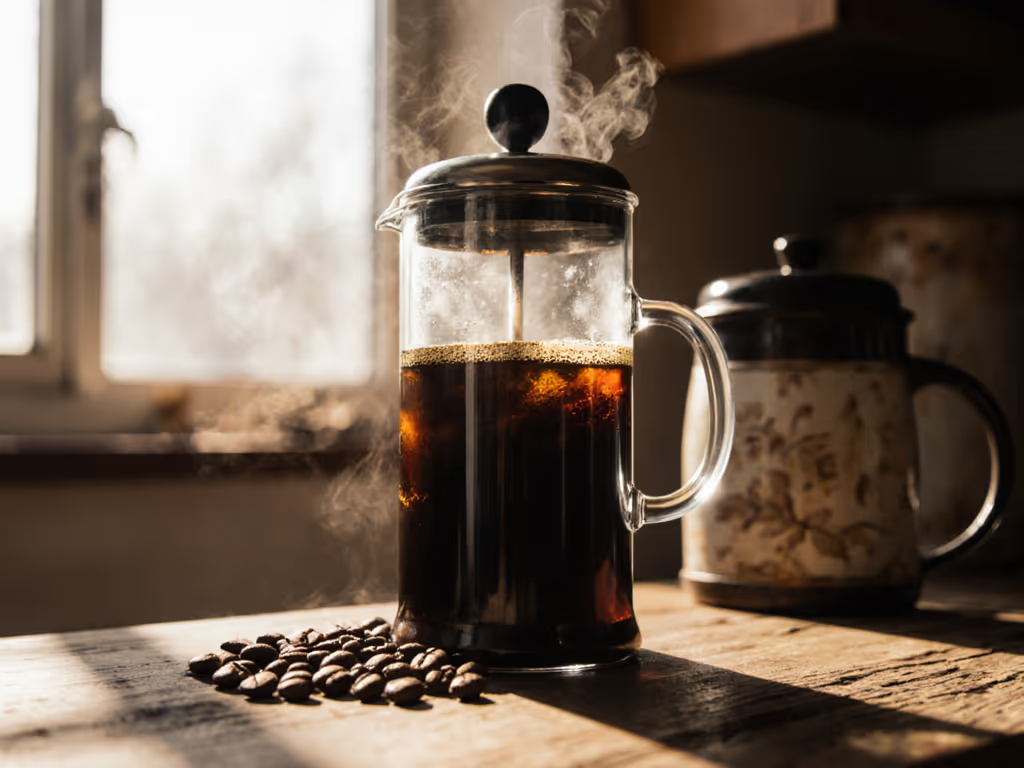
French Press Bean Freshness: Bloom, Extraction, Clarity
By Kai Laurent • 21st Sep
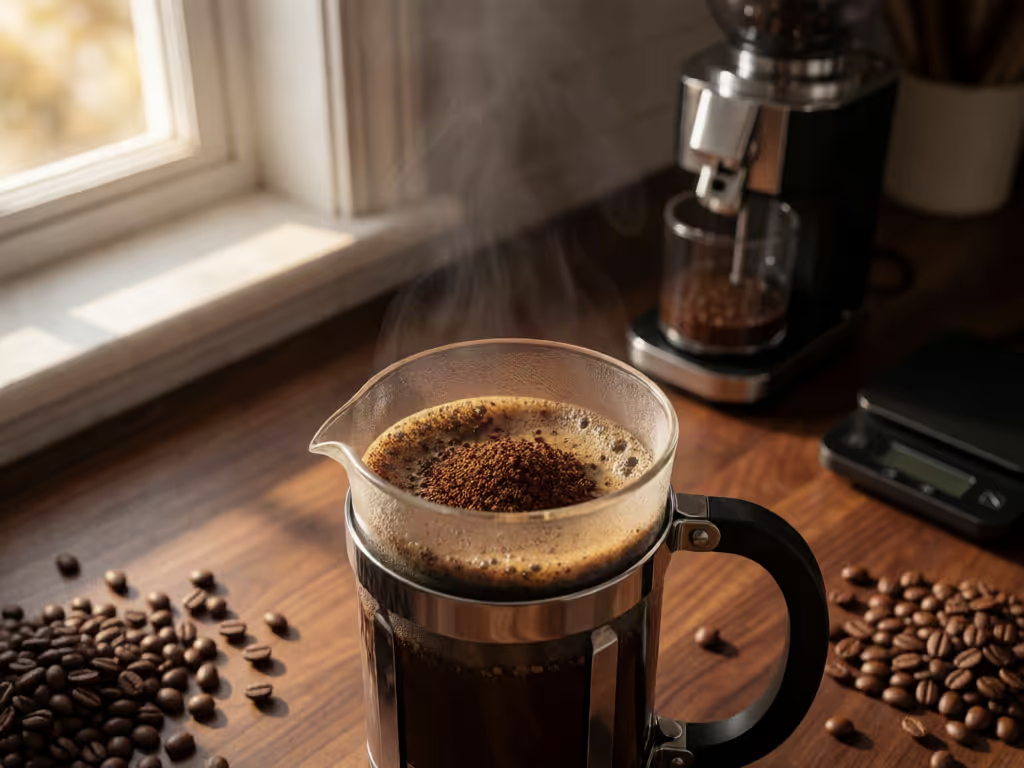
Quick answer
French press freshness is best managed as a changing variable, not a universal “best day.” CO₂ escapes fastest during roughly the first 20 days after roasting, so fresher beans usually bloom more strongly, but that does not prove better extraction or a clearer cup.
- Practical step: Grind immediately before brewing and try a consistent 30-second bloom before the full pour.
- Key distinction: Bloom indicates retained CO₂, while clarity also depends on the method.
- Long storage: Research found sensory deterioration, including rancid notes at 18 months, under specific storage and paper-filter conditions. It does not establish a universal shelf-life or answer food-safety questions for very old beans.
Important: The available evidence does not establish a precise French press peak-rest window; judge your coffee by controlled comparisons rather than a fixed calendar date.
French press bean freshness is not a single date on a bag. It is a moving set of variables: retained carbon dioxide (CO₂), time since roast, time since grinding, and storage exposure. Degassing French press coffee is therefore less about chasing a universal "best day" and more about using a repeatable bloom and a controlled comparison. Variables first, story second.
The practical problem is familiar: one bag produces a lively, easy-to-repeat press one morning and an uneven, flat cup later in the week. Freshness may be involved, but it is not the only variable, and bloom size is not a verdict on quality. Here is what the available evidence can, and cannot, tell you.
What changes as roasted beans rest?
Roasting leaves CO₂ trapped in coffee's cellular structure. That gas gradually escapes after roasting, carrying aroma compounds with it. The Specialty Coffee Association describes the fastest phase of coffee off-gassing as the first roughly 20 days after roast; the rate then slows substantially.
That timeline explains why resting coffee beans is not a binary choice. For a closer look at brewing with extremely fresh beans, see our fresh-roast degassing comparison. A coffee brewed soon after roasting and the same coffee brewed later can release different amounts of gas when water hits the grounds. But it does not establish a universal French press peak-rest window. No controlled evidence here compares roast ages in French press while holding dose, grind, water, and steep procedure constant.
The useful operating rule is simpler:
- Record the roast date when you have it.
- Grind immediately before brewing when comparing batches.
- Keep your press procedure unchanged while you observe bloom and cup results.
- Avoid declaring a winner from one brew.
Grinding matters because it accelerates CO₂ loss from a process that happens over weeks in whole beans to one that occurs in minutes after grinding. If you grind one batch early and another just before brewing, you have changed more than roast age.
Does a French press need a bloom?
What the bloom shows
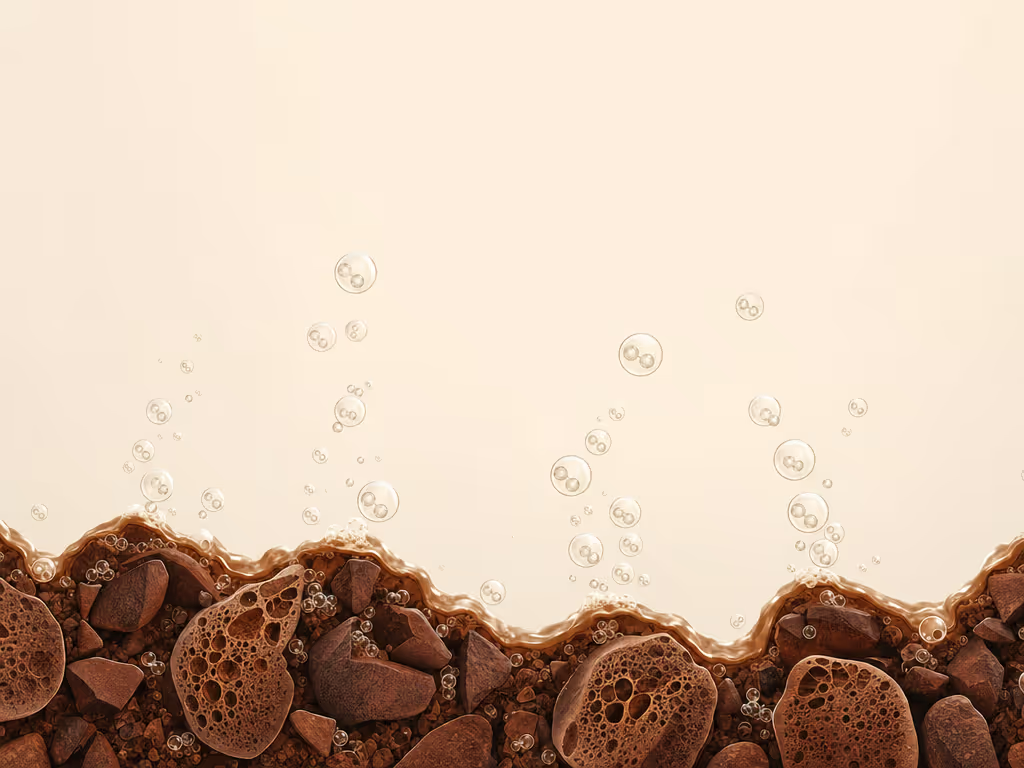
A bloom is the visible bubbling that occurs as water contacts coffee grounds and accelerates CO₂ release. Fresher roasted coffee generally produces a stronger bloom than less fresh coffee because it retains more gas.
That makes bloom a useful observation, not a complete freshness test. A large bloom indicates active gas release. It does not, by itself, prove that the coffee will extract well, taste better, or produce a clearer French press cup.
A practical 30-second bloom
One published French press method from Blue Bottle Coffee begins by moistening the grounds, waiting 30 seconds, then adding the remaining water. Driftaway Coffee similarly describes a short bloom as a way to let gas escape; its explanation is that CO₂ can repel water and limit access to coffee solubles.
Treat that as a testable handling step rather than a law. Use it when you want a consistent routine:
- Add freshly ground coffee to the press.
- Add enough water to wet all grounds.
- Wait 30 seconds.
- Add the remaining water and continue with your usual immersion routine.
Do not change grind, water, steep time, and bloom all at once. If the cup changes, you will not know why.
A bloom is a gas signal, not a scorecard.
How does freshness affect fresh roast extraction?
The defensible answer is narrow. Freshly roasted coffee tends to bloom more strongly because it has retained more CO₂. Roaster-published guidance says allowing that gas to escape can improve water's access to coffee solubles. That is a plausible reason to include a short bloom before the full pour.
What the evidence does not support is a precise prediction such as: "Beans at day X will extract best in every French press." Roast level, coffee composition, storage, and recipe may matter, but the available evidence does not quantify their combined effect in a French press. For a deeper explanation of how these variables interact, see our guide to French press extraction science.
So run a simple comparison instead of following a calendar rule.
The two-brew freshness check
Use two brews from the same bag on separate days. Keep these controls fixed:
- Same coffee mass
- Same water mass
- Same grinder setting
- Same water source
- Same bloom interval
- Same steep and settling procedure
- Same serving method
Log only three observations: roast date, bloom height/activity, and whether the cup seems consistent with your previous brew. If you own a refractometer, TDS can be another logged variable, but consistency of your setup comes first.
Does fresher coffee make French press coffee clearer?
Not on the evidence available. There is no controlled evidence here tying roast age directly to French press clarity, sediment, or colloid concentration.
French press immersion retains more colloids than pour-over brewing, according to Blue Bottle Coffee's guide. That matters because "clarity" in a press is not merely a freshness question. It is also a method question: immersion naturally carries more suspended material than paper-filter brewing. Readers focused on reducing that suspended material can compare French presses designed for cleaner coffee.
Blue Bottle publishes a specific 15-minute, no-press procedure involving a 30-second bloom, breaking the crust, skimming, and allowing the brew to settle. The company says that method produces exceptional clarity of taste. That claim belongs to that exact procedure; it is not proof that every long French press brew, or every fresh coffee, will be clearer.
For day-to-day French press flavor development, separate the questions:
- More bloom? Likely more retained CO₂.
- More clarity? Not established by freshness alone.
- Less sediment? Do not assume roast age is the cause.
- More repeatable extraction? More likely when you control the full procedure.
What does long storage do to beans?
A sensory study of medium-roasted Arabica and Robusta whole beans stored vacuum-packed, in the dark, at ambient temperature tested coffee when fresh and after 9 and 18 months. The coffee was prepared using paper-filter brewing, not French press.
At 9 and 18 months, assessors found lower intensity of positively associated coffee odor, flavor, and sweetness, with higher negative odor and flavor attributes, bitterness, astringency, and bitter aftertaste. At 18 months, rancid odor and flavor associated with oxidation were perceptible.
That is strong evidence that extended storage can reduce sensory quality under those conditions. It is not a French press study, and it is not food-safety guidance.
Storage quality is influenced by moisture, oxygen, light, and extraneous odors. The evidence does not provide a complete consumer storage protocol, so avoid overconfident rules about exact unopened-bag life or a single "best" container.
FAQ: French press freshness decisions
How can I tell if coffee beans are fresh?
Look for the roast date first. During brewing, a stronger bloom can indicate that beans retain more CO₂, and fresher coffee generally blooms more strongly. But bloom is not a definitive freshness or quality test. Compare brews with the same grind and method before drawing conclusions.
How long do beans stay fresh in an unopened bag?
The SCA offers about three weeks after roasting as a practical whole-bean freshness framing when degassing is the guide. That is not a precise unopened-bag shelf-life guarantee. Long-storage research shows sensory decline in vacuum-packed whole beans over months, but it does not establish an exact retail-bag cutoff.
Can I use 2-year-old or 4-year-old beans?
For cup quality, expectations should be low. The available study found substantial sensory deterioration by 18 months under its specific vacuum-packed, dark, ambient storage conditions, including perceptible rancid notes at that point. It does not test two- or four-year-old beans and does not answer whether they are safe to consume. This is a flavor-quality question, not safety guidance.
What is the best way to keep beans fresh?
The supported priorities are to limit the known storage stressors: moisture, oxygen, light, and extraneous odors. Beyond that, the available evidence does not justify a detailed universal storage prescription. The most useful action is still procedural: buy coffee in quantities you can compare and brew while its roast date is known. If bean age is a recurring concern, our bean-age brewing guide explains how equipment and technique can be adjusted for freshly roasted, rested, and older coffee.
Summary and final verdict
French press bean freshness is best handled as a measured variable, not a superstition. CO₂ leaves roasted beans quickly in the early post-roast period, and fresh coffee usually blooms more strongly. A 30-second bloom is a reasonable, repeatable French press step drawn from a published roaster method, but it is not a guarantee of better extraction.
Do not use bloom to diagnose clarity. French press naturally retains more colloids than pour-over, and no available controlled evidence shows that bean age alone determines sediment or clarity in the press.
Final verdict: record roast date, grind just before brewing, use one consistent bloom-and-steep routine, and compare like with like. That approach gives you a usable answer for your beans and your press, without pretending there is one perfect rest day for everyone.
Related Articles
Brewing Guides & Techniques
French Press Sensory Evaluation: Home Cupping Protocol
11th Feb•5 min read