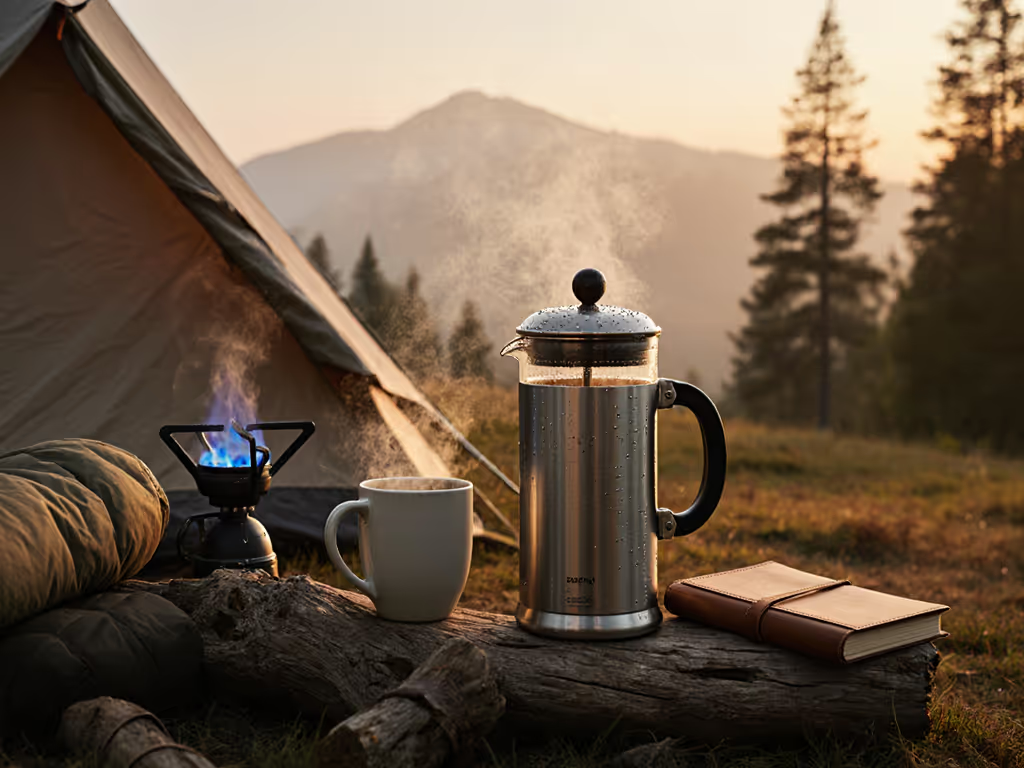
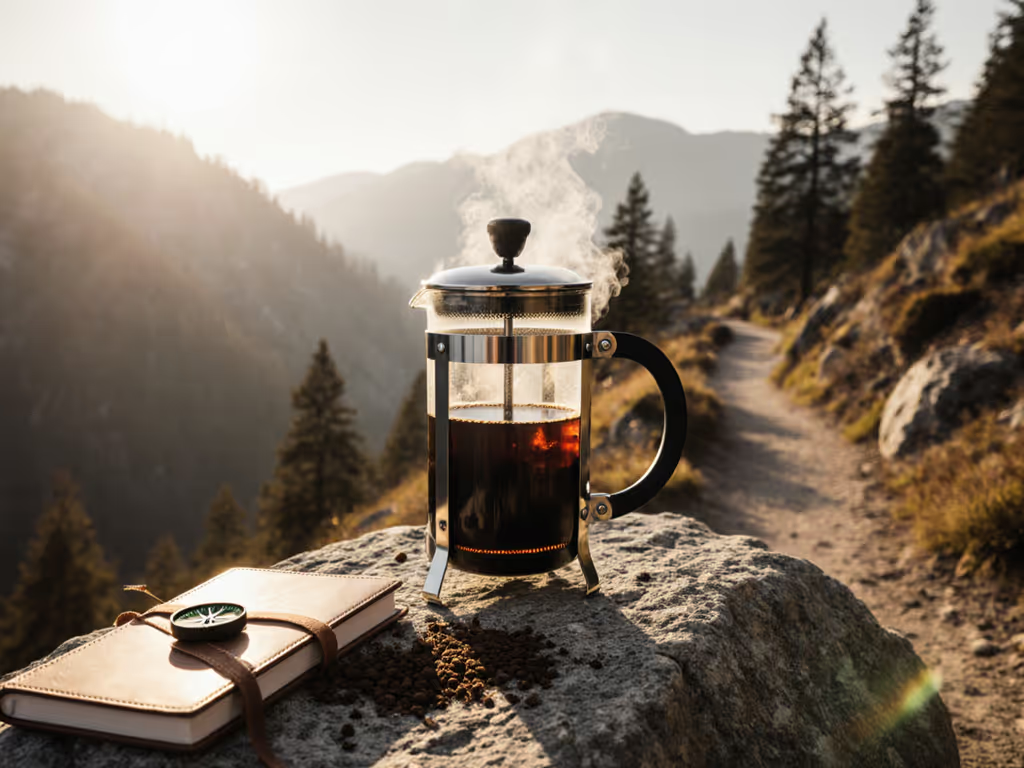
Travel & Outdoor French Presses
Modern French Press Travel Test: Leakproof & Rugged Models
3rd Oct•6 min read
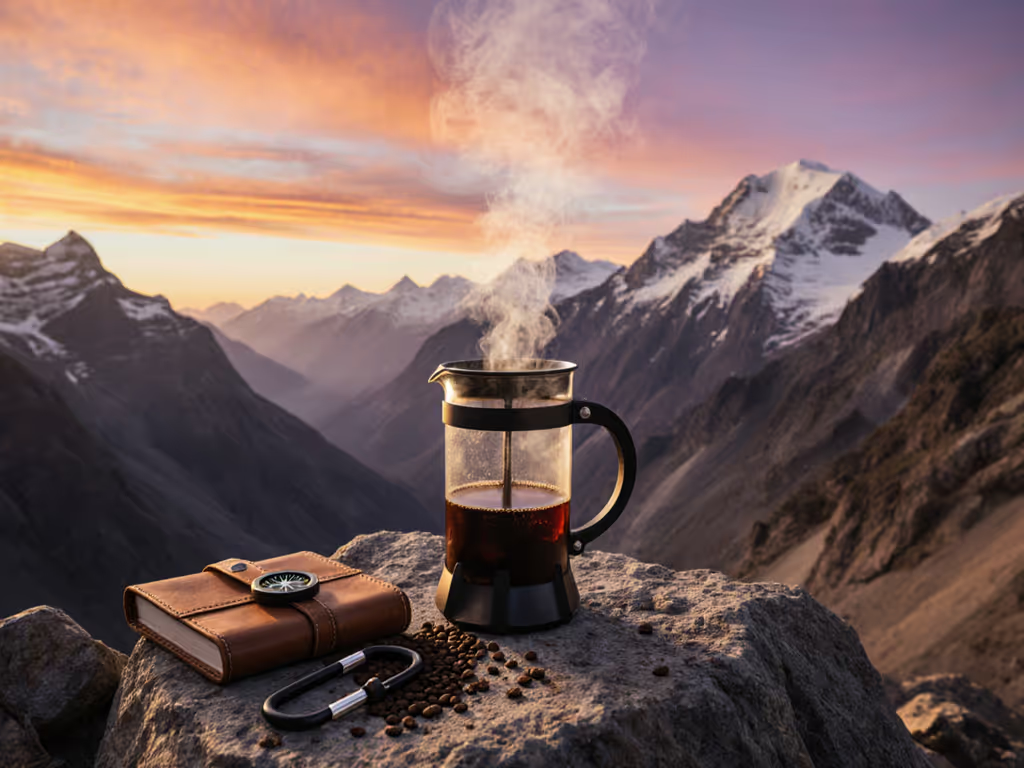
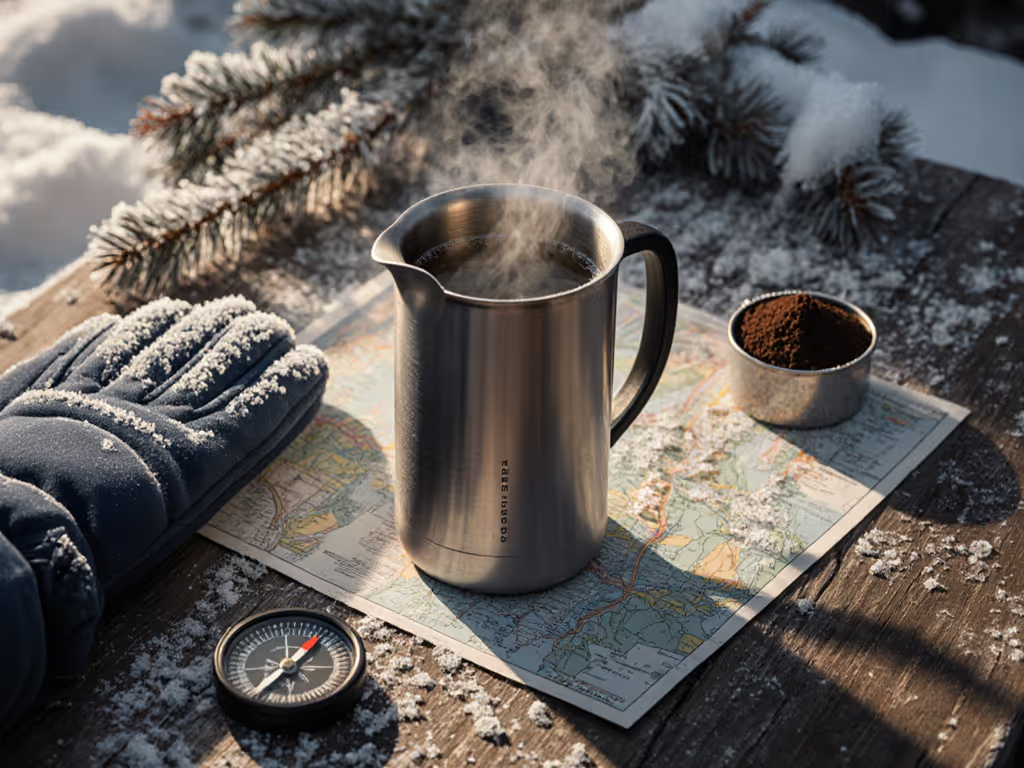
There's something deeply grounding about the ritual of French press travel, especially when you're navigating arctic coffee brewing or desert coffee making under less-than-ideal conditions. Yet so many adventurers abandon their press at the first sign of wind, cold, or limited water, assuming it's too fragile or finicky for the wild. If water is scarce, use our low-water French press cleaning guide to keep grit and rust at bay. What if I told you the opposite is true? With deliberate tweaks and honest tasting notes, your modern French press becomes the most reliable companion for extreme condition coffee, whether you're melting snow for water in Antarctica or rationing sips under a Sahara sun. Let's reframe the narrative: your press isn't the problem. It's how you've been dialed in.
One knob, one note. That's how you turn chaos into clarity (whether you're 10,000 feet up or deep in the woods).
Contrary to popular belief, the French press isn't just for cozy kitchens. Its simplicity (no batteries, no filters, no fragile wiring) makes it uniquely resilient for emergency coffee preparation. For field-tested picks, see our travel French press comparison focused on leakproof, rugged designs. But success hinges on guardrails, not guesswork. Forget chasing perfection by adjusting grind, water, and ratio simultaneously (I've seen friends declare their press 'broken' after doing exactly this, when really, they'd just overcomplicated the experiment). Instead, anchor yourself to these battle-tested baselines: Brewing above 5,000 feet? Our high-altitude French press guide shows the exact time and temperature tweaks for thin air.
A: Cold is your biggest adversary, but not for the reason you think. It's not just about keeping you warm; it's about stabilizing water temperature during the brew. When temperatures plummet below freezing: For precise hardness targets and quick fixes for snowmelt, see our water mineral balance guide.
Water mineral guidance matters more than ever: Aim for 150 mg/L total hardness. Soft glacial meltwater (often <50 mg/L) lacks structural support for extraction, yielding flat, sour coffee. If you're using melted snow, add a pinch of mineral concentrate like Third Wave Water after melting (never pre-dissolve. It will crystallize).
Pre-heat aggressively: Before adding grounds, pour boiling water into your empty press, cap it, and let it sit for 2 minutes. Discard the water, then load coffee. This prevents thermal shock and buys you 30 to 60 seconds of stable extraction time.
Brew fast, decant faster: Reduce steep time to 3 minutes max. Why? Cold air saps heat from the carafe walls, stalling extraction. As soon as you plunge, transfer coffee to a vacuum-insulated thermos.
A: Absolutely, but heat demands precision, not panic. Desert coffee making turns bitter fast when ambient temperatures exceed 100°F. Here's your protocol:
Water first, coffee second: Store your brewing water in the shade until needed. Boiling water + 110°F air = instant over-extraction. Let boiled water rest 90 seconds (instead of 30) to hit 195°F (critical for keeping dark roasts from turning ashy).
Grind coarser than usual: Heat accelerates extraction. A grind size 1 to 2 clicks coarser than your home baseline counters this. One-variable-at-a-time framing here: only adjust grind size on Day 1. Taste. Then, only if needed, shorten steep time by 30 seconds on Day 2.
Embrace the crust: In arid conditions, skip stirring the bloom. Let the coffee form its natural crust (it traps volatile aromatics fighting evaporation). Plunge gently after 4 minutes to avoid agitating fines (those tiny particles make sludge taste metallic in dry air).
A: Standardize your ratio and never waver from it. In crisis scenarios (storm shelters, backcountry), cognitive load skyrockets. Your baseline must be muscle memory:
This works across mug sizes, so scale linearly. A 12 oz mug? 16g coffee + 240g water. Why? Coarse grinds forgive minor time/temperature errors, and 1:15 ensures strength even if water boils down. I've brewed this ratio beside frozen rivers and in desert dunes. It's the anchor when everything else shifts.
Extremes amplify the two mistakes that ruin French press coffee everywhere: leaving grounds steeping and wrong water temps. In arctic conditions, coffee left in the carafe turns icy and astringent as pH shifts accelerate in cold. In deserts, heat speeds up oxidation, and bitter compounds develop 3x faster past 4 minutes.
Here's your fix: Slow-plunge, fast-pour. Thirty seconds before your timer ends, start pressing the plunger down so slowly it takes 30 seconds total. This minimizes sediment while halting extraction. Then, immediately decant all liquid into your travel mug. No 'one more minute'. Taste on purpose.
You don't need expensive toys, but do need components that handle stress. For extreme condition coffee, prioritize:
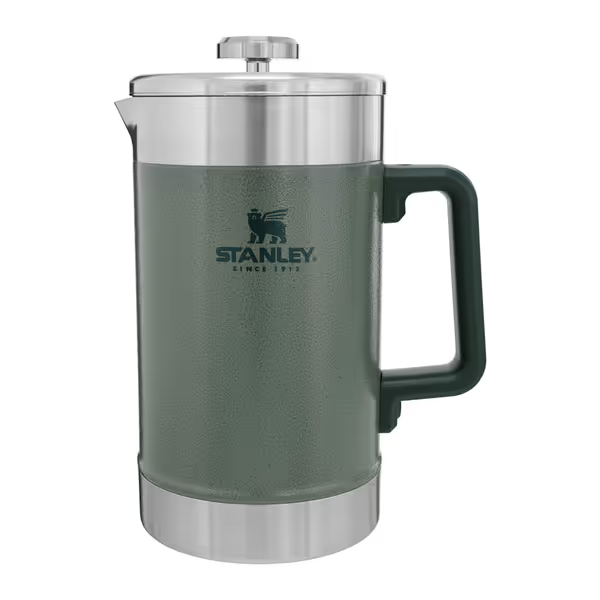
The Stanley Classic Stay-Hot French Press exemplifies this (its BPA-free steel construction laughs at -20°F or 120°F), and the mesh plunger handles gritty desert sand without jamming. If maximum heat retention matters, our vacuum-insulated French press deep dive compares how double walls keep coffee hot in real-world cold. Meanwhile, the GSI Ultralight Java Drip shines for minimalist trails where every ounce counts, though its nylon filter requires extra rinsing in mineral-heavy water.
| Condition | Water (mg/L) | Ratio | Grind Size | Steep Time | Critical Action |
|---|---|---|---|---|---|
| Arctic | 150 | 1:15 | Coarse +1 click | 3 min | Pre-heat carafe empty |
| Desert | 100 | 1:15 | Coarse +2 clicks | 3.5 min | Shield water from direct sun |
Adjust nothing else for your first brew. Taste notes are non-negotiable: jot down one sensory descriptor per variable. Example: "Grind +1: brighter acidity, less muddy texture." Small notes create big clarity.
French press travel isn't about conquering the elements; it's about syncing with them through deliberate, incremental choices. When you stop fighting the variables and start framing them, your press becomes a lifeline. Next time you're brewing under a frozen sky or a blazing sun, remember: mastery isn't in the gear. It's in the one knob you turn, the one note you taste, the one step you take toward a cup that grounds you.
Ready to stress-test your dial-in? Grab our free Extreme Condition Water Mineral Guide, packed with mg/L baselines for 50+ global water sources. Because the best coffee isn't brewed perfectly. It's brewed persistently.