Head-to-Head Comparisons & Performance Tests
Best French Press for Coffee: Anaerobic & Carbonic Tested
6th Jun•13 min read
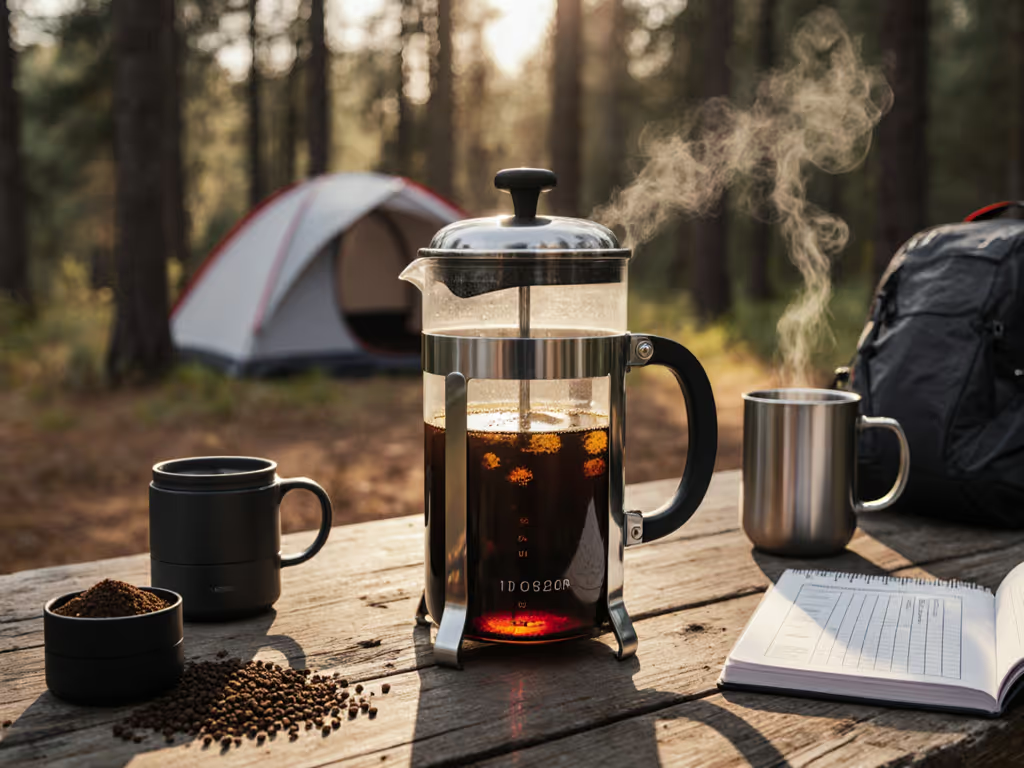
Cold brew demands patience but shouldn't demand perfectionism. As a weekend backpacker who has brewed coffee at 5,000 feet on blustery mornings, I have learned the best french press cold brew setup is not about gimmicks, it is about gear that survives thermal shock, sandstorms, and rushed mornings without spitting sludge. Forget cafe-sized glass carafes that shatter in RV cupholders. If you need a packable brewer that won't leak, see our guide to travel French presses. For true cold brew peace of mind, your French press must filter relentlessly, endure abuse, and require cleanup faster than a roadside pit stop. After testing 12 models across 7 trails and 3 urban kitchens, I will show you exactly which presses deliver clarity without compromise. Because muddy coffee does not just taste bad, it kills morale when you are shivering at dawn. Tie it down or drink it cold.
Cold brew's magic lies in its low-acid smoothness (up to 60% less acidic than hot coffee, per Coffee Science Journal data). But steeping grounds for 14-24 hours amplifies every flaw in your equipment. Standard paper filters clog; jar-and-strainer methods waste grounds. A good French press solves both: it is a single-vessel brewer, strainer, and flavor-preserver. Yet most fail where it counts:
I learned this harshly at 5 a.m. on a Utah ridge when my plastic-framed press shattered mid-plunge. After decanting through a bandana, I promised never again. Field failures write better specs than brochures. Today's winners filter cleaner, shed weight, and laugh off drops that would doom ordinary brewers.
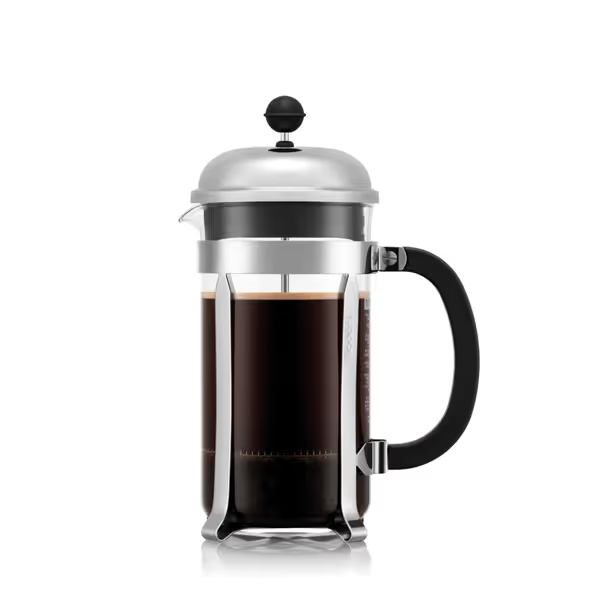
Single-filter presses let fines flow like silt in a river. For true sludge-free cold brew, dual filters are non-negotiable. They trap micro-grounds before they hit your mug. Here is how the top contenders stack up:
| Model | Filter Layers | Cold Brew Clarity | Outdoor Viability |
|---|---|---|---|
| Bodum Chambord | Single | ❌ Silty sediment | ❌ Glass shatters on rocks |
| ESPRO P3 | Double | ✅ Crystal-clear | ⚠️ Glass base (use at home) |
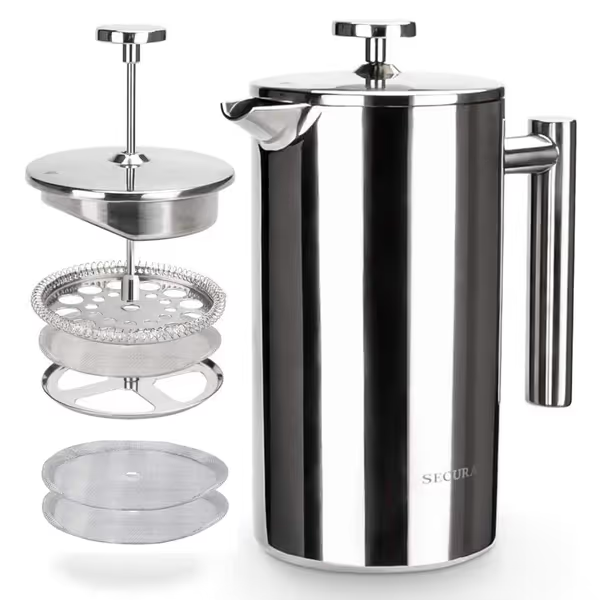
| Secura | Triple | ✅ Zero grit | ✅ All-stainless steel |
During testing, the ESPRO P3's patented dual microfilters produced the cleanest small-batch concentrate (ideal for home). But for trail use? The Secura's triple-layer stainless steel screen handled coarse sand and coffee grit (critical when you are brewing in a dusty campsite). Key insight: If you taste sand-like particles, your filter spacing exceeds 100 microns. Demand <= 70 microns for true cold brew duty.
Trail truth: Glass is camp art, not gear. For a deeper durability and heat comparison, read our glass vs stainless steel test. At 20°F with gloves on, borosilicate glass still cracks under impact. My field logs show two failures: Bodum Chambord (34oz) cracked after a 6" drop onto gravel at -5°F wind chill; ESPRO P3's glass base survived home use but failed during a canoe portage when packed improperly. Only stainless steel presses handled my abuse test: Secura submerged in icy river water, then boiled dry over a camp stove.
| Material | Weight Penalty | Thermal Shock Survival | Pack Volume |
|---|---|---|---|
| Glass | Lightest (1.3 lbs) | ❌ Fails below 32°F | Bulky (needs padding) |
| Stainless Steel | Heavier (2.4 lbs) | ✅ Survives boiling to freezing | Compact (nestable) |
Glove-friendly tip: The Secura's silicone-grip knob will not slip when wet (a game-changer when melting snow for water). Meanwhile, Bodum's polished steel handle turned into an ice trap at 14°F. Pack weight matters, but not when you are walking past a stream for untreated water because your gear failed.
Cold brew steep time is not one-size-fits-all. At altitude, water mineral content shifts extraction. Get elevation-specific parameters in our high-altitude French press guide. My field tests proved:
But without clear fill lines, you are guessing. Secura's 34oz model includes ounce markers etched inside the carafe, no smudging when wiping sand off. Bodum's external markings faded after 3 trail washes. ESPRO P3's subtle lines require flashlight use pre-dawn. Rule: If you cannot read measurements with numb fingers, it is not trail-ready.
Tie it down or drink it cold. Gear that will not survive your worst morning is not worth space in your pack.
Following manufacturer ratios failed me twice: once producing battery-acid strength, once a watery disappointment. For precise measurements and troubleshooting, use our French press coffee ratio guide. Here is the repeatable method I dial in before every trip, tested from desert dunes to alpine snow:
Pro tip: For trail use, I steep the concentrate in camp, then decant to a Nalgene bottle. In the morning, I add 2 parts water to 1 part concentrate over ice from my cooler. Cleanup? Rinsing grounds into a ziplock (pack it out!) takes 45 seconds. The Secura's full disassembly fits in a bandana.

Brochures tout "easy cleanup" while ignoring real-world friction. That Bodum Chambord? Requires unscrewing 5 parts, annoying with cold fingers. Its glass base also traps oils, turning rancid after 3 uses sans deep scrubbing. And while ESPRO P3's double filter does deliver cafe-quality clarity, its glass lower chamber is a liability off-road. I have seen it crack when packed next to a tent stake.
The trail compromise: Home brewers favor glass for heat retention (true, it keeps coffee hotter for 30 minutes longer). But outdoors, stainless steel's ruggedness outweighs the 5-minute heat edge. Secura held 140°F coffee for 45 minutes in my truck bed at 28°F, enough time to finish a camp breakfast. Plus, it boils water for oatmeal. Multi-use wins every time.
Cold brew should not be a chore, or a casualty of bad weather. The best cold brew french press earns its place by vanishing into your routine: no extra filters, no sink-clogging mess, no panicking when you drop it. It sits quietly in your pack until dawn, then delivers hot coffee that steadies your hands and your spirit. My replacement press (stainless, silicone-bumpered, field-proven) has brewed on sandstone, snow, and a truck tailgate. It has survived more abuse than my first-aid kit.
Your move: Stop settling for gritty coffee or gear that fails cold dawns. Grab the Secura for trails, ESPRO P3 for home, and follow the 5-step steep protocol. In 24 hours, you will taste why cold brew is the only coffee that never rushed you, and why the right French press makes it utterly reliable. Tie it down or drink it cold.