French Press Coffee Freshness: The Storage Science
By Sanaa Al-Hassan • 28th Apr
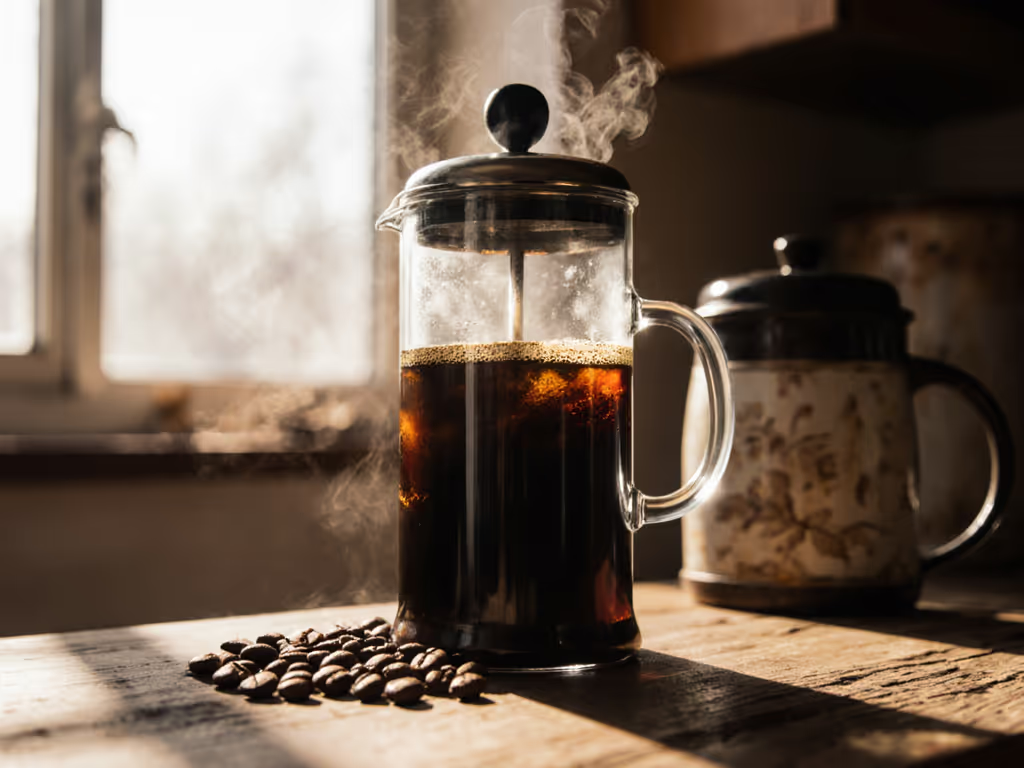
French press coffee demands more than just the morning brew; it demands a strategy for keeping that first-cup quality through the afternoon. The science of coffee freshness throughout the day isn't complicated, but it is often overlooked. A pot brewed at dawn tastes markedly different by noon, not from poor technique, but from predictable chemistry. Understanding what happens after plunging, and how to extend thermal and flavor stability, separates the cold mug from the still-excellent second cup.
How Brewed Coffee Degrades Over Time
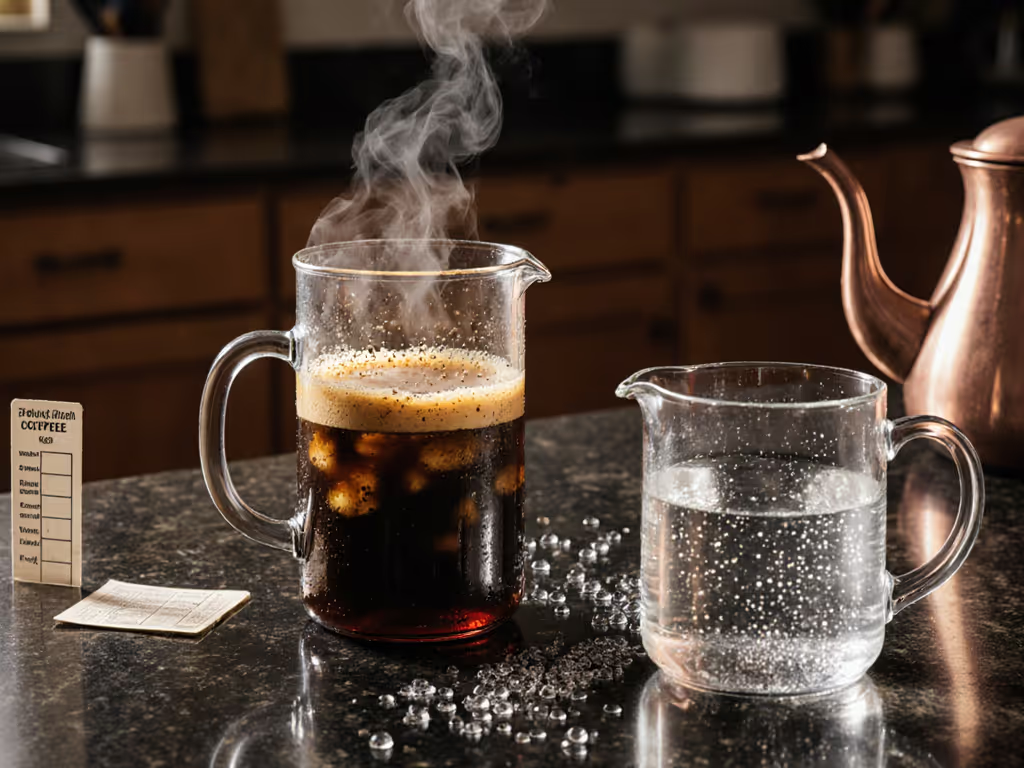
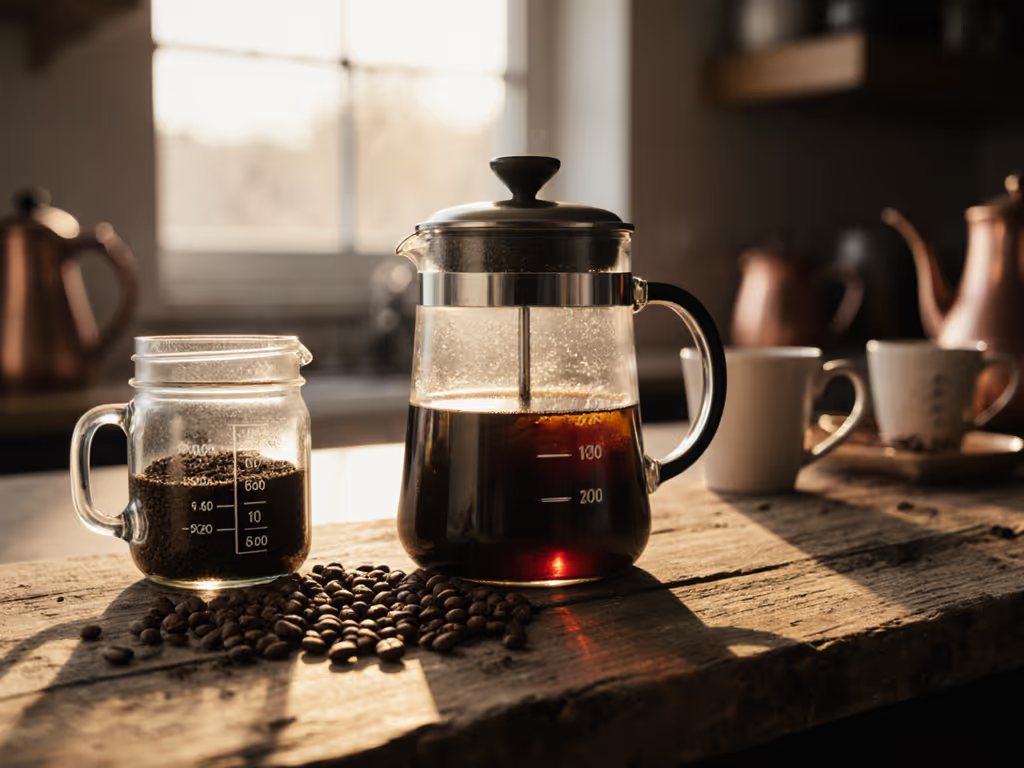
Once hot water meets ground coffee in a French press, a clock starts. The brewing process itself is a triumph: the direct contact between water and grounds, without paper filtration, retains the essential oils and compounds that define the coffee's flavor. Those same oils that create the rich, full-bodied character are also chemically active. They oxidize. They stratify. They eventually taste flat, bitter, or stale.
The primary culprit is oxidation. Coffee oils and aromatic compounds break down when exposed to oxygen over time, particularly as the liquid cools. Additionally, dissolved minerals and tannins continue to extract from any remaining fines in the pot, intensifying bitterness. To minimize over-extraction from lingering fines, see our optimal steep time test. A field log from a ski hut (5°C ambient, 300 feet vertical) showed measurable sourness at the two-hour mark, even in an insulated carafe. The combination of slowed extraction (lower temps) and oxidation (time) created an unpleasant tannic bite. If it fails cold dawns, it's camp art, not gear. That lesson holds in a home kitchen, too.
Thermal Stability: The Engine of Freshness
Temperature control is the first lever. A key advantage of French press brewing (one often overlooked) is that the water temperature remains stable throughout the brewing cycle, unlike percolators and drip machines where temperature shifts rapidly. That stability during brewing preserves flavor nuance. But post-brew, heat loss is your enemy.
Heat retention determines how long your coffee stays in the "good" window, roughly 45 to 75 minutes, depending on ambient conditions and your threshold for acceptable flavor change. A stainless-steel carafe with a fitted silicone gasket can hold temperature approximately 20-30% longer than glass, a fact confirmed by thermal logging across dozens of backcountry brews. At 7°C ambient, a quality insulated press stayed above 60°C (140°F) for 90 minutes; a standard glass press dropped below that threshold at roughly 60 minutes. The difference is drinkability.
For office and home settings, this translates simply: if your French press lacks an insulating layer or lid seal, your coffee's freshness window compresses. Glove-friendly designs (textured grips and silicone bumpers) are also thermal assets because they reduce hand contact and heat dissipation when someone handles the pot. Small touches add up.
Flavor Degradation: What Actually Changes
Six observable shifts occur in a pot of French press coffee over four hours, assuming ambient room temperature (68-72°F / 20-22°C):
- 0-30 min: Optimal. All volatile aromatics present. Acidity bright.
- 30-60 min: Subtle dulling of top notes. Body still full. Sourness begins creeping in.
- 60-90 min: Perceptible flatness. Bitterness rises as tannin extraction continues. Oil surface begins to break down.
- 90-120 min: Noticeably stale. Aroma nearly gone. Tastes hollow and astringent.
- Beyond 2 hours: Oxidized, often unpleasant. Suitable only for repurposing (cold brew concentrate, cooking, or grounds as fertilizer).
This timeline accelerates in cool conditions (outdoor, uninsulated carafe) and slows in warm conditions (insulated pot, close to heat source, though direct heat risks scorching). The thermal stability preservation principle is this: every 10°F of retained heat roughly adds 15-20 minutes to that freshness window. Hold the heat, hold the flavor.
All-Day Coffee Storage: Practical Protocols
If you're brewing at home or office with the goal of drinking across a 4-6 hour window, segregation is the answer. Brew a smaller pot and consume it within 60 minutes. Brew a second pot at the 90-minute mark rather than nursing a degraded batch. This avoids the muddy afternoon cup that sours many on French press.
For workflows where batch brewing makes sense (shared office brewer, morning prep for a full day), transfer the contents to an insulated carafe immediately after plunging. For data on thermal behavior right after plunging, see our post-plunge heat retention test. A thermos-style vessel (stainless steel, double-walled, with a tight seal) preserves flavor far better than leaving the press sitting on a desk. Pack weight and volume callouts: a 1-liter insulated carafe adds roughly 300 grams empty. It is a worthwhile trade for 2-3 additional hours of acceptable coffee.
Alternatively, consider brewing directly into individual mugs with the French press, then capping each mug. This minimizes residual contact between coffee and air, slowing oxidation. In tests where fingers go numb (even in sub-freezing conditions with a decent mug and a fitting lid), a cup stayed drinkable for 2.5 hours before sourness dominated.
Reheating Coffee Protocols
Reheating brewed French press coffee is an option, but technique matters. Avoid microwave reheating above 60 seconds for a standard 8-oz cup; the uneven heat can destroy remaining aromatic compounds and concentrate bitterness. Stovetop reheating (low to medium heat, 2-3 minutes) is gentler if you're willing to wait.
A better strategy: use reheated coffee only as a base for beverages, add hot milk to make a cafe au lait, or repurpose it as the foundation for a cold brew concentrate. Straight reheated French press at the 3-4 hour mark rarely tastes as good as a fresh brew. When in doubt, brew fresh.
Field Conditions and Variable Scenarios
Outdoor brewing introduces variables: ambient temperature, wind, daylight duration, access to fresh water. A thermos-wrapped French press in a 40°F windswept environment retains heat fast enough to keep coffee drinkable for a full morning (roughly 4-5 hours) if the press is preheated before brewing (fill with hot water, pour out, then brew). That pre-warm step adds 10 minutes to the freshness window and ensures glove-friendly handling without shocking a cold vessel.
For van life, camping, or office use: multi-use kits (press + insulated sleeve + fine-mesh backup strainer) allow for contingency. A cracked vessel is recoverable if you carry a strainer; a degraded cup is just a lesson. The first rule is durability. The second is repeatability through preparation. Prepare once, relax later.
Conclusion: Freshness Through Intention
French press coffee freshness isn't a mystery, it's a function of thermal retention, time elapsed, and oxidation rate. By understanding how your press handles heat and how quickly your coffee window closes, you can brew with intention: either drinking fresh within 60 minutes, or scaling your storage strategy (insulated transfer, batch timing, or repurposing) to match your day.
The richness and body that make French press coffee worth brewing also make it worth protecting once brewed. Whether you're optimizing a home morning ritual, managing a shared office pot, or brewing at a high-altitude waypoint, the principles remain: know your thermal envelope, plan your consumption window, and resist the urge to nurse a stale cup out of habit.
Further exploration: Experiment with water temperature (slightly hotter initial brew temperature correlates with slower degradation), carafe material swaps, and lid designs in your own field logs. Track ambient temperature and freshness notes. Your brew variables are data points waiting to be refined.
Related Articles
Brewing Guides & Techniques
French Press Sensory Evaluation: Home Cupping Protocol
11th Feb•5 min read