Basics, Care & Context
French Press Extraction Science: Why Your Cup Tastes This Way
6th May•11 min read
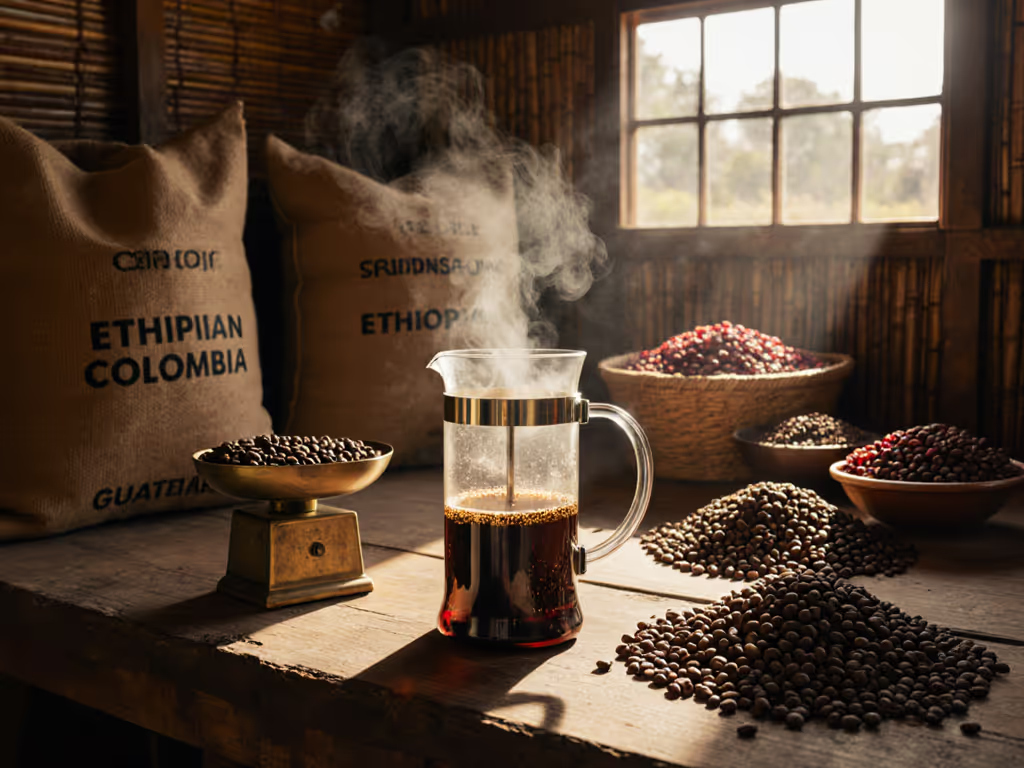
If you care about french press terroir and precise coffee origin expression, you are already ahead of the average press user. You know that Ethiopia shouldn't taste like Brazil, and a washed lot shouldn't behave like a natural. The open question is simple: does immersion help you taste those differences, or does it blur them into warm, pleasant noise?
If it can't repeat, it can't be my daily driver.
This FAQ is a test-forward look at what a french press coffee does to origin signals, which variables matter, and how to design brews that let terroir through instead of sanding it down.
In wine, terroir is the set of environmental and agricultural factors that give a region its distinct character: climate, soil, altitude, farming practices, and how they interact with the plant variety. Coffee borrowed the term later.
For specialty coffee terroir, think of three layers working together:
Those upstream factors show up as differences in coffee flavor profile: acidity type, sweetness character, aromatics (floral, fruity, nutty), and structure (how the flavors hang together).
Terroir does not guarantee "better"; it predicts distinct. The question for coffee using french press is: does your brew method preserve those distinctions or overwrite them with its own signature?
By design, a French press is an immersion brewer: ground coffee soaks in hot water for several minutes without percolation through a paper filter. You separate liquid from grounds with a metal mesh plunger rather than a fine paper or metal filter.
Mechanically, that means:
Those three features shape flavor:
Each of those can either reveal or bury terroir signals depending on your controls. To see how insulation affects this, check our heat retention comparison of insulated French presses.
It can. But it doesn't have to.
Immersion (done carelessly) tends to:
That combination can compress differences between origins into a similar "dark, heavy, slightly muddy" profile. If every cup ends up as thick chocolate and bitterness, you will struggle to notice whether the beans were bright Kenyan or mellow Colombian.
But immersion also has unique advantages for terroir:
The brews that bury terroir tend to be the ones where key variables are uncontrolled (grind spread all over the map, wide water temperature swings, and plunging that re-agitates fines at the end).
Control your inputs, earn your cup.
Many people worry that french press coffee is "too muddy" for expensive beans, a concern you can see in community debates about whether French press is worthy of fancy, freshly roasted coffee.
My position, after running controlled comparisons: it depends more on your grinder and water than on the press itself. Start by dialing minerals with our French press water balance guide to keep origin acids vivid, not harsh.
In a week of bad weather I logged 60 brews across three presses, tracking TDS and temperature drop minute by minute. The prettiest pot on the counter struggled to produce two sweet cups in a row with one grinder, while a scuffed steel workhorse delivered consistent, origin-distinct cups with another. The variable wasn't the press; it was grind quality and heat retention.
If your goal is coffee origin expression:
Ranked for impact on origin clarity:
These are the levers that decide whether you taste place, or just "generic strong coffee."
Use this as a terroir-forward baseline for a single 350 to 400 ml mug:
What this does for terroir:
If a washed high-altitude Ethiopian still doesn't read as floral or citrusy with this, suspect your grinder or water, not the press. Then improve particle consistency with our French press grind guide to eliminate muddiness.
In broad, testable terms (assuming good beans and a competent grinder):
High-acid, high-altitude coffees (e.g., East Africa, some Central America)
Immersion tends to turn sharp edges into rounder, juicier acidity if contact time and temp are controlled.
Over-steeped, they quickly become pithy and bitter, with terroir drowned under generic "strong."
Lower-acid, chocolate/nut-forward coffees (many Brazils, some lower-altitude origins)
French press amplifies body and chocolate traits.
These cups can survive mildly sloppy technique and still taste pleasant but may make different Brazils feel more similar to each other.
Fermentation-driven naturals and experimental lots
Immersion often supercharges fruitiness and aroma, sometimes to the point of imbalance.
If every natural tastes like "fermented fruit bomb" in your press, try cooler water (90 to 92 C) and coarser grind to re-balance towards terroir rather than just processing.
The pattern: immersion is a magnifier. If your controls are tight, it magnifies origin. If they are loose, it magnifies generic traits (body, bitterness, fruit funk) at the expense of place.
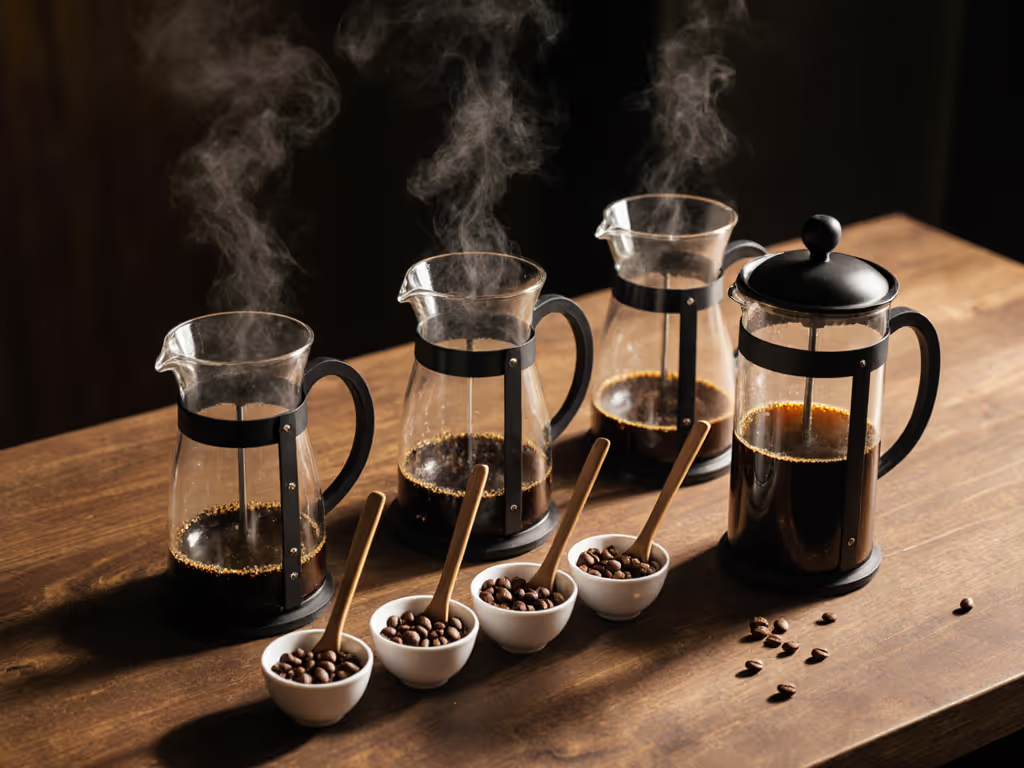
Use a simple three-brew diagnostic with one grinder and one water source:
Log basic data (g, C, minutes, water source). If you want objective numbers, follow our extraction yield guide for home setups. If you change only one variable at a time and still can't taste meaningful differences between origins, the bottleneck is not the French press; it is either grind quality, severely off water chemistry, or heavily aged beans.
Keep the action list short and testable: For a structured comparison at home, try our African vs Latin American field test protocol.
The goal is not chasing the "perfect" cup; it's building a system where a Kenyan tastes Kenyan, a Brazil tastes Brazilian, and they taste that way every weekday morning.
In other words: Control your inputs, earn your cup. When you do, a French press stops being the enemy of terroir and becomes a surprisingly honest lens on it.