How to Measure French Press Extraction Yield
By Priya Deshmukh • 19th Feb
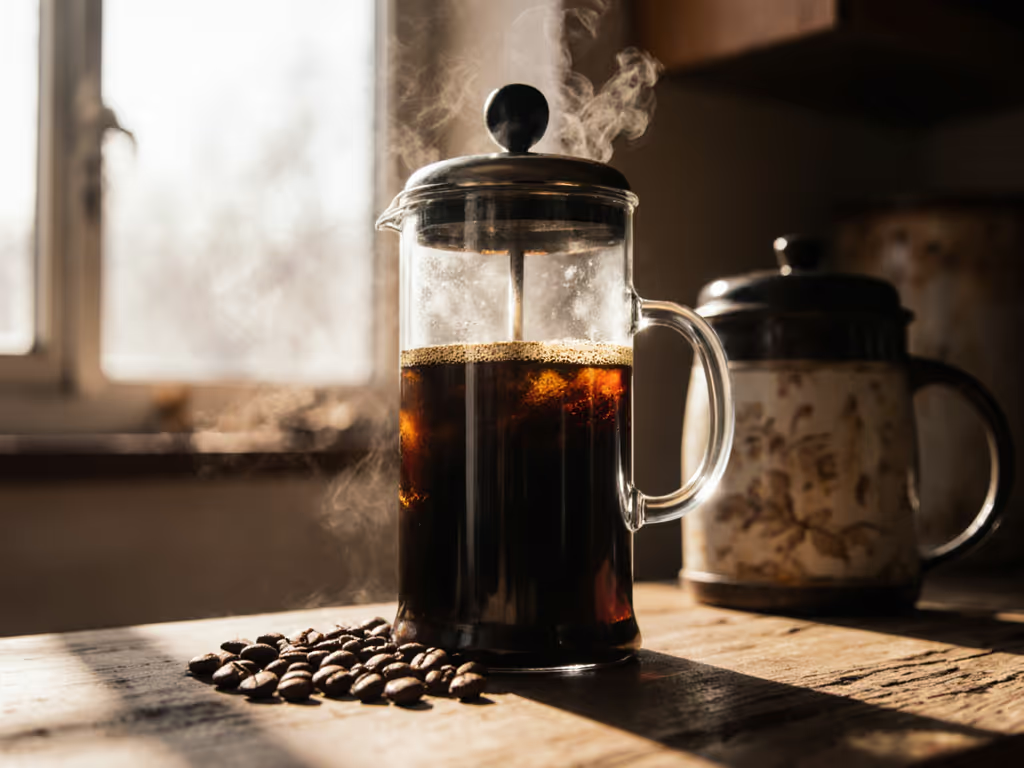
Understanding french press extraction yield and how to measure coffee extraction transforms your morning routine from guesswork into deliberate technique. This guide walks you through the practical why behind extraction measurement, what tools you actually need, and how to build a repeatable baseline for your mug size and water, all without gear theater.
Why Measure Extraction Yield at All?
Extraction yield is the percentage of your ground coffee that dissolved into your final cup. Think of it as a conversation between water and grounds: too little time or contact, and you're left with sour, thin coffee. Too much, and you get bitter, muddy sludge.
For a french press coffee, the optimal extraction yield typically falls between 20% and 30%, a broader, more forgiving window than espresso (18-22%) or pour-over (18-24%).[2] That latitude is one reason people love immersion brewing: the method is inherently hard to sabotage if you stay within guardrails.
But here's what matters most: without measurement, you're tasting the same variables every brew. Grind, dose, water temperature, steeping time, they all shift flavor. Measure extraction yield, and you gain clarity on what actually moved the needle. I watched a friend once chase perfection by changing three things at once (grind, dose, and water), then declare the press inconsistent. We reset: one ratio, one grinder click, taste notes written down. Two brews later, their sweet spot emerged. That afternoon cemented my approach: fewer variables, clearer wins, happier mornings.
What Tools Do You Need?
The Essential Instrument: Refractometer
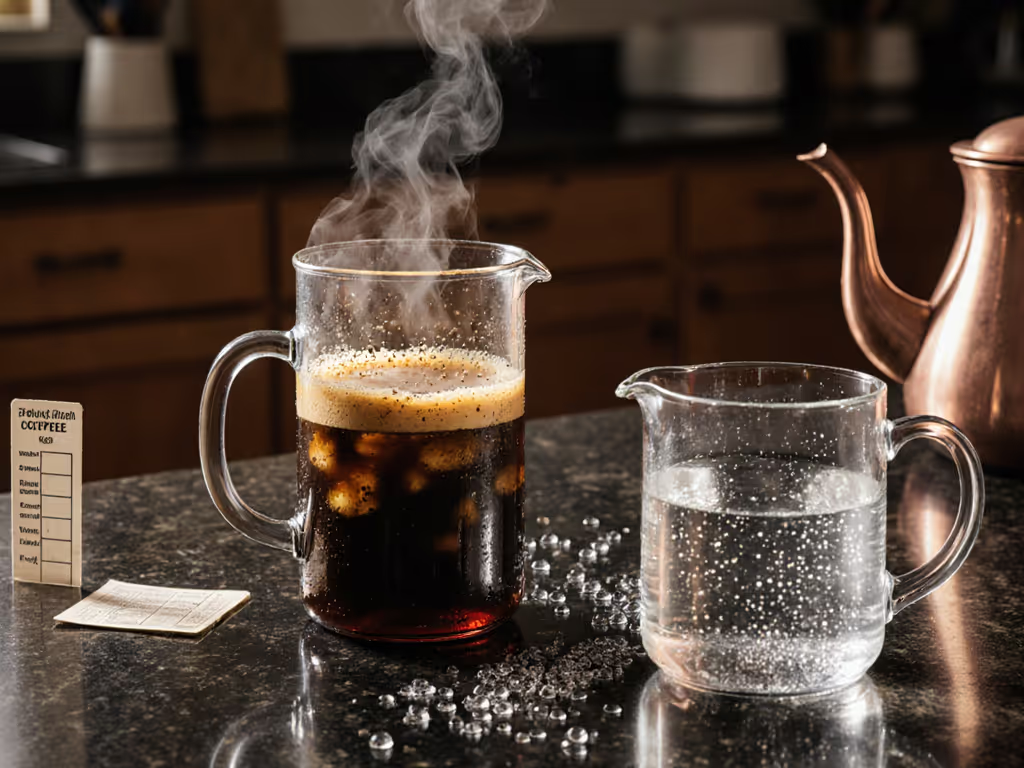
A refractometer is the gateway tool. It measures Total Dissolved Solids (TDS), the concentration of coffee solubles in your cup, expressed as a percentage.[1][3] You place a few drops of cooled brew on the lens, wait for a stable reading, and that number tells you how "strong" your extraction was.
You don't need an expensive model. Many household versions cost under $30. Professional coffee refractometers (like the VST Coffee Lab III mentioned in industry guides[1]) run higher but aren't mandatory for home baseline work. A basic kitchen or aquarium refractometer works fine to start.
Secondary Data You'll Record
Measurement isn't just the refractometer reading. You'll also need:[1][3]
- Dose: weight of dry coffee grounds (in grams)
- Brew Water: total weight of water added (in grams)
- Brew Mass: weight of liquid that ended up in your cup (in grams)
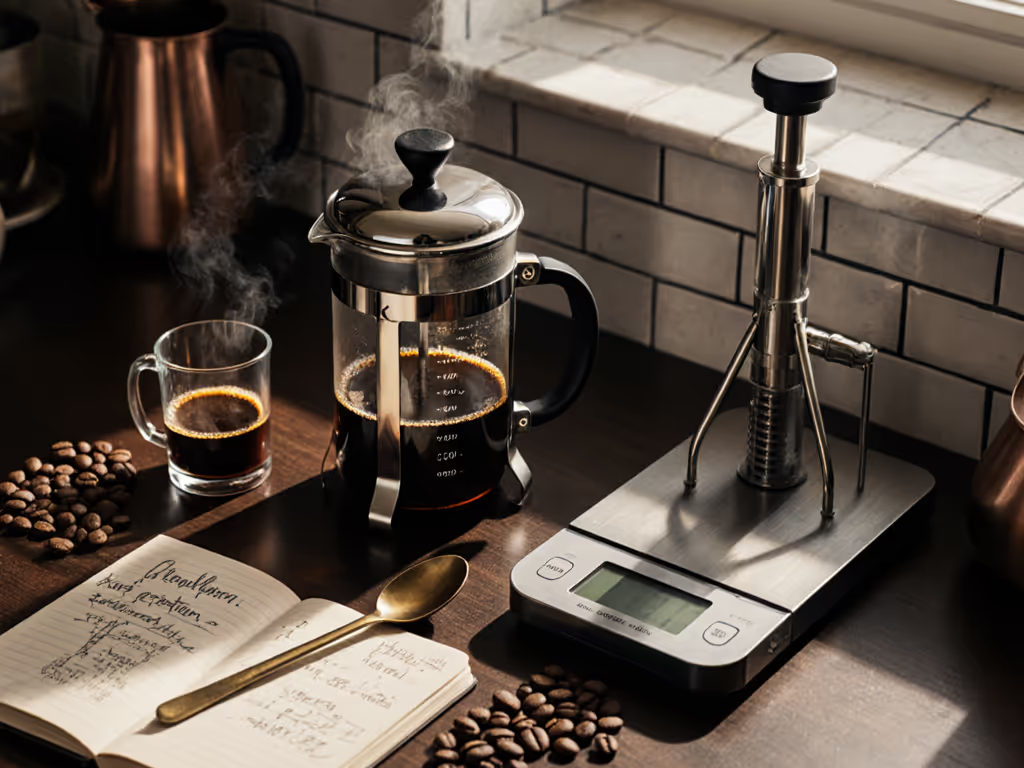
A small kitchen scale (usually $15-25) handles all three. Weigh your ground coffee before brewing, weigh your water as you pour, and weigh your final cup after pressing.
The Extraction Formula (Simplified)
Once you have TDS percentage from the refractometer and your three weights, the math is straightforward:
Extraction Yield (%) = (Brew Mass × TDS%) ÷ Dose
For example: if your 30g dose produces a 300g cup with 1.5% TDS, your extraction yield is (300 × 1.5) ÷ 30 = 15% extraction.
If that number feels low (it is). You'd want to aim for 20-30% for french press.[2] That tells you to either increase steeping time, use finer grounds, or boost your water temperature slightly. For a data-driven look at timing, see our optimal steep time test. One knob, one note.
How to Sample and Measure TDS
The Unfiltered Method (Simplest)
For home work, unfiltered sampling is fastest:[1]
- Stir the brewed coffee vigorously for 10-15 seconds after pressing. This ensures an even slurry.
- Draw a sample into a small pipette or syringe (3-5 mL is plenty).
- Dispense a few drops onto the refractometer lens, just enough to cover the surface. Close the lid.
- Wait 10-20 seconds for the sample to cool and stabilize to room temperature.
- Take readings repeatedly until the number on the scale stops changing. Ignore the first reading or two; the refractometer is equalizing. When it holds steady for 5+ consecutive readings, that's your TDS.
Do not average multiple readings.[1] The stable final number is your data point.
If Sludge Bothers You: Syringe Filter Method
If you want to exclude suspended fines (the cloudy particles that give sludge its gritty texture), use a syringe filter attachment:[1]
- Draw cooled brew into a syringe.
- Screw a fine filter (VST or similar) onto the syringe tip.
- Push the coffee through, discarding the first 10 drops.
- Collect the filtered sample in a small cup.
- Proceed with refractometer measurement as above.
This method takes slightly longer and requires a filter (~$5-10 per pack), but it gives you a clearer picture of dissolved solids independent of grit. To understand how filtration affects cup clarity, read our single vs double filter test.
Building a Baseline: The Single-Variable Approach
Now that you know how to measure, here's how to use measurement to dial in your press:
Start with Ratio and Time
For a modern french press, a standard baseline is 1:15 ratio (one gram of coffee to 15 grams of water).[6] For common mug sizes:
- Single mug (8 oz / ~240 mL): 16g coffee + 240g water, 4-minute steep
- Two mugs (12 oz / ~360 mL): 24g coffee + 360g water, 4-minute steep
- Larger batch (16 oz / ~480 mL): 32g coffee + 480g water, 4-minute steep
Brew one pot using this baseline. Measure extraction yield. If you land in the 20-30% range, you've found a safe anchor.[2] For ratios and temperatures across common mug sizes, follow our French press coffee ratio guide.
Adjust One Variable Per Brew
If your yield is too low (under 20%, tasting thin or sour):
- Increase steep time by 30 seconds, or
- Use slightly finer grounds, or
- Raise water temperature to 200-205°F (if below).
Brew again. Measure. Taste notes. Compare.
If your yield is too high (over 30%, tasting bitter or heavy):
- Decrease steep time by 30 seconds, or
- Go coarser, or
- Lower temperature slightly (if safety and flavor allow).
Don't change grind and time in the same brew. Start with one knob, turn it slowly, taste on purpose.[1] The clarity compounds fast.
Water Minerals and Extraction
One subtle variable people overlook: water mineral content affects extraction rate. For troubleshooting by water chemistry, see our water mineral balance guide. Hard water (high dissolved minerals, typically 150-300 mg/L of total hardness) extracts faster and can push toward over-extraction. Soft water (under 50 mg/L) extracts slower and may require longer steep or finer grounds to reach 20-30%.[2]
You don't need to test your water's mineral profile with lab equipment. Instead, observe: if your baseline tastes consistently flat despite good TDS numbers, try filtered or bottled water. If it turns bitter even at shorter steep times, you may have hard tap water, and a simple pitcher filter can shift behavior noticeably.
Putting It All Together
The guardrail for french press extraction is wide, which is a gift. A 22% yield (middle of your range) is very hard to botch. But the act of measuring (weighing dose, recording TDS, tasting alongside numbers) builds intuition. After a few weeks of one-variable brews and notes, you'll stop needing the refractometer for daily coffee. You'll recognize the look, feel, and taste of your 22% cup, and your hands will dial it in on instinct.
That's the goal: measurement as a teacher, not a crutch. Use the scale and refractometer to close the gap between intention and cup. Once you know your baseline, you're free to vary it with confidence.
Further Exploration
If you want to deepen your understanding, consider exploring how grind uniformity (cone burr vs. flat burr grinders) shifts extraction consistency, or experiment with pre-heating your press before brewing to test whether thermal loss mid-steep changes your yield. For grinder pairing and consistency tips, use our French press grind guide. You might also measure the same beans across different water sources to see firsthand how minerals shape the curve. Each small experiment sharpens your palate and confirms your intuitions, one brew at a time.
Related Articles
Brewing Guides & Techniques
French Press Sensory Evaluation: Home Cupping Protocol
11th Feb•5 min read