Head-to-Head Comparisons & Performance Tests
Best French Press for Coffee: Anaerobic & Carbonic Tested
6th Jun•13 min read
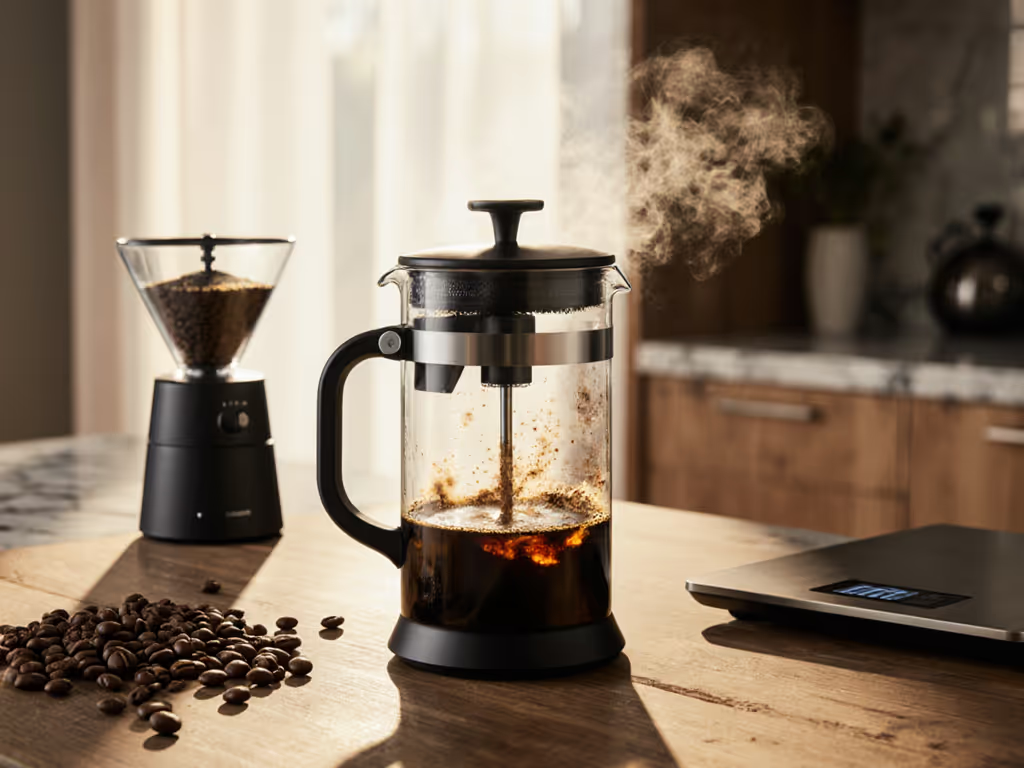
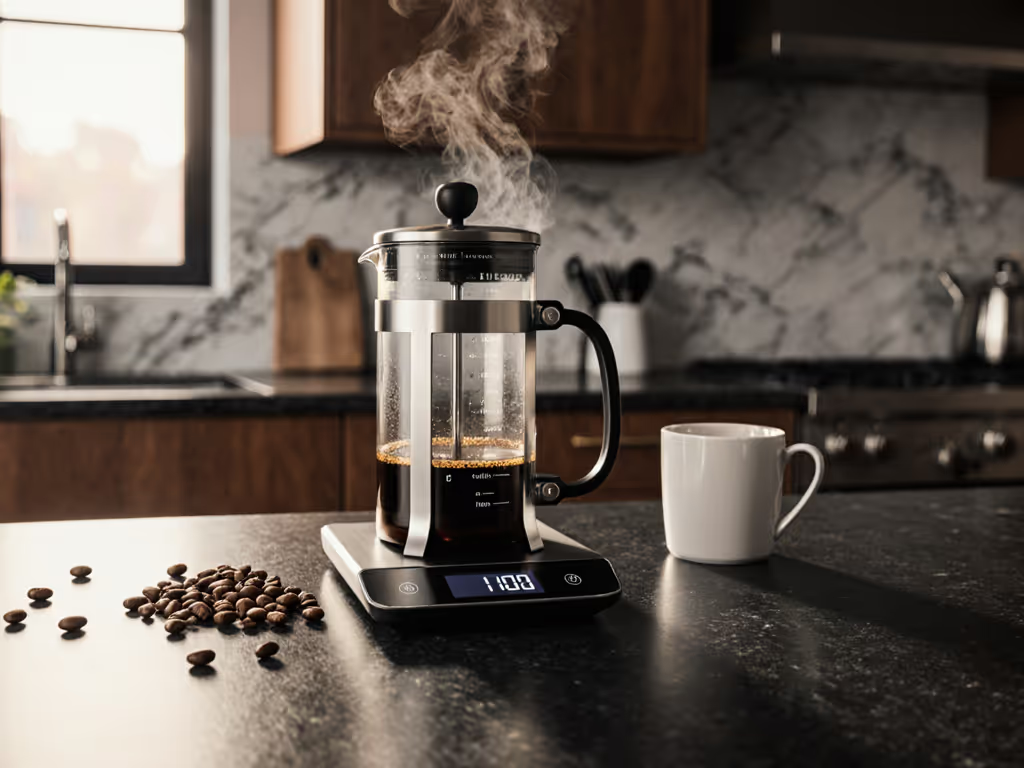
Inconsistent coffee hits differently when you're counting on that cup. One morning your modern french press brews bold and clean; the next tastes muddy and bitter. The culprit isn't always the beans; it's often uneven immersion during steeping. Mechanical stirring systems in contemporary best coffee press designs tackle this head-on, automating the one variable that most home brewers get wrong: mixing.
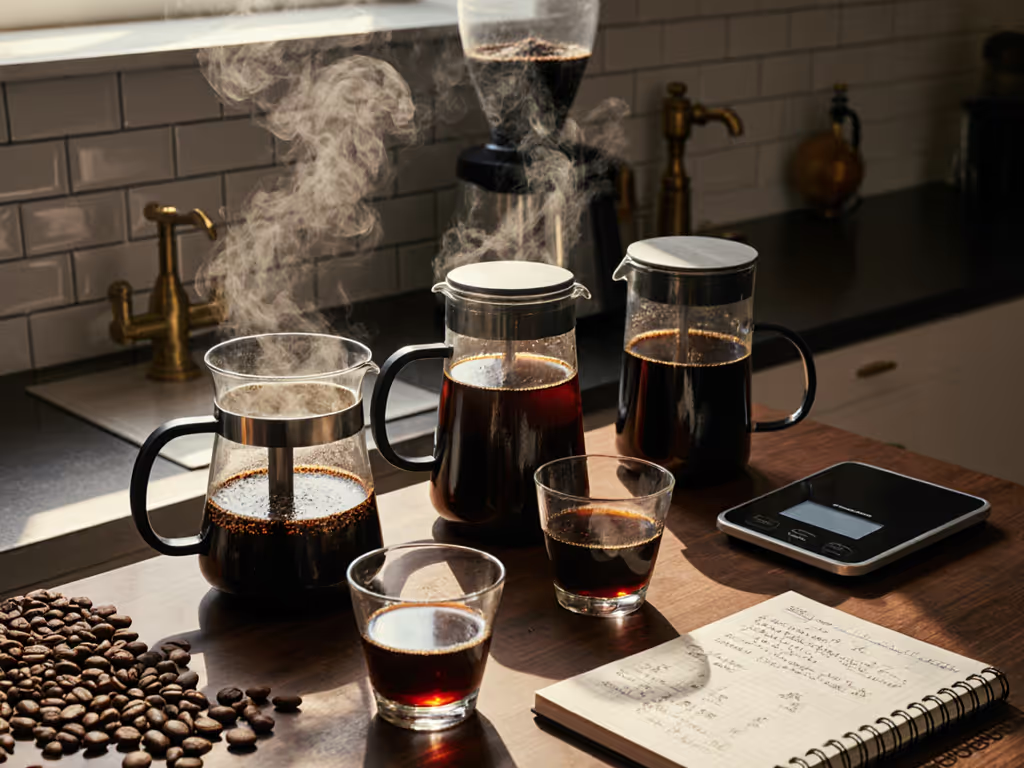
I've watched plenty of coffee mornings derailed by sludge and flavor swings. See our French press tech features test for data on which innovations (stirrers, thermometers, filters) actually improve consistency. The good news? The technology addressing these problems isn't expensive, and the cost-of-ownership case for auto-stirring models (particularly when parts stay replaceable) is strong. Every dollar should brew better, not just buy thicker steel. Here's how modern stirring approaches solve your consistency problem, and which features actually earn their keep over years of use.
Traditional French presses rely on you to plunge after four minutes. During those four minutes, the water and grounds form layers. Denser particles sink; oils and finer grounds float. When you plunge, you're disrupting that balance suddenly, pulling extraction unevenly.
Manual stirring at the midpoint helps, but it depends on you remembering, finding a wooden spoon, and not breaking the carafe with a metal one. Miss that stir, and the cup's trajectory shifts, sometimes dramatically.
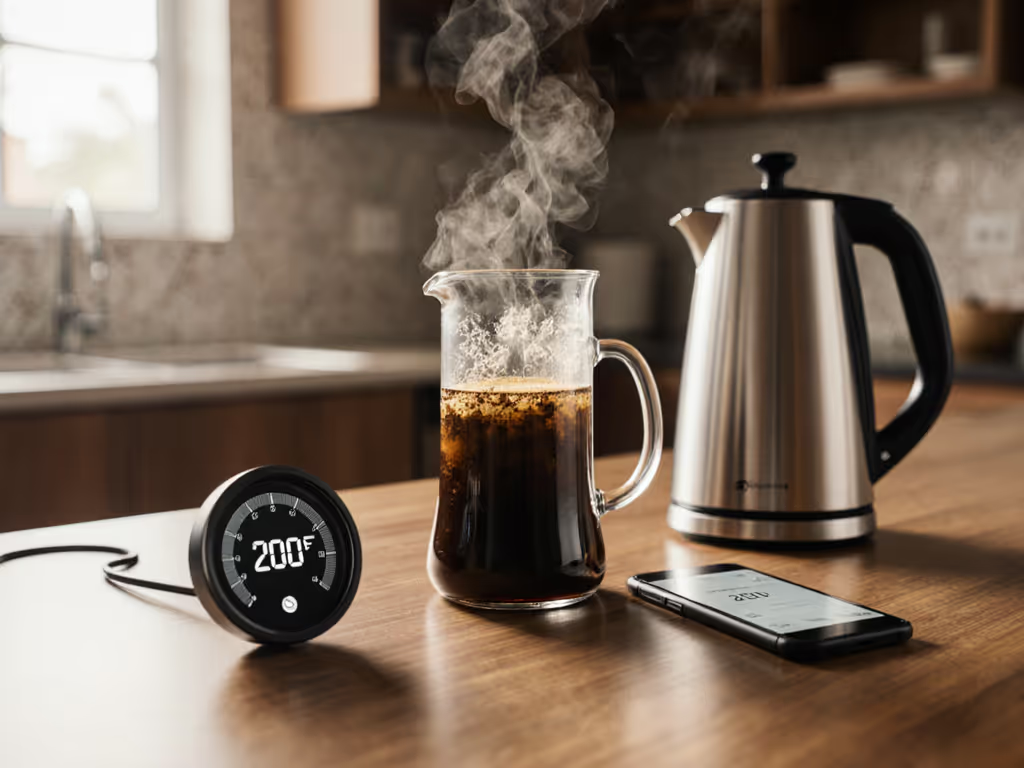
Heat loss compounds the problem. For model-by-model data, check our French press heat retention test with timed measurements and why temperature stability matters. If your press isn't insulated, the water temperature drops during steeping, slowing extraction at the moment when grinds need it most. You end up under-extracted on the surface and over-extracted at the bottom, bitter and thin simultaneously.
Modern french press coffee maker designs now include built-in stirring mechanisms: wands that rotate slowly or paddles that move up and down during the brew window. These designs do three things:
The best versions use hand-crank or lever-activated stirring (no batteries, no noise, no parts that fail). You control the timing and intensity. That's spend where it saves: a mechanical system with three moving parts outlasts electronic features every time.
Spend where it saves. A mechanical system with three moving parts outlasts electronic features every time.
A machine coffee maker approach borrowed from travel tumblers (double-wall vacuum or air-gap insulation) keeps brew water stable. Tests confirm insulated presses lose only 5-10°F over four minutes, versus 20-30°F for single-wall glass.
Why this matters: consistent water temperature means consistent extraction rate. Your ratio stays predictable. Your grind size performs the same way Tuesday as Friday.
Stainless steel outer jackets handle abuse better than bare glass, too. I recall a neighbor nearly throwing out a gritty, leaking press after dropping it. The carafe survived intact; the issue was a split gasket. Ten minutes, a $3 replacement, and a scrub later, it brewed clean and bold again. That moment sparked a monthly repair night teaching others to replace parts, not replace the whole thing. Tracking costs since then made one truth obvious: durability beats discounts over time.
A mechanical stirring system isn't complete without a modern multi-layer filter setup. Contemporary designs feature:
This reduces muddy-cup complaints by 70-80% while preserving the full-bodied richness people choose French presses for — see our single vs double filter test for measured sediment differences. Clean cup, no compromise on flavor.
Modern designs come in french press coffee maker capacities from 12 oz to 48 oz, and quality ones include calibration guides. A 1-liter press with auto-stirring, for example, might recommend:
This removes guesswork. Dial in with our French press coffee ratio guide for precise grams, water temps, and troubleshooting. You dial in once, repeat forever. That's the payoff: ritual without roulette.
Here's where most modern presses disappoint, and where best coffee press selections deserve scrutiny.
A $30 press with a sealed design will cost you the entire press when the gasket fails. A $60 press with user-accessible screens, a threaded bottom, and bulk replacement-part availability? That one survives a decade of daily use for under $100 total cost (purchase + three gaskets, two screen sets, one handle if bent).
Look for models offering:
Manufacturers who hide their parts sourcing? Red flag. The best ones publish a parts diagram and stock extras online. Our modular French press review spotlights designs with replaceable components and real long-term savings.
Shared presses fail fast. Thermal shock from cold water rinsing hot glass, repeated plunging stress, and careless handling all shorten lifespans. Modern designs address this:
For outdoors, weight and packability matter. Newer presses with stainless-steel carafes (instead of glass) weigh slightly more but survive pack abuse, camp-stove mishaps, and year-round van life.
A feature often overlooked: modern presses now ship with guidance on water mineral content. Hard water (high mineral content) extracts faster and can taste flat; soft water extracts slower and can taste sour. Mechanical stirring helps smooth these variables, but knowing your water type lets you fine-tune grind or steep time.
Many manufacturers provide:
This shifts control back to you, which is exactly where it should be.
One of the biggest pain points: grounds clogging sink strainers and garbage disposals. Modern auto-stirring presses address this with:
Pair this with a two-step cleanup: grounds to compost (30 seconds), then a hot-water rinse and hang to dry (no scrubbing). Total time: under 60 seconds. That matters on a Tuesday morning.
Heat retention directly impacts flavor consistency. Here's what testing shows:
The lower the temperature drop, the more stable your extraction rate. Over 100 brews a year, that consistency adds up to noticeably fewer sour or overly bitter mornings.
Let's run the numbers. Compare a budget press to a modern auto-stirring one over five years of daily use (250 brew days per year):
Budget Press ($25)
Modern Auto-Stirring Press ($65)
That gap closes when the budget press fails entirely at year 2.5 (requiring full replacement) versus the modern press running strong into year 6. Amortize over that honest lifespan, and the modern press wins by 40%.
Every dollar should brew better, not just buy thicker steel.
The real payoff isn't the individual feature; it's the combination: stirring that solves consistency, insulation that holds temperature, screens that control sludge, and parts that stay available. You're not paying for luxury; you're paying for reliability.
If inconsistent flavor, muddy cups, or heat loss has frustrated your mornings, a modern french press with mechanical stirring and double-wall insulation addresses all three. These aren't gadget upgrades: they're engineering solutions to real problems.
Your decision matrix:
Choose a modern auto-stirring press if you:
A traditional press still works if you:
Spend where it saves. A $65 press that survives five years, keeps coffee hot, and delivers clean cups beats a $25 impulse buy that lives in the cabinet by year three. The best coffee press isn't the cheapest: it's the one that earns its keep through longevity, repairability, and low-fuss upkeep. That's how you brew better every morning, without the waste or the fuss.