Head-to-Head Comparisons & Performance Tests
Best French Press for Coffee: Anaerobic & Carbonic Tested
6th Jun•13 min read
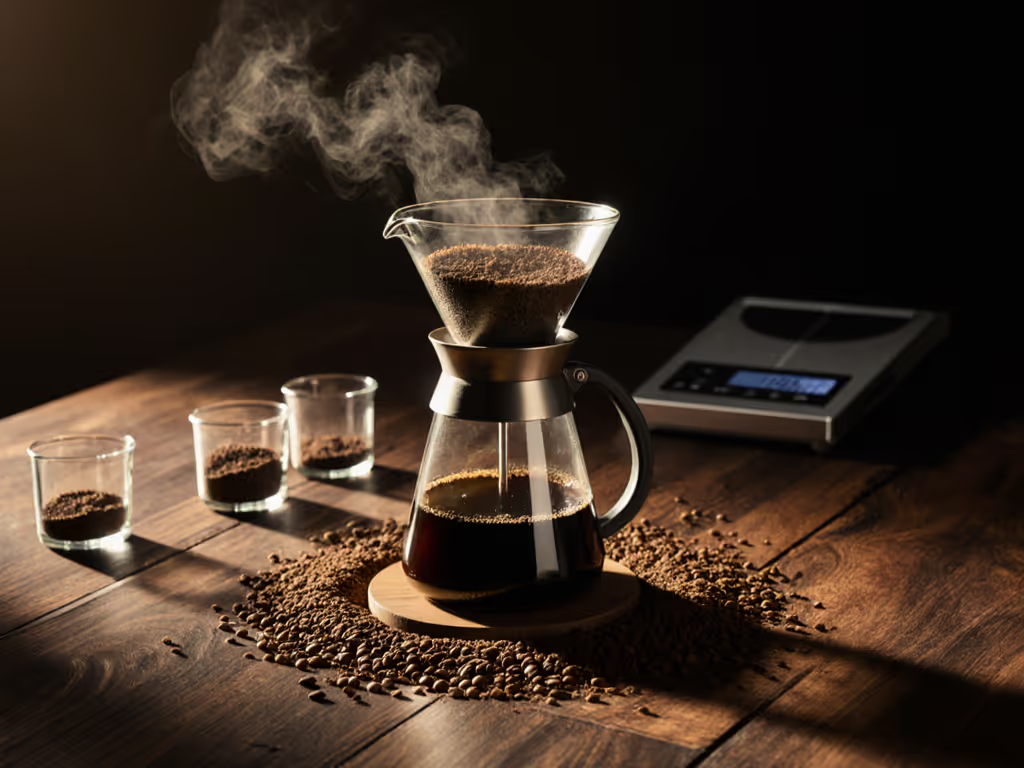
Yes, but not in the way most people try it. When you brew French press coffee ground finer than traditional coarse, you're testing the limits of your filter specification, water mineral profile, and plunge discipline. The outcomes depend on controlling variables that most brewers leave unmeasured. Variables first, story second: if your filter is genuinely 200-250 microns (the serviceable range), your grinder produces consistent particle size, and your water hardness sits between 80-100 mg/L, you can execute a repeatable cup with medium-coarse grounds. For a deeper look at mesh sizing, see our French press micron ratings guide. Fine grounds in a French press? The data says it's possible, but only if the press, grind consistency, and brew sequence stay locked.
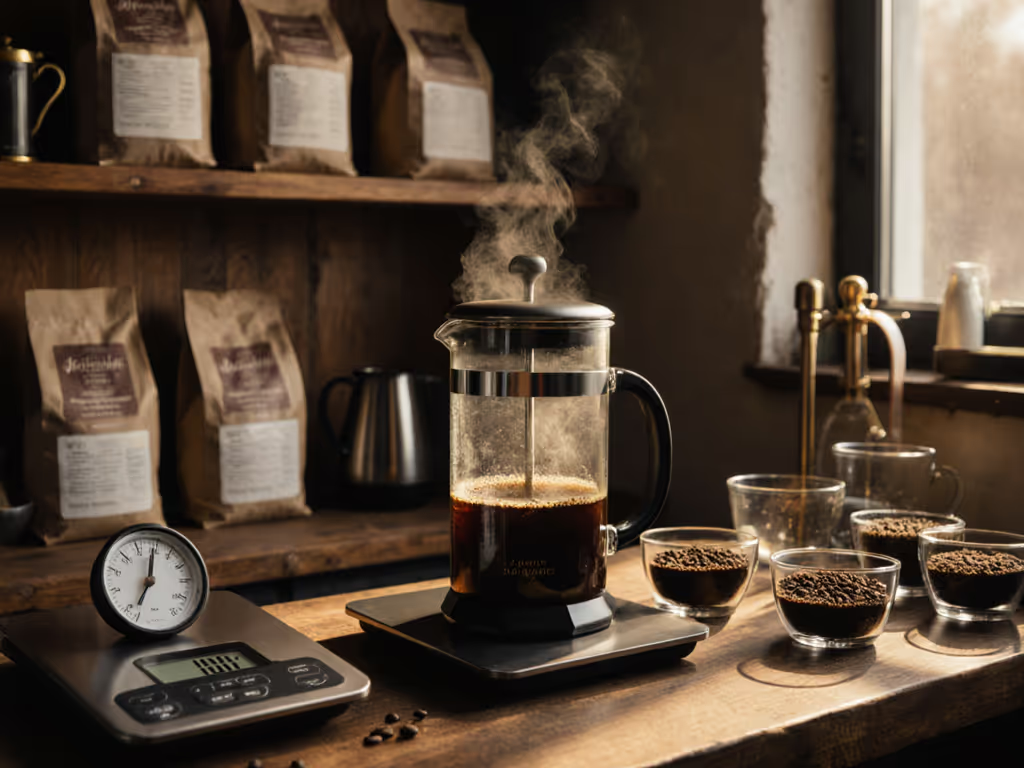
This is the question that matters. I spent a rainy week logging 60 brews across three presses: one expensive and sculpted, one an industrial workhorse, one buried in a cabinet. I measured dissolved solids (TDS) and temperature drop every minute. The result? The press that looked best couldn't repeat a sweet cup twice. The scuffed one did, every time. The variable wasn't the pot; it was what went into it.
Grind inconsistency is the primary driver of sediment and muddy flavor, more than your filter's nominal micron rating. Here's why:
This is why a dedicated grinder setting for French press coffee outperforms winging it.
The industry standard is a guardrail, not a promise. Most stainless steel filters range from 150-300 microns, but filters below 150 microns often clog (especially with finer grinds), while those above 300 microns allow too many fines through.
The sweet spot is 200-250 microns enough to catch most sediment while preserving the body and aromatic compounds you want.
Filter performance isn't uniform. Some mesh screens have uneven pore distribution, confirmed by filter permeability tests. A dual-layer steel filter typically sits at 150-200 microns and reduces visible sediment by 40% compared to single-layer, but the trade-off is slower flow and potential clogging with finer grinds. For measured results across designs, see our single vs double filter test.
| Filter Type | Micron Range | Cleanup | Sediment Profile |
|---|---|---|---|
| Single-layer steel | 200-250 | Easy, durable | More sediment |
| Double-layer steel | 150-200 | Slower flow | 40% less sediment; clogging risk |
| Perforated disk | 300+ | Fast flow | Noticeable grit |
Yes, measurably. Rushing the plunge creates turbulence that forces fines through the filter and into your cup. A controlled 30-second plunge (or the bloom technique: 30 seconds of saturation, then fill) reduces fines dispersion by allowing CO2 to escape first, settling particles before pressure is applied.
This isn't ritual theater. The plunge is a mechanical variable. If it's inconsistent, your repeatability evaporates.
This is the variable nobody measures but everyone should. Hard water (above 150 mg/L) causes fines to clump and clog filters faster. Soft water lets them slip through. The working range is 80-100 mg/L total hardness, the sweet spot between filter flow and fines retention. For practical adjustments, read our water mineral balance guide.
If your tap water is outside this range, you're either fighting clogging or drinking a grittier cup. Knowing your water chemistry lets you adjust grind fineness accordingly.
Some brewers experiment with medium-coarse grounds and shorter brew times (2:30 instead of 4:00) to accelerate extraction and dial in more sweetness. The trade-off is unambiguous: smaller grounds slip through the filter, and you end up with more sediment in your final mug.
If your modern French press has an ultra-fine filter (12x finer than standard, for example), this trade-off becomes manageable, and you can use medium-coarse without sacrificing clarity. Without that specification upgrade, you're accepting grit as the cost of faster brew time.
Finer grinds expose more surface area, so soluble compounds extract faster. In theory, you get fuller flavor in less time. The catch: with a standard French press filter and uneven grinder output, you also get more fines in your cup.
If you're running a grinder with low fines production (high-quality conical burr at the right setting) and a quality filter, you can run medium-fine grounds at 4 minutes with water at 195°F (91°C) instead of the recommended 200°F. The lower temperature slows extraction and avoids bitterness. The result? A bolder cup that avoids over-extraction's muddy notes.
But here's the guardrail: this works if you've locked down the grinder, water temperature, and filter spec. If it can't repeat, it can't be my daily driver.
Start by defining your variables:
Test the same recipe twice in one week. For exact ratios and temperatures, follow our French press coffee ratio guide. If flavor and silt levels match, you've locked it. If they drift, the variable is still loose.
Capacity doesn't change the grind spec, but thermal mass does. A small French press cools faster, so you'll want to preheat the vessel with hot water before brewing, then discard. For a full-sized press with higher thermal mass, preheating is less critical.
The grind-to-water ratio remains constant (1:15 is the standard). A 12 oz small French press needs 25 g coffee and 375 ml water. A 34 oz press needs 75 g and 1.125 liters. The grind fineness doesn't scale with size.
Fine grind in a French press is worth testing if:
It's not worth the trouble if you're chasing a cafe taste without the discipline to hold variables steady. The influencer shortcut ("just grind finer") ignores the fact that every other lever has to be locked first.
It means your filter's pore distribution is mapped and repeatable, your grinder's fines output is low, and your brew sequence is identical each time. It's not a marketing buzzword; it's a specification you can verify.
Most standard presses don't ship with this transparency. Ultra-fine coffee extraction requires it.
Can you brew fine grounds in a French press? Yes. Should you? Only if you're willing to lock down the grinder, water chemistry, temperature, and plunge technique, and verify repeatability before claiming victory.
The workhorse press beats the pretty one because it's durable enough to survive daily testing and rigid enough to hold temperature. The grind matters more than the pot. The filter spec (200-250 microns, ideally) matters more than the brand. And the variables matter more than the ritual.
Start with coarse grounds and a 4-minute steep at 200°F. Document two brews side by side. If the cup is clean and consistent, you've dialed it. If you want finer flavor, dial the grind down one notch, lower the water to 195°F, and shorten the brew to 3:45. Test it twice. If it repeats, you've earned a finer cup.
If it doesn't repeat, the variable is still loose. Find it, lock it, and try again.
That's the method. It's not glamorous, but it works every time.