
Modern French Presses With Thermometers for Precision Brewing
By Amara Ndlovu • 29th Sep
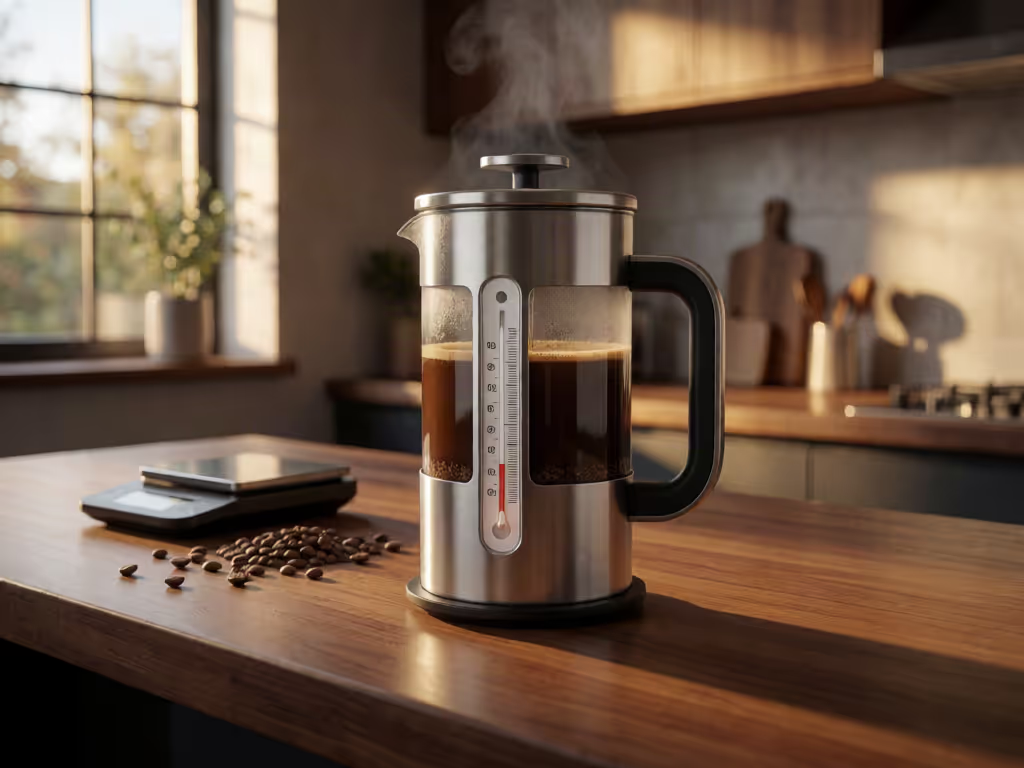
At a glance
The Barista Warrior is the only one of these three presses with a documented built-in thermometer.
- Built-in temperature reference: Choose the Barista Warrior for an in-press temperature reference and a 34-ounce stainless-steel format. Its gauge may support a more repeatable routine, but its accuracy has not been independently verified. View on Amazon
- Best by use case: Pick the Bodum COLUMBIA for documented dishwasher-safe cleanup and insulated simplicity. Choose the ESPRO P7 for its manufacturer-described dual micro-filter; its 32-ounce configuration has a stated 24-ounce minimum brew size.
- What decides it: None of these replaces a consistent method: aim for about 93°C, steep around four minutes, and clean the filter after every use. Verify the Bodum’s capacity and ESPRO’s paper-filter package before ordering.
Important: Only the Barista Warrior is documented as having a built-in thermometer; Bodum and ESPRO are temperature-relevant insulated alternatives, not confirmed thermometer presses.
A modern French press can make your weekday coffee far more repeatable, but only one of the three presses reviewed here has a documented built-in thermometer. That distinction matters. For precision brewing, temperature is one useful variable, while insulation, filtration, batch size, and cleaning determine whether the brewer actually fits your home coffee routine for the long haul.
If you are tired of guessing why one cup is rich and the next is flat, you do not need more countertop gear. You need a stable method and a press whose compromises match your priorities. The National Coffee Association's general French-press guidance is water around 93 ± 3°C (199 ± 5°F) and about four minutes of contact time. Keep those two variables steady, clean the filter thoroughly, and choose the right kind of press for your batch size.
Every dollar should brew better, not just buy thicker steel.
Here is the practical comparison: the thermometer-equipped Barista Warrior for people who want an in-press temperature reference; the insulated Bodum COLUMBIA for straightforward heat retention and dishwasher-safe cleanup; and the ESPRO P7 for buyers focused on a finer filtration system. None is automatically "best." The durable choice is the one you will maintain instead of replace.
1. Start With What "Precision" Actually Means in a French Press
A thermometer cannot correct every source of inconsistency. It can help you repeat your starting temperature, but coffee flavor still shifts when you change the coffee dose, water amount, grind, steep time, or cleaning quality. Temperature influences both the speed and degree of extraction, which is why it deserves a place in a repeatable routine, but it is not a magic fix for stale grounds or a clogged screen. For a deeper explanation of why temperature, contact time, and particle movement shape flavor, see our French press extraction science guide.
For low-fuss brew consistency, use this short operating checklist before buying anything:
- Keep your water temperature in the same zone. Around 93 ± 3°C is a useful general target for French press coffee.
- Use roughly the same four-minute steep each time. Set a phone timer if your press has no timing feature.
- Change one variable at a time. If a cup is bitter, do not simultaneously alter temperature, grind, and steep time. You will not know what helped.
- Clean the filter stack after every brew. Retained grounds and coffee oils can turn the next cup bitter.
- Match brewer size to the batch you make. A press that is wrong for your usual volume becomes an annoyance, not a ritual.
Double-walled designs can help maintain a more consistent brew temperature and keep coffee hot longer after brewing. That is useful for meetings and slow breakfasts. It does not prove that one particular press holds heat better than another; no independent heat-retention measurements are available for these three models.
2. Barista Warrior: Best Fit When You Want a Built-In Temperature Reference
The Barista Warrior French Press with Thermometer is the direct answer for buyers specifically seeking a stainless-steel press with a documented integrated temperature gauge. Its listed gray configuration is 1.0 L/34 fl oz, with double-wall stainless-steel construction and dual stainless-steel mesh screens. The brand listing presents 195-205°F as its intended brewing range.
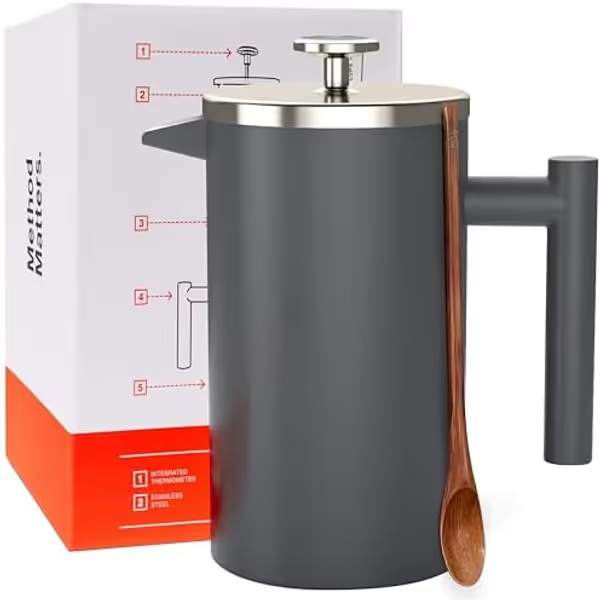
Barista Warrior French Press
Precision temperature and durable design for consistently rich, hot coffee.
Capacity34 oz (4+ cups)
Capacity34 oz (4+ cups)
Pros
Built-in thermometer ensures perfect brewing temperature.
Double-wall insulation keeps coffee hot for hours.
Cons
Thermometer accuracy may require specific use.
Larger capacity might not be ideal for single servings.
Customers appreciate its sturdy build, excellent heat retention, and great-tasting coffee, with easy cleaning.
Customers appreciate its sturdy build, excellent heat retention, and great-tasting coffee, with easy cleaning.
The important restraint: treat that gauge as a reference tool, not laboratory equipment. The available review evidence describes it as a useful bonus for more brewing control, but does not establish calibration accuracy, response speed, or long-term durability. If you want fewer variables on a rushed morning, being able to see a temperature indication on the brewer may still be more practical than handling a separate thermometer.
Where it earns its place
Pros
- It is the only press in this comparison with documented built-in thermometer hardware.
- It uses dual stainless-steel mesh screens.
- It has double-wall stainless-steel construction.
Cons and ownership cautions
- The listed temperature range is a retailer/brand claim, not an independently verified accuracy result.
- An independent reviewer found the smooth body easy to rinse, but said the plunger and filter need a sponge or bottle brush.
- That reviewer also reported the brewer is not dishwasher-safe and benefits from prewarming. Hand-washing is part of the ownership cost here.
- If replacement parts matter to you, check their availability before committing.
Who should buy it
Choose the Barista Warrior if your biggest pain point is starting every brew at a similar temperature and you prefer the simplicity of an all-in-one visual cue.
Simple routine: prewarm the press if you use it, add your usual coffee and water, use the gauge as a repeatable temperature cue, steep about four minutes, then press gently. If the cup still tastes muddy, do not assume temperature is at fault; inspect and scrub the filter stack first.
3. Make Cleanup the Part You Can Repeat Every Day
This is the unglamorous section that protects flavor and stretches the service life of any French press. Our French press cleaning guide covers deeper maintenance, including filter disassembly, stubborn coffee oils, and replacement parts. Ten minutes with a scrubber and a cheap gasket once saved a neighbor's gritty, leaking brewer from the bin; the same lesson applies here. A press is only "low maintenance" when you do the small maintenance it requires.
The under-a-minute post-brew routine
Tools: a spoon, compost or trash container, dish soap, and a sponge or bottle brush.
- Scoop grounds into the trash or compost container first. Do not make your sink strainer carry the whole coffee bed.
- Rinse the carafe and lid. Warm water is enough for the immediate rinse.
- Separate the plunger/filter assembly as far as its design allows. Wash the mesh and the surfaces that trap coffee oil.
- Dry before reassembly. This makes it easier to spot lingering grounds next time.
The rule is simple: clean the entire press after every use, including the filter. Retained grounds and coffee oils can make the next cup taste bitter.
For shared kitchens, tape a four-step version of that list inside a cabinet. The most expensive office press is still a bad investment if nobody cleans the screen. For camping, bring a small brush and a sealable grounds container; a steel body does not make grounds disappear responsibly.
This is also where I am openly biased: I favor presses whose screens and gaskets you can maintain over time. The supplied information documents dual mesh screens for the Barista Warrior and a Dual Micro-Filter system for the ESPRO P7, so ask about replacement parts before purchase, not after the plunger begins to drag. Buy once, fix often.
4. Bodum COLUMBIA: Best Fit for Dishwasher-Safe Insulated Simplicity
The Bodum COLUMBIA Insulated French Press Coffee Maker is a temperature-relevant alternative, not a thermometer press. Its documented build is double-wall stainless steel, and Bodum gives brewing guidance of about 92-96°C. That puts the recommended water range close to standard French-press guidance, but you will need a separate thermometer (or a repeatable kettle routine) if you want to measure it.
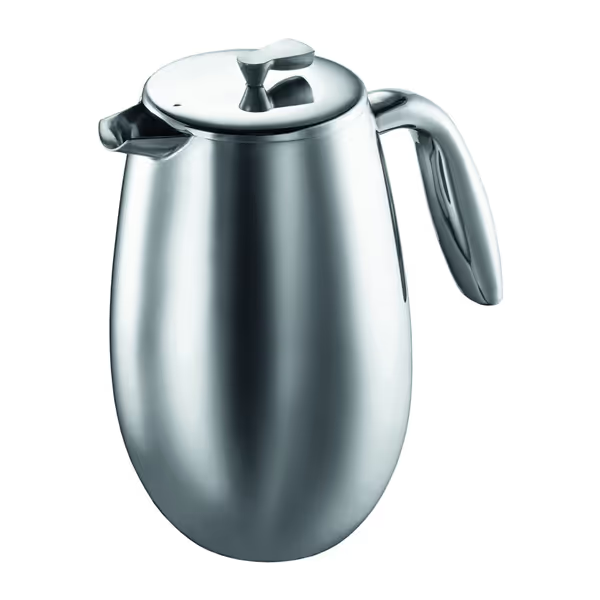
Bodum Columbia Thermal French Press
Consistent, hot coffee for hours, eliminating sludge, built to last.
$59.99
Capacity1.5 Liter (12 cups)
Capacity1.5 Liter (12 cups)
Pros
Retains heat for up to 2 hours.
Durable, shatterproof stainless steel construction.
Cons
Works best with coarse ground coffee.
Higher capacity might be excessive for single servings.
Customers find this French press coffee maker well-constructed with good craftsmanship and appreciate its stainless-steel look. The product keeps coffee hot and makes great coffee, with one customer noting it works best with coarse ground coffee. They praise its durability, with one mentioning the silicon filter has held up well, and find it easy to clean, particularly noting it washes beautifully in the dishwasher.
Customers find this French press coffee maker well-constructed with good craftsmanship and appreciate its stainless-steel look. The product keeps coffee hot and makes great coffee, with one customer noting it works best with coarse ground coffee. They praise its durability, with one mentioning the silicon filter has held up well, and find it easy to clean, particularly noting it washes beautifully in the dishwasher.
Its clearest practical advantage is care: Bodum states that the COLUMBIA is dishwasher-safe. For a household or office where coffee gear gets used hard and cleaned inconsistently, that is a genuine usability benefit. The product listing also claims heat retention for up to two hours, but that is a listing claim rather than an independently measured result.
Where it earns its place
Pros
- Double-wall stainless-steel construction supports its insulated design.
- Dishwasher-safe care is directly documented by Bodum.
- Bodum provides a concrete water-temperature instruction: about 92-96°C.
- It serves buyers who value heat retention and a simple routine more than having temperature displayed on the press.
Cons and buying cautions
- No built-in thermometer is documented, so this cannot provide on-press temperature feedback.
- The retailer listing conflicts on capacity: its title and narrative identify 34 oz/1 L, while a feature list states 1.5 L/12 cups. Confirm the capacity on the exact listing before ordering, especially if you brew for a team.
- The "up to two hours" heat-retention statement should be read as a brand/listing claim, not a verified comparison result.
- If replacement parts matter to you, check availability before purchase.
Who should buy it
Pick the COLUMBIA when your priority is an insulated press with dishwasher-safe cleanup, and you are happy to control water temperature outside the brewer. It makes particular sense for a home or office that values a clean handoff: brew, serve, disassemble, wash.
A separate thermometer may sound less elegant than an integrated one, but it has one cost-of-ownership advantage: if it fails, you replace the thermometer rather than the brewer. That is the kind of boring, useful distinction worth making before you pay for convenience.
5. ESPRO P7: Best Fit When Sediment Is Your Main Complaint
The ESPRO P7 French Press Coffee Maker is another insulated comparator without a documented built-in thermometer. Its standout feature is ESPRO's Dual Micro-Filter system, which the manufacturer says produces grit-free coffee. ESPRO also says its Air Lock Technology stops extraction immediately after plunging; treat that as a manufacturer claim rather than an independently validated performance result.
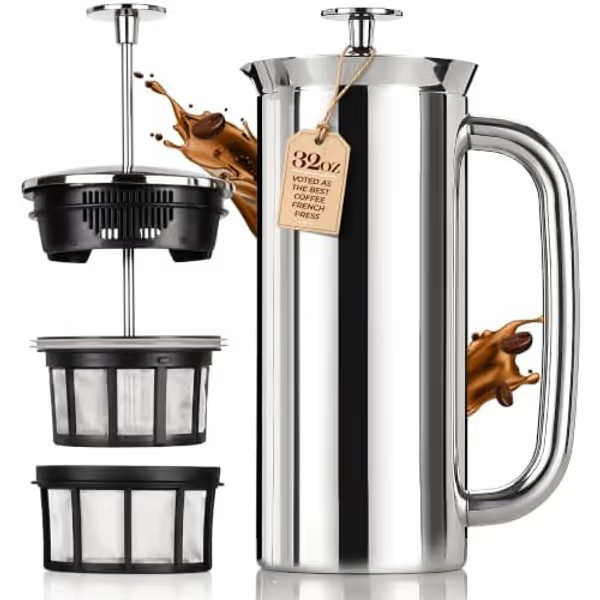
ESPRO P7 French Press
Smoother, cleaner French press coffee with superior thermal retention.
Filtration12x finer than standard French presses
Filtration12x finer than standard French presses
Pros
Ultra-fine dual filtration eliminates grit and sludge
Double-walled insulation keeps coffee hot longer
Cons
Premium price point compared to basic models
Included paper filters are an added cost for ongoing use
For people who want an immersion-style brewer with a manufacturer-described grit-free result, filtration is often the more relevant upgrade than temperature display. The P7's dual system is designed specifically around that goal. It is made from stainless steel and polypropylene, and the 32-ounce configuration has an official minimum brew size of 24 ounces.
Where it earns its place
Pros
- ESPRO's Dual Micro-Filter system is purpose-built for a cleaner, lower-sediment cup.
- The 32-ounce configuration has a stated 24-ounce minimum brew size, giving you a useful guardrail for batch planning.
- ESPRO claims the insulated design keeps coffee at an optimal temperature for hours.
- Its listed materials are stainless steel and polypropylene.
Cons and ownership cautions
- No thermometer is documented. Precision-minded owners need a separate way to measure water temperature.
- A 24-ounce minimum brew size makes the 32-ounce model a poorer match for solo, small-mug mornings.
- Apart from an independent reviewer’s cleanup finding for the Barista Warrior, no independent comparative cleanup evidence or independent sediment or heat-retention testing was available for these models. Do not mistake ESPRO's manufacturer claims for a head-to-head result.
- Paper-filter packaging is unclear: ESPRO says filters are sold separately, while one retailer listing says 10 are included. Check the current purchase option rather than budgeting around included filters.
Who should buy it
Choose the P7 if your French-press frustration is chiefly sediment. If you are considering the 32-ounce configuration, account for its stated 24-ounce minimum brew size.
The 32-ounce configuration is not a match for a serving below its stated 24-ounce minimum. Buying too large because it looks more capable is a classic false economy: you pay for capacity, then work around the brewer every morning.
6. Compare the Three Presses by Your Actual Problem
Here is the short version for decision-fatigued buyers.
| If your priority is… | Best match | Why |
|---|---|---|
| Seeing a temperature indication on the brewer | Barista Warrior | It is the only model here with a documented built-in thermometer. |
| Dishwasher-safe cleanup | Bodum COLUMBIA | Bodum documents dishwasher-safe care. |
| Reducing sediment | ESPRO P7 | ESPRO's Dual Micro-Filter is designed for a grit-free result. |
| Brewing a batch under 24 oz | Check another size or model | The 32-ounce P7 has a stated 24-ounce minimum brew size. |
| A temperature-focused workflow without a built-in gauge | Bodum COLUMBIA | It is insulated and includes 92-96°C brewing guidance; add your own thermometer if measurement matters. |
Do not choose based on a promise of "hours hot" alone; review our French press heat-retention test to understand why measured temperature performance matters. Double walls are useful, but the practical questions are: Can you clean the filter thoroughly? Does the batch size fit? Can you replace wear parts? Will your household actually follow the routine? Those answers determine the cost per satisfying cup over years.
7. Summary and Final Verdict
The phrase "modern French presses with thermometers" needs one correction: in this group, only the Barista Warrior has a documented built-in thermometer. It is the practical pick for brewers who want a visible temperature reference built into a 34-ounce insulated steel press, provided they accept hand-washing attention around the plunger and filter, and understand that thermometer accuracy was not independently established.
The Bodum COLUMBIA is the better fit for buyers who want insulated stainless steel and documented dishwasher-safe cleaning, not an integrated gauge. Its capacity information is inconsistent across one retailer listing, so verify the exact size before purchase.
The ESPRO P7 is the focused choice for reducing sediment. Its filtration and extraction-control features are manufacturer claims, but the design emphasis is clear: cleaner-cup brewing rather than in-press temperature readout. If you choose the 32-ounce configuration, note its stated 24-ounce minimum brew size.
My final verdict is not to chase "precision" as a feature badge. Choose the Barista Warrior for built-in temperature guidance, the COLUMBIA for easy-care insulated simplicity, or the P7 for filtration-first brewing. Then protect the purchase with the same habits: stable water temperature, a four-minute timer, and a genuinely clean filter. That is how a French press earns its place in your kitchen instead of becoming another discarded gadget.
FAQ
What is the best French press in 2026?
There is no defensible single winner from these three alone. The Barista Warrior is the best match for an integrated thermometer, the Bodum COLUMBIA for dishwasher-safe insulated use, and the ESPRO P7 for its manufacturer-described Dual Micro-Filter system. Your batch size and cleanup tolerance matter more than a universal ranking.
What type of French press is best?
There is no best type for everyone. A double-walled press can help keep temperature steadier during brewing and coffee warmer afterward. Beyond that, choose a size you will actually fill, a filter you will clean after each use, and ideally a design with serviceable wear parts.
What are the downsides of using a French press?
Ongoing filter cleaning is one practical consideration. Retained grounds and coffee oils can make the next cup taste bitter, so clean the entire press after each use, including the filter. A press with a more elaborate filter may also create more pieces to wash. Build your choice around the maintenance you are willing to do every day.
Related Articles
Buyer's Guides by Use Case & Audience
Tactile French Press: Blind-Friendly Coffee Maker Reviews
21st Jan•9 min read
Buyer's Guides by Use Case & Audience
Best French Press for Your Roast Profile: Zero Sludge Brews
11th Jan•8 min read
Buyer's Guides by Use Case & Audience
Modern French Press: Cafe-Grade Durability Tested
2nd Jan•7 min read
Buyer's Guides by Use Case & Audience
French Press Coffee: Chef-Tested Recipes & Techniques
10th Dec•7 min read