
Brew Comfortably: Arthritis-Friendly French Press Tips
By Priya Deshmukh • 13th Nov
Your morning French press shouldn't fight you back. For many coffee lovers managing arthritis or limited mobility, that stiff plunger rod and slippery glass carafe can turn a cherished ritual into a painful chore. But what if I told you cleaner cups and comfortable brewing are possible without abandoning this beloved method? I've seen too many friends abandon French presses after one too many sore knuckles, until we shift focus from force to smart design. Let's reframe this as a solvable puzzle where small, deliberate adjustments (not brute strength) create joyful mornings. Baseline before tweaks.
Why Your French Press Might Be Hurting You (And What to Do)
"The plunger sticks or requires too much downward pressure, what gives?"
Glass French presses often demand 8-12 pounds of force to plunge smoothly, straining joints. But here's the good news: it's rarely the coffee's fault. Coarse grinds actually reduce resistance because water flows easier through larger particles. Try this one-variable-at-a-time experiment tomorrow morning:
- Grind 28 g of coffee one click coarser than usual (e.g., from setting 20 to 19 on a Baratza Encore)
- Brew at a 1:15 coffee-to-water ratio with 200°F water
- Note exactly how much pressure the plunger needed on a scale of 1-5
I once watched a friend chase perfection by changing three things at once (grind, dose, and water), then declare the press inconsistent. We reset: one ratio, one grinder click, taste notes written down. Two brews later, their 'sweet spot' emerged. Start with one knob, turn it slowly, taste on purpose. A coarser grind often cuts plunger resistance by 30-40% while keeping flavor balanced. If sediment becomes an issue, only then explore double-filtered models like the ESPRO P7, whose micro-filters let you use even coarser grinds without grit.
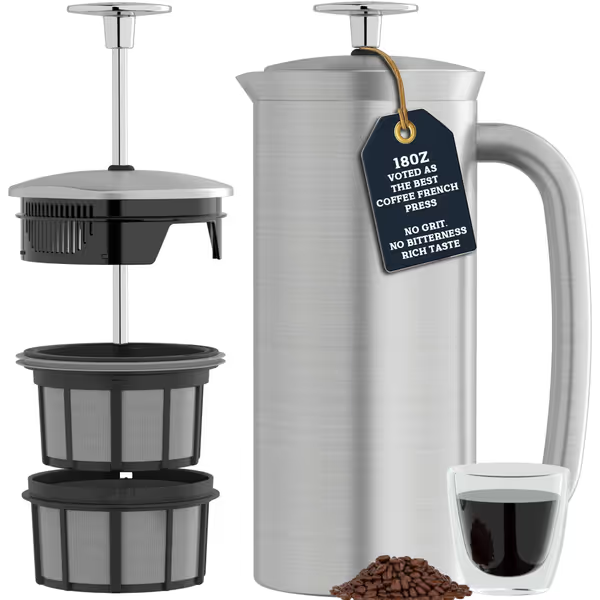
ESPRO P7 French Press
Smoother, grit-free coffee that stays hot longer.
$115
Capacity18 oz brewed coffee (27 oz water)
Capacity18 oz brewed coffee (27 oz water)
Pros
Double micro-mesh filter eliminates sludge and grit.
Double-walled stainless steel keeps coffee hot.
Cons
Some find it expensive for a French press.
Filter effectiveness on grounds debated by users.
Customers find this French press coffee maker makes excellent coffee with a rich taste, and appreciate its double-walled stainless steel insulation that keeps the brew warm for a long time. The filter system effectively strains grounds, and customers find it simple to clean. While some customers consider it well worth the money, others feel it's not worth the price tag. Customers disagree on how well the grounds are kept out of the coffee.
Customers find this French press coffee maker makes excellent coffee with a rich taste, and appreciate its double-walled stainless steel insulation that keeps the brew warm for a long time. The filter system effectively strains grounds, and customers find it simple to clean. While some customers consider it well worth the money, others feel it's not worth the price tag. Customers disagree on how well the grounds are kept out of the coffee.
"How do I grip the handle safely when my knuckles ache?"
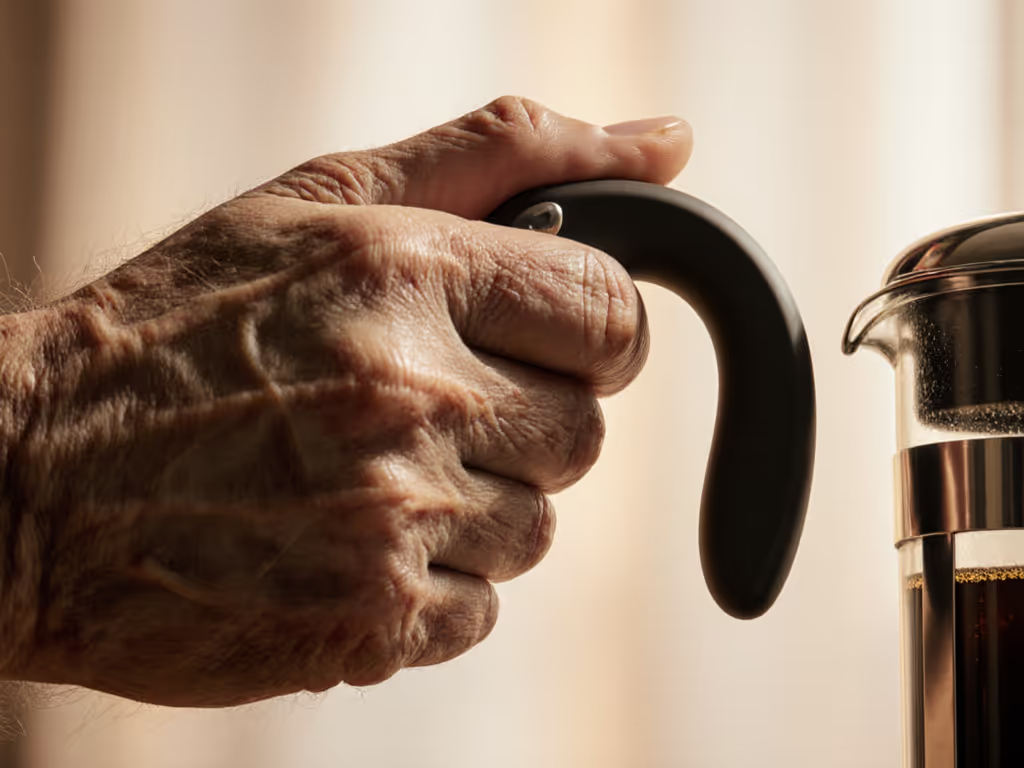
Look for presses with textured, wide-grip handles set away from heat. Stainless steel models (like Stanley or Bodum Columbia) often feature handles that stay cooler than glass equivalents. Try wrapping a silicone oven mitt around the handle before brewing, it adds cushion without blocking heat. For severe grip challenges, position the press against a wall or countertop edge so you can use your body weight through the plunger rod with minimal hand strain. Sensory note: if your hands feel relaxed during the plunge but the coffee tastes thin, increase dose by 1 g (not grind fineness) to preserve ease while boosting body.
"I hate the gritty last sips, but fine filters make plunging harder"
Ah, the classic French press dilemma! Double-filter systems (like ESPRO's) trap sediment without requiring finer grinds that increase resistance. But let's address the root cause: water mineral content. Too few minerals (under 50 mg/L) exaggerates bitterness and sludge perception. Aim for 75-120 mg/L total dissolved solids using a simple $15 TDS meter. If your tap runs low, add a pinch (0.5 g) of Lite Salt (KCl + magnesium) to your reservoir (one variable at a time). This tweak often reduces perceived grit by improving mouthfeel, letting you stick with coarser grinds for easier plunging.
Building Your Arthritis-Friendly Brew Blueprint
Warm-Up Your Hands Before Brewing
Dip hands in warm water for 30 seconds while the kettle heats. This simple pre-brew ritual improves joint flexibility more effectively than forcing stiff fingers onto cold metal. Pair it with a 45-second pre-infusion (bloom) stage (just add twice the coffee's weight in water, wait, then fill) to give you breathing room before plunging.
Adopt Mug-Scaled Baselines
Stop wrestling with full carafes. For solo mornings, brew directly into your favorite mug:
- 12 oz mug: 15 g coffee + 200°F water to fill
- Brew time: 4:00 total (30 s bloom, 3:30 steep)
- Plunge depth: Only halfway (reduces resistance by 60%)
This small-batch approach means less coffee to plunge, faster extraction, and zero wasted effort. Weekend indulgence? Scale up only when needed, but keep the same ratio and grind size.
Water Temperature = Joint Relief
Overheated water (above 205°F) accelerates coffee particle swelling, creating more plunge resistance. A gooseneck kettle with precise temp control (like Bodum's Bistro) lets you hit 195-200°F consistently, reducing stuck plungers while brightening flavor notes. For $20 backup accuracy, drop a $5 Thermapen into your kettle spout.
Baseline before tweaks.
Your First Comfort Experiment
Don't overhaul everything at once. Pick just one adjustment from this list for tomorrow's brew:
- Coarse test: Grind one click coarser + note plunger ease
- Water mineral check: Add 0.25 g Lite Salt to 500 ml water
- Mug-scale trial: Brew straight into your regular cup
Write down only the pressure rating (1-5) and one sensory descriptor like "smooth" or "bright." That's your baseline. Next week, try another micro-experiment. Mastery isn't about perfect gear, it's about honest notes and tiny wins. Your joint-friendly French press journey starts with curiosity, not compromise.
Further exploration: Grab my free One-Variable Dial-In Journal (it includes arthritis-specific checklists and mineral adjustment guides). Because your coffee ritual should feel like a warm hug, not a fight.
Related Articles
Buyer's Guides by Use Case & Audience
Tactile French Press: Blind-Friendly Coffee Maker Reviews
21st Jan•9 min read
Buyer's Guides by Use Case & Audience
Best French Press for Your Roast Profile: Zero Sludge Brews
11th Jan•8 min read
Buyer's Guides by Use Case & Audience
Modern French Press: Cafe-Grade Durability Tested
2nd Jan•7 min read
Buyer's Guides by Use Case & Audience
French Press Coffee: Chef-Tested Recipes & Techniques
10th Dec•7 min read