
Best French Press for Your Roast Profile: Zero Sludge Brews
By Priya Deshmukh • 11th Jan
If you've ever wondered why your Ethiopian light roast tastes like sour pond water in the French press while that chocolatey medium-dark sings, you're wrestling with the most misunderstood relationship in home brewing: French press for roast profiles. Choosing the best coffee for French press isn't about grabbing any bag off the shelf, it's about matching your beans' journey from farm to roast curve with how immersion extraction amplifies their personality. I've watched too many brilliant coffee lovers quit presses after one sludgy, bitter cup, not realizing the roast profile was the real culprit (not their technique). Let's reset that narrative with practical guardrails, not guesswork.
Why Your Roast Profile Makes or Breaks French Press Coffee
Q: Isn't French press just for dark roasts? Every café serves it that way.
Start with one knob, turn it slowly, taste on purpose.
Actually, immersion brewing excels with lighter roasts. You just need to adjust your expectations and process. The café standard of medium-dark roasts exists because those profiles hide inconsistency (under-extraction tastes less sour, over-extraction less bitter). But here's what passionate home brewers discover: light roast extraction in a French press reveals floral, tea-like notes you'd never get from drip, but only if you respect the bean's delicate structure.
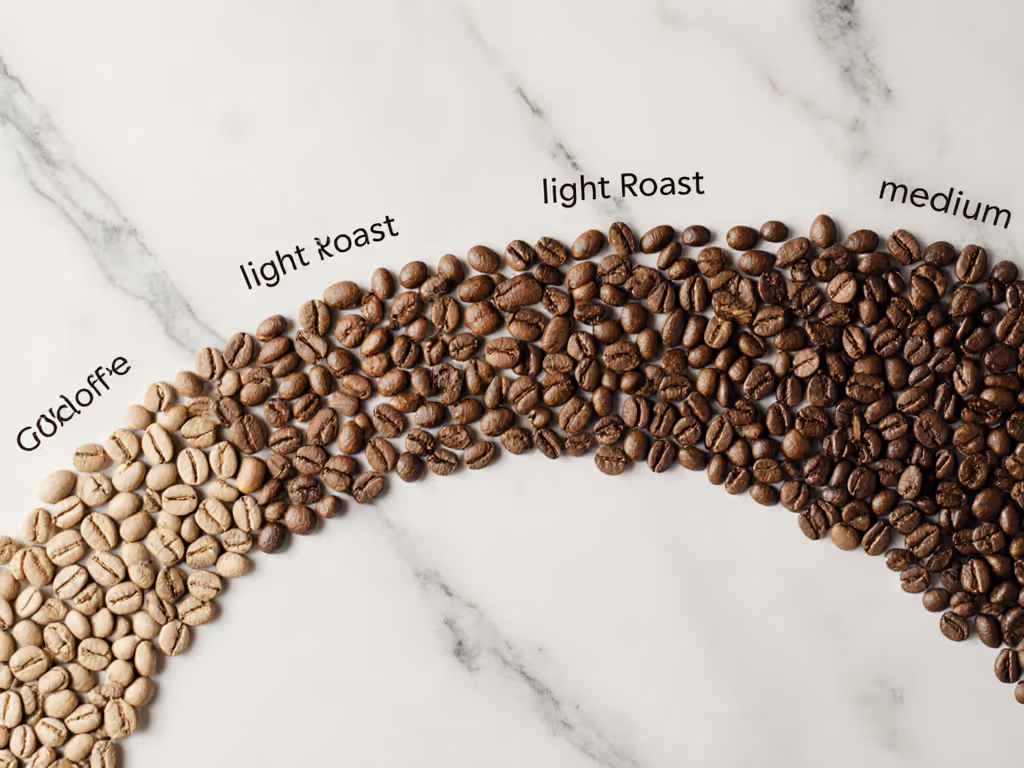
- Light roasts (City to Full City+): High acidity, complex fruit/floral notes. Challenge: French press's long steep time over-amplifies sharp acids if water temp or time isn't dialed. Solution: Lower brew temp (195°F/90°C), shorter steep (3:30 max), and softer water (50mg/L calcium).
- Medium roasts (Full City to Vienna): Balanced sweetness, caramel/chocolate notes. Why it works: Enough development to avoid sourness, not so much that oils dominate. Your sweet spot: The "Goldilocks zone" for 80% of home brewers, forgiving but nuanced.
- Dark roasts (French/Vienna+): Bold, smoky, low acidity. Risk: Press amplifies bitterness via over-extracted oils. Fix: Coarser grind, 1:17 ratio, and... maybe skip the press for these? Espresso or moka pot often suits them better.
Q: I tried a light roast and got vinegar. What went wrong?
That "vinegar" note means your bright Ethiopian or Kenyan overwhelmed the press's extraction window. Light roasts have more soluble solids but less thermal stability, so if the water is too hot or the steep too long, acids dominate. Last Tuesday, I watched a remote engineer (let's call her Maya) nearly ditch her press after a sour Yirgacheffe. We reset: same beans, but dialed her kettle to 195°F instead of boiling, used a 3:00 steep, and filtered her tap water through a $10 pitcher. Third brew? "Like tasting sunshine," she texted. This is French press roast optimization in action: tiny shifts, massive flavor payoffs.
The Sludge Mystery: Why Your Coffee Feels Like Mud
Q: Why does French press always leave gritty sludge, even with medium roast?
Sludge isn't inevitable. Our single vs double filter test shows how dual screens reduce sediment without sacrificing body. It is a symptom of mismatched variables. Dark roasts physically crumble more during roasting, creating fine particulates that slip through filters. But here's the roast-specific insight: coffee from French press only gets muddy when you use beans overdeveloped for immersion brewing. That oily French roast? Its fractured cell structure releases micro-fines no mesh filter can catch. Meanwhile, a well-structured medium roast (like a Guatemalan Antigua) keeps its integrity, yielding cleaner sediment.
Pro tip: For zero sludge with any roast, employ the "double settle":
- After pouring water, wait 1 minute before placing the lid (lets coarse grounds sink)
- After pressing, wait 30 seconds before pouring (lets fines settle to bottom)
Q: Does roast level affect how clean my cup tastes?
Absolutely. Light roasts (when properly brewed) produce less sludge than dark roasts in French press, not because of grind size, but bean density. Lighter roasted beans are harder and more intact, so they fracture cleanly when ground. Dark roasts? They're brittle sponges that shed fines like a husky in summer. I once tested identical grind settings (28 clicks on a Baratza Encore) across roast levels: the light roast settled clear after 5 minutes; the French roast left a permanent chocolatey haze. Your takeaway: Choose medium roasts for maximum cleanliness and complexity.
Building Your Roast-Specific Blueprint (No Guru Required)
Q: What's the simplest ratio for different roasts?
Stop memorizing ratios by roast. For a formula you can scale, see our French press coffee ratio guide. Anchor them to your mug. Here are baseline recipes for mug sizes that work across profiles:
| Mug Size | Light Roast Ratio | Medium Roast Ratio | Dark Roast Ratio |
|---|---|---|---|
| 8oz solo | 1:15 (24g:360g) | 1:16 (22g:350g) | 1:17 (20g:340g) |
| 12oz duo | 1:14 (30g:420g) | 1:15 (28g:420g) | 1:16 (26g:416g) |
| 16oz group | 1:13 (36g:468g) | 1:14 (34g:476g) | 1:15 (32g:480g) |
Why this works: Lighter roasts need slightly stronger ratios to compensate for lower perceived body. Darker roasts benefit from weaker ratios to avoid overwhelming bitterness. Weekday mornings? Stick to the medium roast column, it's your most forgiving sweet spot.
Q: How does water mineral content change roast expression?
Water isn't just water. It is a roast amplifier. Hard water (150+mg/L calcium) exaggerates bitterness in dark roasts but enhances clarity in light roasts. Soft water (<50mg/L) does the opposite. My breakthrough came when I realized my friend's "inconsistent" press was actually her tap water, high in magnesium, which made her light roast taste metallic. For precise targets and easy fixes, use our water mineral balance guide.
Practical mg/L water mineral guidance:
- Light roasts: 40-60mg/L total hardness (pitcher-filtered tap)
- Medium roasts: 60-80mg/L (most filtered pitchers)
- Dark roasts: 80-100mg/L (some tap water, but avoid extremes)
Don't buy expensive mineral kits yet. Just filter your tap water. That $15 pitcher solves 90% of "bad bean" accusations.
Real Talk: Troubleshooting Roast Profiles Like a Pro
Q: My medium roast tastes flat. Is it the beans or my press?
Flatness usually means under-extraction, but the cause depends on roast. With medium roasts, it's often grind mismatch: too coarse for the 4-minute steep. Try this:
- Grind 1 click finer (if electric grinder)
- Add 15 seconds to brew time
- Only change one thing at a time
If it's still tea-like, check your water temp. Medium roasts need 200°F (93°C), not boiling. Too cool? You're not dissolving enough sugars. This is where sensory descriptors anchored to actions matter: "flat" = "not enough caramel notes" = "increase extraction via temperature, not time."
Q: Can I use a French press for light roasts outdoors?
Yes, but adapt your approach. If you brew on the go, compare options in our travel French press test for leakproof, rugged picks. Camp stoves often lack temperature control, so here's my vanlifer-tested hack for light roast extraction on the trail:
- Boil water, then wait 45 seconds (reaches ~195°F naturally)
- Use pre-ground beans (medium-coarse) stored in airtight container
- Steep 3:00, then pour all coffee into an insulated mug immediately
No sludge, no fuss. The key is accepting that outdoor brewing favors medium roasts. You lose temperature control accuracy. But when you nail that bright, clean Ethiopian at 7,000 feet? Pure magic.
Why Your 'Best Coffee Press' is Already in Your Cabinet
The truth no one tells you: there is no single "best coffee press." Only the best approach for your roast. I once saw a $300 double-walled press fail spectacularly because the user roasted their own beans to dark French levels and used a fine grind. Meanwhile, a $15 Bodum made transcendent coffee with a light roast and disciplined technique.
This is where I draw my line: Chasing gear fixes won't solve roast-profile confusion. Your current press can make restaurant-quality coffee if you:
- Match roast level to extraction time (light = shorter, dark = coarser)
- Filter your water (seriously, it's non-negotiable)
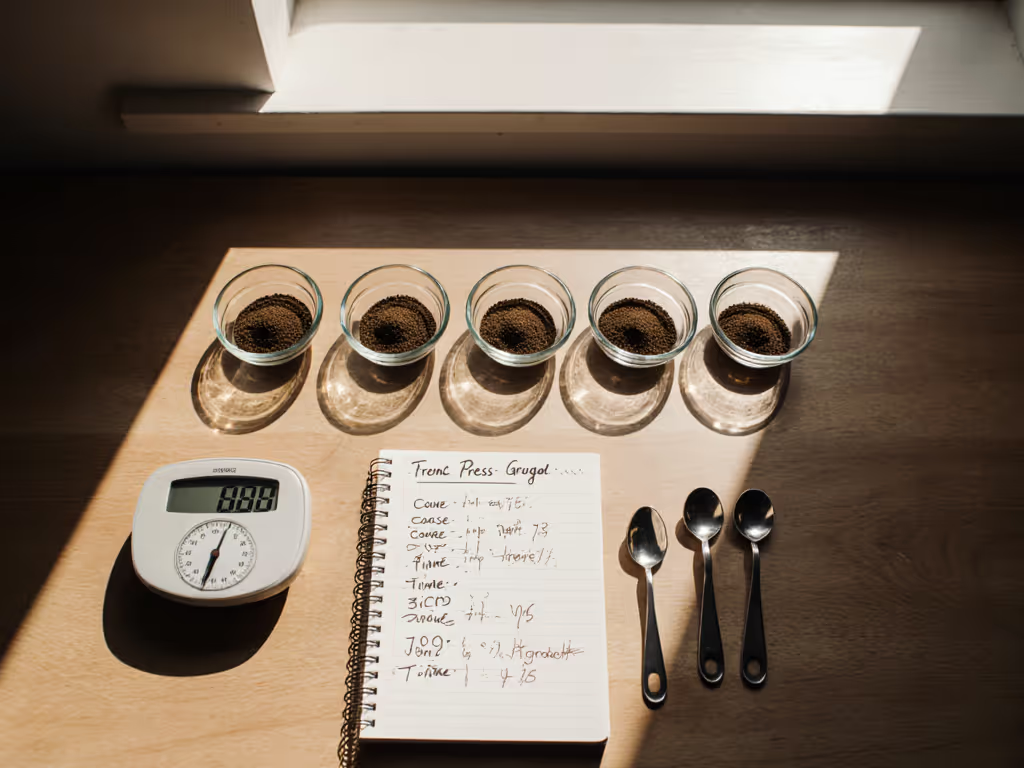
- Write down one change per brew ("grind 1 click finer")
- Taste notes focused on balance ("too sour?" vs "bad")
I remember watching a friend chase perfection by changing three things at once, then declare the press inconsistent. We reset: one ratio, one grinder click, taste notes written down. Two brews later, their "sweet spot" emerged. That afternoon cemented my approach: fewer variables, clearer wins, happier mornings.
Your Invitation to Clarity (Not Complexity)
Mastery in French press brewing isn't about owning the shiniest carafe or memorizing roast charts. It's noticing how a Kenyan AA sings at 195°F for 3:30, while your Guatemalan needs 200°F for 4:00. It's finding that your office's hard water means dark roasts taste bitter unless you dilute with bottled water. Tiny deliberate shifts compound into transformative cups.
So next time you're frustrated with sludge or sourness, ask: "What single variable can I adjust for this specific roast?" Then taste like your morning depends on it, because it does. Start small, taste big.
Further Exploration
- Try this: Brew the same medium roast at 195°F vs 202°F, and note how caramel notes shift
- Share your "one-variable win" in the comments, I'll reply with personalized tweaks
Related Articles
Buyer's Guides by Use Case & Audience
Tactile French Press: Blind-Friendly Coffee Maker Reviews
21st Jan•9 min read
Buyer's Guides by Use Case & Audience
Modern French Press: Cafe-Grade Durability Tested
2nd Jan•7 min read
Buyer's Guides by Use Case & Audience
French Press Coffee: Chef-Tested Recipes & Techniques
10th Dec•7 min read
Buyer's Guides by Use Case & Audience
French Press Gift Guide: Sludge-Free Brewing
29th Nov•7 min read