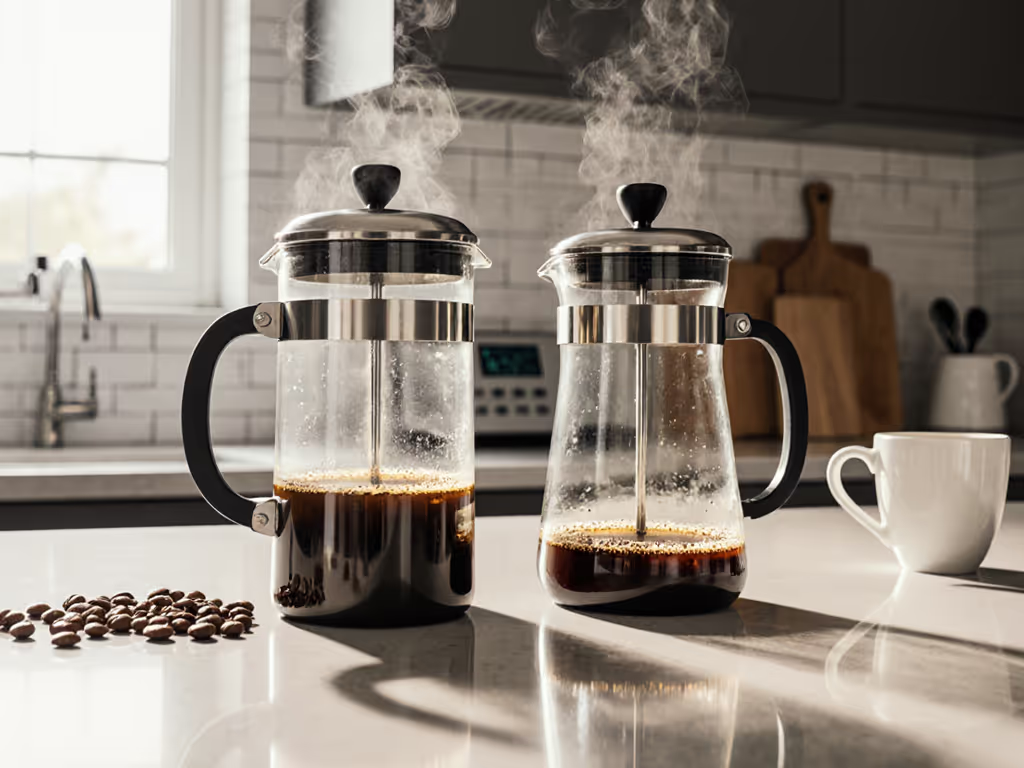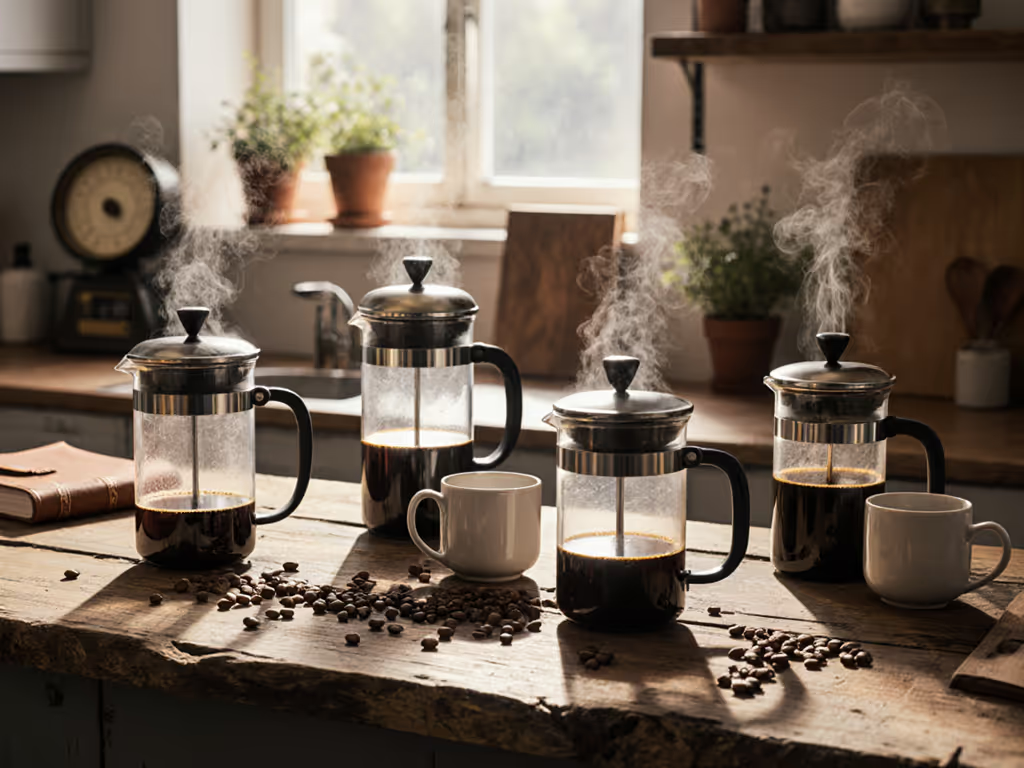
Large French Press Coffee Maker: Thrifted Buyer’s Guide
By Priya Deshmukh • 2nd Sep
What to do
To buy a large French press secondhand with confidence, choose for your actual batch size, verify the maker and model, check recalls, inspect the plunger, and clean every removable part before brewing. Leave an item behind when its materials, condition, or replacement parts are too uncertain.
- Start with: Decide whether you need a large press for daily use, shared breakfasts, guests, or camping. The available evidence does not provide a market-wide standard for “large” or cup markings; one published review reports a 64-ounce option but does not establish the largest available press.
- Then: Compare glass and stainless steel around your routine: stainless steel retained heat better than glass in one test, while metal-mesh filtration still leaves some sediment. Treat these as scoped findings, not universal rules.
- Important prerequisite: Check the exact product against recalls before buying or brewing, especially identifiable Bialetti models.
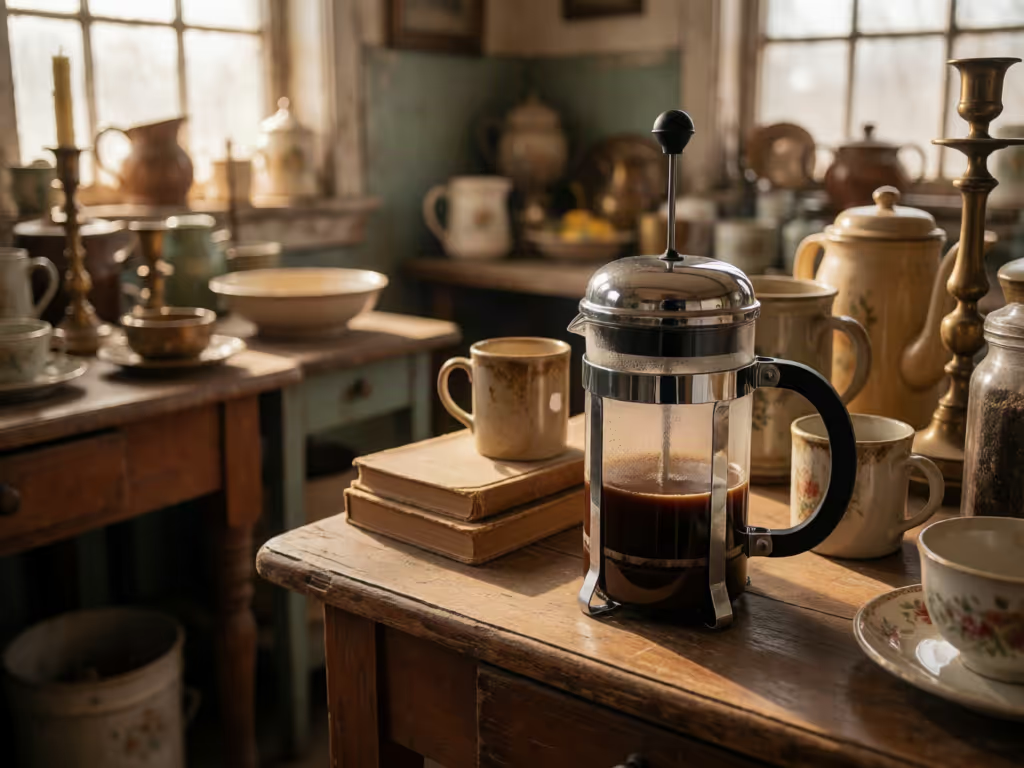
A large French press coffee maker can be one of the most satisfying thrift finds: generous enough for a slow breakfast, a shared office pot, or several camp mugs, with no paper-filter habit to maintain. But a secondhand press is not a purchase to rush. The goal is not to identify the single best French coffee press from a crowded shelf; it is to bring home one whose condition, materials, capacity, and cleanup needs suit your actual mornings.
A little patience is the bargain. I have watched someone change grind, dose, and water in one frustrated attempt to rescue a press they thought was "inconsistent." Resetting to one baseline (and writing down what changed) made the useful information appear. Start with one knob, turn it slowly, taste on purpose.
Begin with the job, not the label
The available evidence does not provide an authoritative market-wide capacity chart or cup-to-ounce convention for French presses. Read thrift-store markings alongside the vessel's stated capacity when that information is available.
Before shopping, define the batch you need:
- Two people or a long weekend breakfast: Look for enough room to brew and pour without crowding the top of the carafe.
- Guests, meetings, or a shared studio: Prioritize a stable build, an easy-to-handle plunger, and a cleaning routine others can follow.
- Camping or vanlife: Favor the material and form factor you are comfortable washing and packing. Do not assume a thrifted item is rugged simply because it looks metal.
If capacity matters more than thrift, one editorial test report notes a 64-ounce French press offering from YETI. For more options sized for families, offices, and shared breakfasts, see our large-capacity French press guide. That is a useful reference point for what a very large press can look like, not proof that it is the largest French press available today, and not a reason to overlook a well-suited used find.
Make safety your first pass
A thrift store coffee maker may have an unknown history. Clean appearance alone cannot verify the composition, food-contact compliance, or prior treatment of unmarked vintage glass, coatings, plastics, metals, or seals. In the U.S., FDA guidance says food-contact notifications and food-additive petitions must contain sufficient scientific information to demonstrate safety under intended conditions of use, but that does not certify an unidentified secondhand item.
That uncertainty calls for a simple guardrail: if you cannot identify the maker and model (or you are uneasy about an unknown material or degraded-looking component), leave it behind. A low price is not a reason to turn uncertainty into your morning coffee ritual.
Check recalls before buying - or brewing
If a press has recognizable branding, model information, or a distinctive design, check the relevant consumer-product recall database before use. This matters in secondhand shopping because recalled products should not be resold.
One specific example is the 2017 Bradshaw/Bialetti recall: it covered certain eight-cup presses with a glass beaker in a plastic frame, a stainless-steel plunger, blue/green/black/red color options, and date codes from March 2017 or earlier. The safety agency said those glass beakers could break in normal use, creating a laceration hazard, and instructed consumers to stop using recalled units.
Do not extend that recall to every Bialetti press, every glass press, or every colorful plastic frame. Use the exact product description to make the check.
A thrift find becomes a keeper only after its identity and condition feel clear enough for its job.
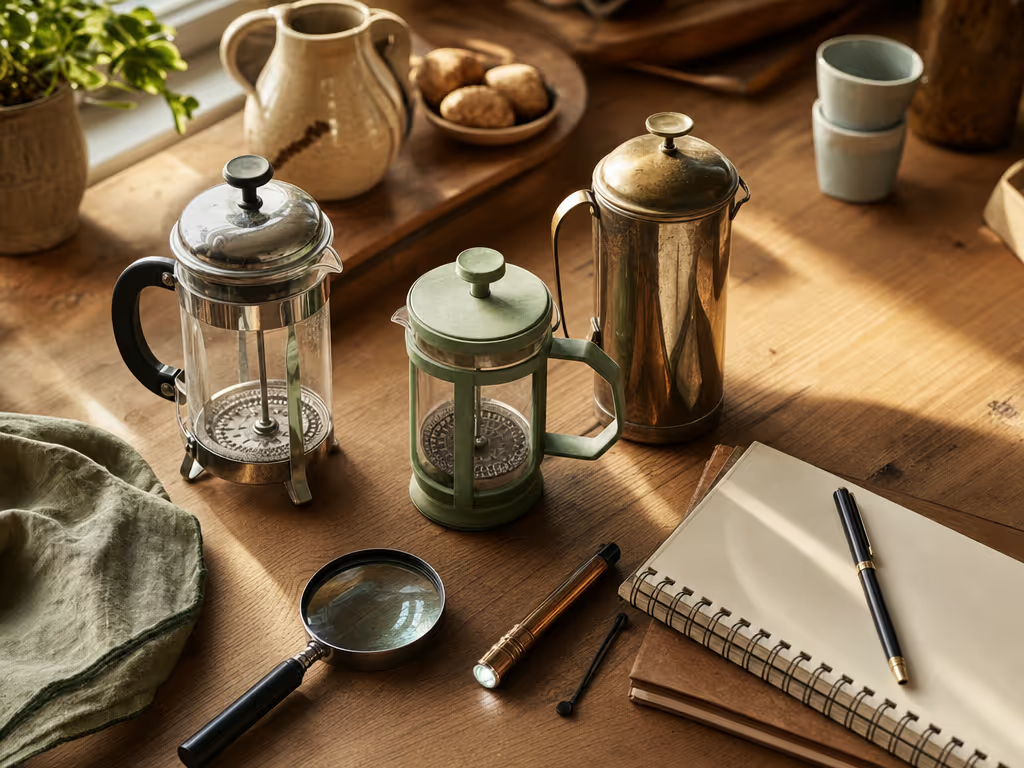
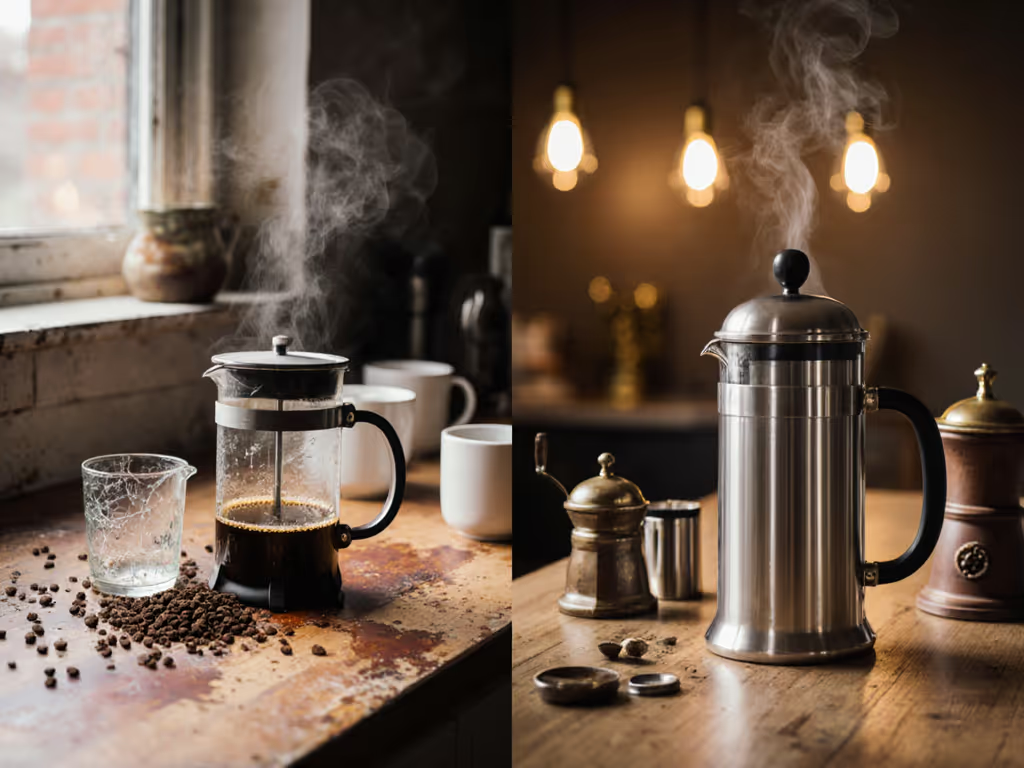
Choose glass or stainless steel around your routine
Material is a trade-off, not a personality test. Our glass versus stainless steel comparison breaks down how the two materials differ in durability, heat retention, and everyday value.
Glass: visual and familiar, but handle with more intention
Glass makes it easy to see coffee and grounds, and it can feel wonderfully uncomplicated on a breakfast table. For a used glass press, though, slow down. There is no universal evidence-backed visual rule that says a particular scratch, chip, cloudy patch, or loose frame is safe or unsafe. Do not treat a casual shelf inspection as a safety certification.
If you bring home a glass press that you are comfortable using, a manufacturer recommends pre-warming the carafe with warm water before adding boiling water. That is a care suggestion, not a guarantee against breakage.
Stainless steel: a strong candidate for lingering service
For people who nurse a mug through a meeting, stainless steel deserves a close look. In one publisher's testing across 18 presses, stainless-steel models retained heat better, while glass models yielded cooler coffee. That finding is limited to the presses and methods tested, but it aligns with a practical thrift-shopping priority: insulation can matter more than a dramatic silhouette.
Do not assume all steel bodies, lids, or internal parts are equivalent, however. If a used press is unmarked or you cannot assess its food-contact surfaces with confidence, pass rather than guessing.
Inspect the plunger as if it were the brewer - because it is
The carafe gets attention; the plunger assembly decides whether the press feels graceful or maddening. Remove the lid and look at the filter stack in good light. Can you take it apart without forcing it? Are all the pieces present? Does the mesh look intact and sit flat when reassembled?
Avoid guessing that a random replacement screen, spring, rod, lid, gasket, or carafe will fit. These parts should be treated as model-specific unless you can document an exact maker-and-model match.
A metal-mesh French press will not produce zero sediment. If reducing grit is a priority, our single- versus double-filter test explains how filtration design affects sediment and mouthfeel. An editorial test found that some fine coffee material remains inherent to this style, though tighter or dual filters may reduce grit. That is useful expectation-setting: a little texture is part of the method; a suddenly messy cup or poorly behaving plunger is a reason to investigate the assembly rather than endlessly altering your coffee.
One knob, one note. First establish that the filter assembly is complete and clean. Then adjust your coffee routine one variable at a time (perhaps your grinder setting), and record whether the cup tastes clearer, more bitter, or more pleasantly full-bodied.
Give every used press a cleaning reset
A good clean is essential, but it is not a laboratory certification and cannot make a damaged or unknown-material item safe. For a press you have chosen to keep, use this practical reset based on manufacturer maintenance guidance:
- Disassemble the plunger and filter assembly.
- Rinse away old grounds.
- Wash all parts with mild dish soap, including the mesh filter.
- Inspect the screens in good light. A brown tint or slick feel can indicate that coffee oils remain.
- Dry every component thoroughly before reassembly. For storage, keep the press disassembled and completely dry rather than trapping moisture between filter layers.
For weekday cleanup, make grounds disposal the routine's first move: tip grounds into the bin or compost collection you use, then rinse and wash the press parts. For detailed maintenance steps, including disassembly and filter care, consult our French press cleaning guide. This keeps the sink step smaller and makes a shared kitchen less likely to become a grounds-clogged negotiation.
Set a repeatable first brew before judging the find
The temptation after buying used is to fix everything at once: new beans, different water, a finer grind, a longer steep. That is how a perfectly workable press can get blamed for a confusing cup.
Instead, establish a simple baseline with the coffee and water already familiar to you. Once the press passes its condition check, use our French press ratio and recipe guide to establish precise measurements, temperature, and timing for a repeatable first brew. Use the same mug, the same batch size, and the same timing for two brews. Write brief tasting notes: muddy or clear, bitter or sweet, thin or rounded, hot enough or cooling too quickly.
Then make one purposeful change at a time:
- If the cup is more silty than you enjoy, examine cleaning and filter assembly before changing everything else.
- If coffee is cool by the second pour, consider whether the press material suits your serving pace.
- If flavor shifts from day to day, hold the press setup steady and change only one brewing input for the next attempt.
Water deserves the same calm treatment. Your tap, filtered water, and bottled water can taste different, but you do not need water-chemistry dogma (or expensive gear) to learn from that. If you explore mineral content later, note the source and its listed mg/L information when available, then compare one water source against another while keeping the rest of the brew unchanged.
FAQ
Is a glass or stainless-steel French press better?
Neither wins for every kitchen. In one published test, stainless-steel presses held heat better and glass presses produced cooler coffee. Glass may suit someone who values visibility and is prepared to handle the carafe carefully; steel may suit longer breakfasts or meetings. For any used press, identity, condition, and confidence in the food-contact materials come first.
What are the main downsides of a French press?
Metal-mesh filtration leaves some sediment, so it cannot promise a completely grit-free cup. Heat retention can also vary by material; glass was cooler than stainless steel in the cited editorial testing. Used presses add a separate challenge: missing or mismatched plunger parts and uncertain material history.
What is the biggest French press available?
There is no verified market-wide maximum to declare. A published review reports one 64-ounce YETI option, but that does not establish it as the largest available. Buy for the batch you will realistically brew, pour, clean, and finish.
Let the next cup teach you something
The best coffee press is not necessarily the biggest, shiniest, or most talked-about one on the thrift shelf. It is the press you can identify, clean thoroughly, use with confidence, and repeat without adding friction to your day.
Bring a small note to your next thrift trip: desired batch, preferred material, recognizable-brand check, complete plunger, and a plan to clean it fully at home. Then, once it earns a place on your counter, keep exploring through small changes and honest tasting notes. That is where better coffee (and happier mornings) usually begins.
Related Articles