
Perfect Summer French Press: Cooler Water
By Priya Deshmukh • 12th Jan
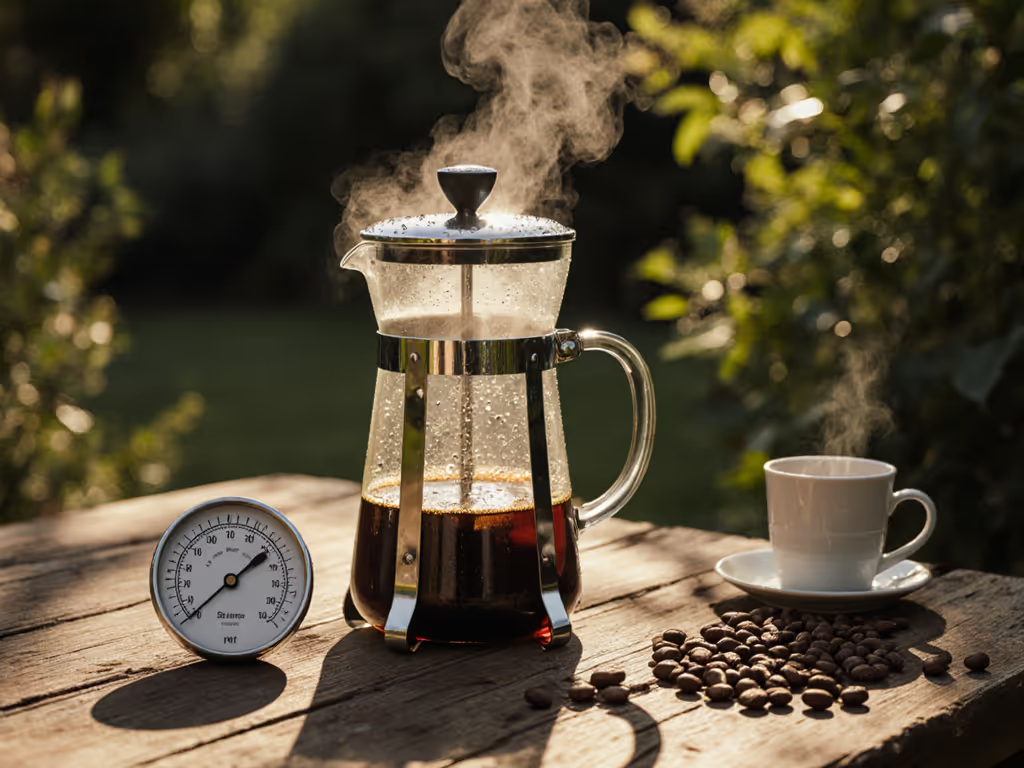
When summer heat turns your kitchen into a sauna, that same French press recipe that delivered vibrant, balanced coffee in January might now leave you with a cup that's harsh and over-extracted. It's not your coffee or your technique (it's the calendar). Seasonal french press brewing requires subtle adjustments to water temperature, because summer coffee temperature needs are fundamentally different from winter's. Let's explore why conventional wisdom falls short when ambient temperatures rise, and how a single, deliberate temperature tweak can rescue your morning ritual from bitterness.
Why does my French press taste different in summer?
You're not imagining it. That bright, juicy coffee you loved in cooler months now tastes flat or bitter, even when you follow the exact same steps. This is seasonal coffee extraction in action: higher room temperatures accelerate the chemical reactions between water and coffee grounds. When your kitchen is already 75°F (24°C), pouring 200°F (93°C) water into your press creates a slurry that stays hotter longer than it would in winter. This extra heat duration extracts more compounds (especially those harsh, bitter ones associated with pyridines) before you even finish your pour.
Start with one knob, turn it slowly, taste on purpose.
I once watched a friend chase perfection by changing three things at once (grind, dose, and water), then declare the press inconsistent. Two brews later, their sweet spot emerged. Fewer variables, clearer wins, happier mornings.
What's the ideal water temperature for summer French press?
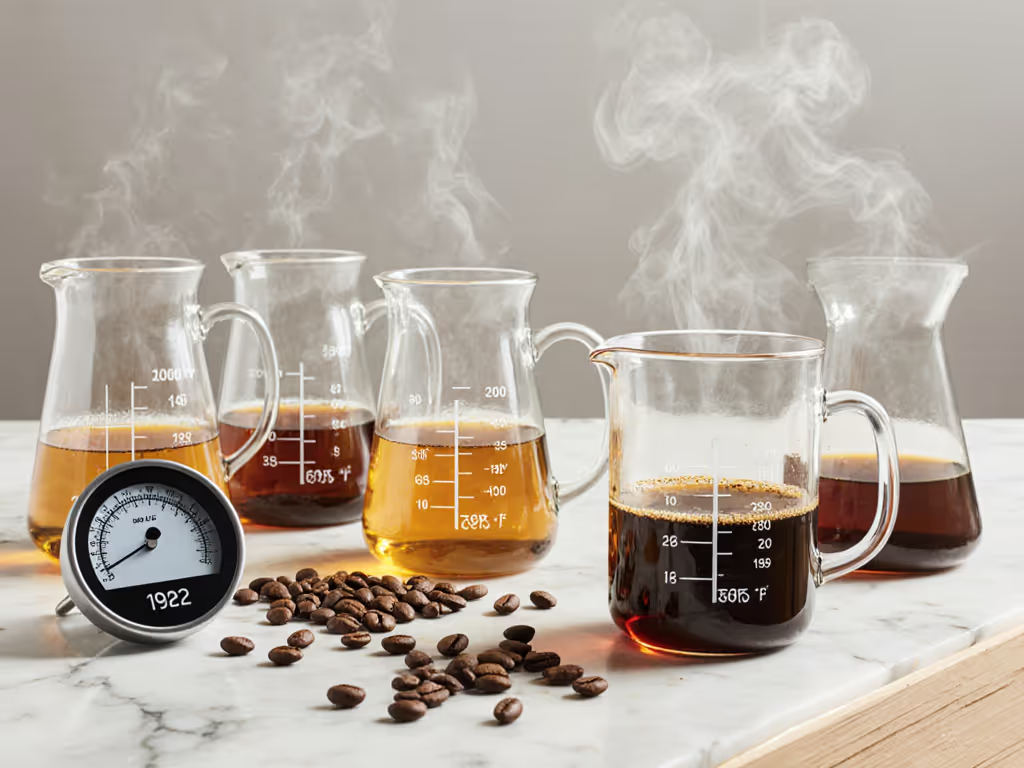
Drop your target temperature by 5-8°F (3-4°C) from your winter baseline. For most light-to-medium roasts, aim for 195-198°F (90-92°C) instead of the standard 200-205°F (93-96°C). For darker roasts, go even cooler to 185-190°F (85-88°C). Here's why this works:
- Chemical reality: Higher ambient temps mean your slurry cools slower. Water at 195°F in summer effectively behaves like 200°F did in winter.
- Extraction balance: Cooler water reduces the rate of extraction, counteracting the faster kinetics caused by warm surroundings. This prevents over-extracting those bitter compounds while still capturing sweetness and acidity.
- Thermal momentum: Your press and room are already warm, so your slurry won't lose heat as rapidly. This extends effective extraction time.
Baseline recipe for 12 oz mug (summer version)
| Component | Measurement |
|---|---|
| Coffee | 22 g (medium-coarse grind) |
| Water | 350 g @ 195°F (90°C) |
| Brew time | 4:00 minutes |
Note: If using hard water (above 150 mg/L total minerals), drop temp another 2°F, since mineral-rich water extracts more aggressively. If you brew with hard water, see our water mineral balance guide for ideal targets and easy fixes.
How does hotter room temperature affect brewing?
Ambient temperature brewing isn't just about comfort, it changes physics. In summer, two key shifts occur:
- Slower heat dissipation: Your slurry stays in the "extraction sweet zone" (160-190°F) 20-30 seconds longer than in winter. This extra time often pushes extraction into bitterness.
- Faster volatile compound loss: Summer heat accelerates the evaporation of delicate aromatic compounds while your coffee steeps. That's why summer cups sometimes taste "flat" even when extraction is technically correct.
The solution isn't shorter brew times (which can cause under-extraction), but cooler starting water. This moderates the extraction curve, preserving delicate florals while avoiding harshness.
Do I need to adjust my coffee-to-water ratio in summer?
Not necessarily, but your grind size might need a tiny coarsening. Here's my guardrail:
- First, adjust temperature alone (5°F drop = noticeable difference)
- Second, if bitterness persists, go one grinder step coarser
- Never change both ratio and temperature simultaneously
Seasonal shifts rarely require ratio changes. Ratios govern total extraction potential; temperature and grind affect extraction speed. In summer, we're correcting for accelerated extraction, not total yield. Stick with your trusted 1:15 ratio and adjust the variables affecting speed. For exact measurements and troubleshooting, follow our French press ratio guide.
Can I use cold brew methods in my French press for summer?
Absolutely, but it's not traditional cold brew. Try this ambient temperature brewing hack for a cleaner, crisper iced coffee:
- Use your standard summer temperature (195°F)
- Brew as usual (4 minutes)
- Pour immediately over 150 g of ice in a heatproof pitcher
- Stir gently to melt ice evenly
This "flash-chill" method preserves brighter notes better than refrigerated cold brew. For more summer options, explore our iced coffee comparison for French press methods. The rapid temperature drop locks in volatile aromatics that would otherwise dissipate during slow cooling. For true cold brew, extend steep time to 12 hours using room-temp water, but reserve this for weekend indulgence, not weekday efficiency.
What's a simple summer French press routine I can trust?
Your French press summer routine needs just two seasonal adjustments:
Weekday version (under 5 minutes)
- Heat water to 195°F (use electric kettle with temp control, or boil then wait 45 seconds)
- Add 22 g medium-coarse coffee to preheated press
- Pour 350 g water, stir gently
- Steep 4:00, then press slowly
- Pour entire contents into a travel mug (retains heat better than leaving it in the press)
Weekend version (for savoring)
- Heat water to 192°F (for light roasts) or 188°F (for dark)
- Add 30 g coffee to press, bloom with 60 g water for 30 seconds
- Fill to 500 g total water, then stir
- Steep 3:30 for cleaner body, 4:30 for richer texture
- Pour in stages to appreciate evolving flavors
Why this works: The science of seasonal shifts
Barista Hustle's research confirms that immersion methods like French press extract differently at scale (the larger the batch, the cooler your ideal temperature should be). Summer heat acts like an invisible "batch size" multiplier, making your standard 12 oz press behave like a larger vessel. By dialing down temperature, you counteract this effect without overcomplicating your process.
Remember: Mastery comes from small, deliberate adjustments and honest tasting notes. Did that 195°F cup taste noticeably smoother than your usual 200°F? Jot it down. Did lowering to 192°F make your light roast sing? That's your new summer baseline. If you love lighter profiles, our light roast French press guide covers temperature tweaks and steep times. No guru mystique needed, just one variable, one change, one cup at a time.

This isn't about discarding your winter recipe, it's about seasonal awareness. Your palate changes with the weather too; summer heat often makes us crave brighter, cleaner cups. By respecting seasonal french press brewing principles, you'll spend less time troubleshooting and more time enjoying coffee that harmonizes with the season.
Start small, taste big. Your perfect summer cup is just one temperature adjustment away.
Related Articles
Brewing Guides & Techniques
French Press Sensory Evaluation: Home Cupping Protocol
11th Feb•5 min read