
Modern French Press: Expert Extraction Control and Flavor Optimization
By Priya Deshmukh • 13th Oct
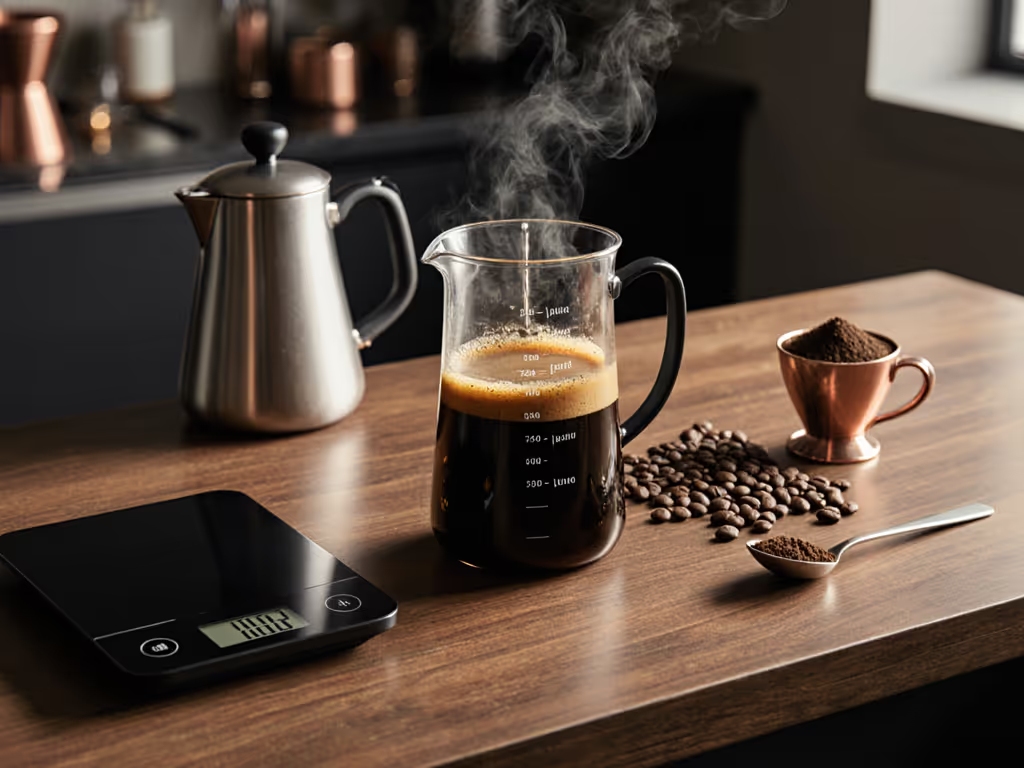
The modern French press for coffee transforms this classic brewer into a precision instrument, one that rewards deliberate technique with unparalleled clarity and body. By mastering extraction variables and understanding sludge-reduction methods, you'll unlock consistently rich flavors that elevate your daily ritual beyond guesswork. Let's dive into optimizing your process, one variable at a time.
Getting Started: Your Baseline Blueprint
Begin with a reliable baseline recipe, the foundation for all future experiments. Consistency starts here:
- Ratio: 1:16 coffee-to-water (e.g., 30g coffee : 480g water). Adjust later if needed.
- Grind: Medium-coarse (like sea salt) to balance extraction and minimize silt.
- Water: 200°F (93°C) (just off the boil).
- Steep time: 4 minutes, followed by 5-8 minutes of settling for sediment reduction.
Baseline before tweaks: Brew this recipe three times with your favorite beans. Note the aroma, body, and finish. This becomes your sensory reference point.
Why Does Sludge Happen, and How Do I Fix It?
Sludge stems from ultra-fine particles slipping through mesh filters. Modern solutions:
- Grind adjustment: Too fine? Sediment increases. Too coarse? Under-extraction occurs. Target consistency first.
- Settling phase: After steeping, wait 5-8 minutes before pressing. Fines sink naturally, reducing cup grit.
- Press technique: Plunge slowly and stop before reaching the bottom sludge layer.
- Filter upgrade: Double micro-mesh filters (like those in stainless steel models) trap finer particles.
How Do I Optimize Flavor Through Variables?
Change just one variable per brew cycle. Record observations:
| Variable | Adjustment Range | Flavor Impact |
|---|---|---|
| Grind size | Coarser → Finer | Body ↑ / Clarity ↓ |
| Water temp | 195°F-205°F (90°C-96°C) | Brightness ↑ / Bitterness ↓ |
| Brew time | 3-5 minutes | Intensity ↑ / Balance ↓ |
| Coffee ratio | 1:14 → 1:18 | Richness ↑ / Acidity ↓ |
Sensory tip: Taste on purpose. Note flavors at three temperatures: hot, warm, and cooling. Acids and florals shine early; chocolates and nuts emerge later.
Water Minerals: The Invisible Lever
Calcium and magnesium (50-150 mg/L) boost extraction; sodium smooths acidity. For best results:
- Filtered water > Tap (chlorine mutes nuance).
- Mineral kits offer controlled adjustments (e.g., +10mg/L Mg for Ethiopian beans).
Scaling for Solo Cups or Groups
| Servings | Coffee | Water |
|---|---|---|
| 1 mug (12oz) | 22g | 350g |
| 2 mugs | 44g | 700g |
| 4 mugs | 66g | 1,050g |
Pro tip: Preheat your press with boiling water. Discard before adding grounds (this stabilizes brew temperature).
Durability and Design: Choosing Your Modern Workhorse
Prioritize:
- Material: Stainless steel resists breakage and retains heat. Double-walled models (e.g.,
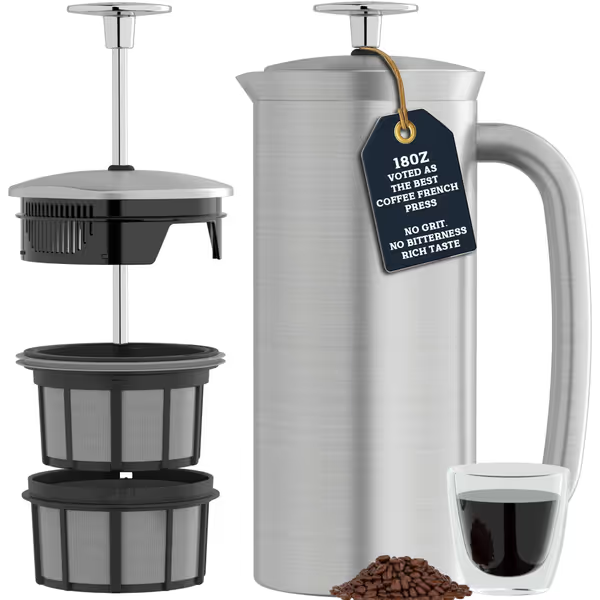
ESPRO P7 French Press
Smoother, grit-free coffee that stays hot longer.
$115
Capacity18 oz brewed coffee (27 oz water)
Capacity18 oz brewed coffee (27 oz water)
Pros
Double micro-mesh filter eliminates sludge and grit.
Double-walled stainless steel keeps coffee hot.
Cons
Some find it expensive for a French press.
Filter effectiveness on grounds debated by users.
Customers find this French press coffee maker makes excellent coffee with a rich taste, and appreciate its double-walled stainless steel insulation that keeps the brew warm for a long time. The filter system effectively strains grounds, and customers find it simple to clean. While some customers consider it well worth the money, others feel it's not worth the price tag. Customers disagree on how well the grounds are kept out of the coffee.
Customers find this French press coffee maker makes excellent coffee with a rich taste, and appreciate its double-walled stainless steel insulation that keeps the brew warm for a long time. The filter system effectively strains grounds, and customers find it simple to clean. While some customers consider it well worth the money, others feel it's not worth the price tag. Customers disagree on how well the grounds are kept out of the coffee.
) add insulation.
- Filter: Dual micro-mesh systems improve particle capture.
- Seals: Replaceable silicone gaskets prevent oil retention.
Office/Outdoor Optimization
- Groups: Assign one person to brew. Use timers and labeled ratio cards.
- Camping: Pack whole beans + hand grinder. Rinse immediately with boiling water to avoid oily residue.
30-Second Cleanup Protocol
- Compost grounds (never pour down sinks).
- Rinse with cold water to solidify oils.
- Weekly: Disassemble, soak pieces in cafiza, scrub.
Your Journey Starts Here
The modern French press rewards precision without pretension. Start with your baseline. Change one knob. Taste deliberately. Soon, you'll craft cups that resonate with your unique rhythm, weekday-consistent, weekend-indulgent. What variable will you adjust tomorrow?
Related Articles
Brewing Guides & Techniques
French Press Sensory Evaluation: Home Cupping Protocol
11th Feb•5 min read