French Press Mastery: Pro Techniques Made Simple
By Priya Deshmukh • 2nd Dec

Let's talk about French press coffee, the cozy, full-bodied brew that's been misunderstood for far too long. Too many of us have settled for muddy, inconsistent cups from our modern French press, thinking it's the method's fault rather than our approach. The truth? French press mastery isn't about expensive gear or complicated rituals, it's about simple, repeatable baselines that turn curiosity into confidence. Whether you're grabbing your morning mug before remote work or hosting weekend guests, I'll show you how to dial in your press with the precision of coffee education programs, but the simplicity of weekday mornings.
Why does my French press coffee taste inconsistent from day to day?
Inconsistency is every French press lover's nemesis, and I've seen it derail more coffee enthusiasts than any other issue. The problem usually stems from changing multiple variables simultaneously (like when I watched a friend adjust their dose, grind, and water temperature all at once, then declare the press "faulty").
Instead, embrace the mantra: Start with one knob, turn it slowly, taste on purpose.
Your foundation should be a reliable baseline recipe:
- For an 8-10oz mug: 20g coffee to 300g water (1:15 ratio)
- For a standard 12-14oz office mug: 28g coffee to 420g water
- For a weekend grande (16-18oz): 36g coffee to 540g water
Stick to this ratio for a week while keeping your water temperature at 200°F (just off the boil). Only then consider adjusting grind size. Baseline before tweaks. For dialed-in measurements and troubleshooting, see our French press ratio guide.
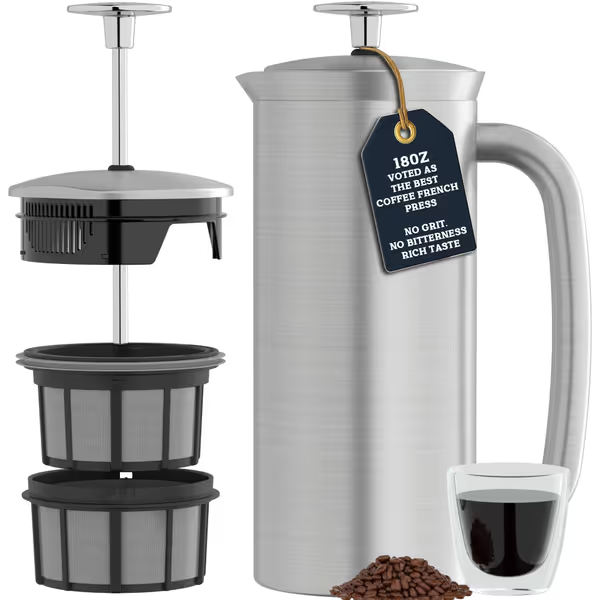
ESPRO P7 French Press
Smoother, grit-free coffee that stays hot longer.
$115
Capacity18 oz brewed coffee (27 oz water)
Capacity18 oz brewed coffee (27 oz water)
Pros
Double micro-mesh filter eliminates sludge and grit.
Double-walled stainless steel keeps coffee hot.
Cons
Some find it expensive for a French press.
Filter effectiveness on grounds debated by users.
Customers find this French press coffee maker makes excellent coffee with a rich taste, and appreciate its double-walled stainless steel insulation that keeps the brew warm for a long time. The filter system effectively strains grounds, and customers find it simple to clean. While some customers consider it well worth the money, others feel it's not worth the price tag. Customers disagree on how well the grounds are kept out of the coffee.
Customers find this French press coffee maker makes excellent coffee with a rich taste, and appreciate its double-walled stainless steel insulation that keeps the brew warm for a long time. The filter system effectively strains grounds, and customers find it simple to clean. While some customers consider it well worth the money, others feel it's not worth the price tag. Customers disagree on how well the grounds are kept out of the coffee.
How can I get a cleaner cup without all the sludge?
That gritty bottom inch of your cup doesn't have to be inevitable. While some models like the stainless steel options with double filtration help minimize sediment, the biggest factor is your technique, specifically your plunge timing and pressure.
Wait until the 4-minute mark, then plunge slowly over 20-30 seconds (not the aggressive 5-second shove many tutorials suggest). The slower plunge gives fine particles time to settle. And crucially, decant your coffee immediately after plunging. Leaving coffee sitting in the press continues extraction, creating both bitterness and extra sediment. If sludge persists, compare single vs double filters to see which setup yields the cleanest cup.
If you're using a glass press and still getting sludge, try this one-variable-at-a-time experiment: extend your bloom phase by 15 seconds to see if improved degassing reduces fines. Write down your tasting notes (less gritty, more rounded body) so you can track what actually works.
How does water quality affect French press coffee?
This is where many coffee guides overcomplicate things. You don't need expensive mineral drops or a chemistry degree, just awareness of what's in your tap. For French press specifically, aim for water with 50-150 mg/L total dissolved solids (TDS).
If your tap water is extremely hard (scale in kettles? yes), try a basic carbon filter. Extremely soft water (no mineral taste?) might benefit from a pinch of magnesium sulfate, but honestly, most municipal waters fall within an acceptable range for immersion brewing. The French press is actually more forgiving than pour-over about water minerals because of its longer contact time.
Remember: Mastery comes from small, deliberate adjustments and honest tasting notes. Not from chasing perfect water chemistry.
What's the right grind size for French press?
"Coarse" means different things to different grinders, and this is where most beginners go wrong. Forget generic descriptions like "breadcrumbs" or "sea salt," use your press as the reference.
Here's my one-variable-at-a-time calibration method:
- Start with your grinder's coarsest setting
- Brew with your standard ratio
- Assess:
- If plunging feels effortless (like pushing through water), go one click finer
- If you meet strong resistance at 1cm from the bottom, go one click coarser
- Repeat until plunging takes 20-30 seconds of steady pressure
This method works whether you're using a $20 blade grinder or a precision burr model. I've seen students in coffee brewing certification programs achieve remarkable consistency with this approach (no SCA French press curriculum required).
How do I prevent my French press coffee from getting bitter?
Bitterness in French press usually comes from two sources: over-extraction or prolonged contact with grounds after brewing. Most guides recommend a 4-minute brew time, but that's just a starting point.
Try this sensory-driven adjustment:
- For brighter, fruitier beans: 3:30-3:45 brew time
- For chocolatey, nutty profiles: 4:15-4:30
- Always decant immediately after plunging
I once helped a client troubleshoot their "bitter morning cup" only to discover they regularly left coffee sitting in the press for 10+ minutes while answering emails. Thermal carafes help, but no insulation can prevent over-extraction once the plunge is complete. For a step-by-step fix, follow our stop bitter French press guide.
How can I clean my French press quickly without clogging sinks?
The dreaded coffee sludge clog! Here's the 30-second cleanup routine I teach in my home coffee workshops:
- Pour grounds directly into compost (not the sink)
- Fill press halfway with hot water and a drop of soap
- Plunge vigorously three times
- Rinse with clear water
For glass presses, avoid thermal shock by never using ice-cold water right after brewing. And if you're concerned about durability for office or outdoor use, consider stainless steel models with dishwasher-safe components, they handle rough handling better than glass and sidestep the sink-clogging issue entirely. For full teardown, oil removal, and filter replacement, use our French press cleaning guide.
Wrapping Up: Your French Press Confidence Blueprint
The most transformative French press sessions I've witnessed happened when people stopped chasing perfection and started embracing deliberate experimentation. That friend who initially thought her press was "inconsistent"? She now hosts monthly coffee tastings with three simple baselines for her mug sizes, one-variable-at-a-time adjustments, and tasting notes that guide her next experiment.
Baseline before tweaks. Mastery isn't about having the fanciest equipment, it's about understanding how small changes affect your cup.
Whether you're using a basic glass press or a double-walled stainless model, remember that great French press coffee comes from thoughtful repetition, not complexity. Start with one ratio that matches your mug, master your plunge technique, and let your palate guide your next small adjustment. Your perfect cup isn't out of reach, it's just one deliberate experiment away. To fine-tune your water, see our water mineral balance guide.
Ready to deepen your understanding? Explore our free guide to water mineral profiles for immersion brewing, or join our next virtual coffee education session where we break down dial-in blueprints for every brew method.
Related Articles
Basics, Care & Context
French Press Extraction Science: Why Your Cup Tastes This Way
6th May•11 min read