French Press Coffee How-To for Confident Guest Service
By Linh Nguyen • 6th Sep
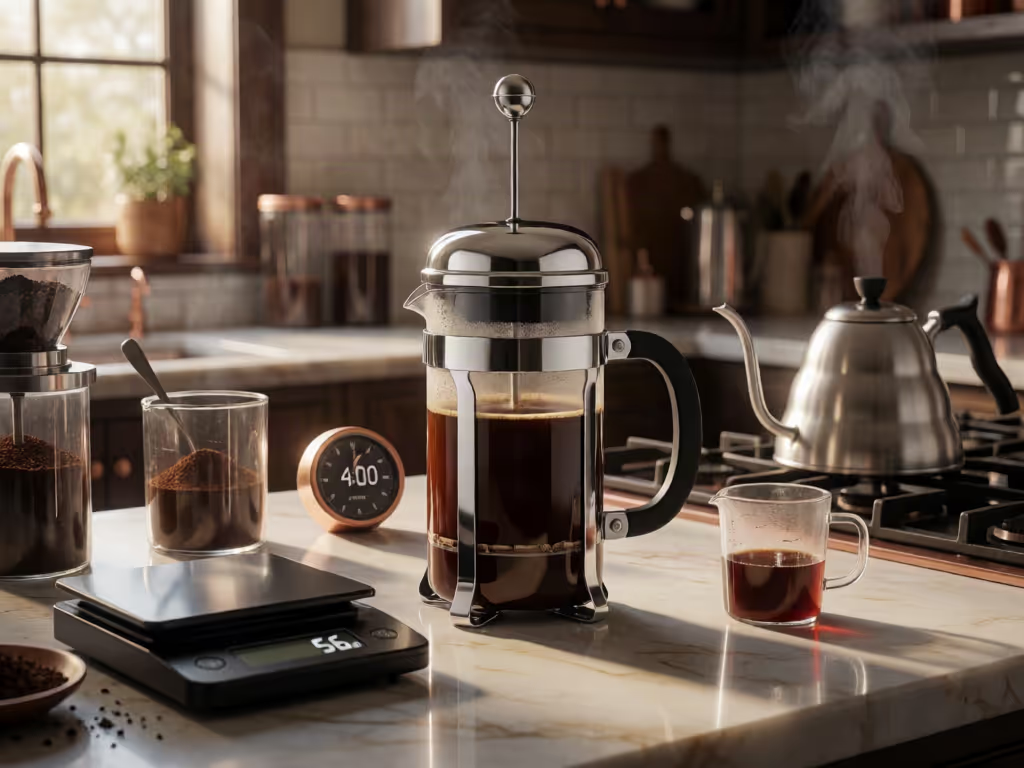
What to do
Serve confident French press coffee by planning the pour, measuring coffee and water, preparing a simple self-serve station, brewing on one timer, and decanting promptly. A repeatable eight-cup starting batch is 56 grams of coffee and 850 grams of water.
- Start with: Choose guest-sized servings and set out cups, spoons, and optional milk or sweetener before brewing.
- Then: Preheat the empty press, use a very coarse grind, brew with just-off-boil water, plunge gently, and serve or decant immediately.
- Important prerequisite: Choose one tested timing method and keep it consistent: the article’s host-friendly method presses at four minutes, while another published approach targets six to eight minutes.
Important: Press “cup” labels are not standardized guest-serving counts, and there is no single universal coffee-to-water ratio or steep time.
A good French press coffee how-to routine is less about performing for guests and more about removing decisions before anyone arrives. Measure the coffee, choose one brewing method, set out the few things people may want, and pour the brewed coffee off promptly. That is enough for warm, capable coffee service for guests (whether it is a relaxed brunch, a work meeting, or coffee after dinner).
You do not need café equipment or a complicated script. You need a sequence that is easy to repeat when conversation starts, someone asks where the spoons are, and the timer is already running. Brew joy should survive Mondays and shared sinks without drama.
Step 1: Decide the Pour Before You Brew
Time: 2 minutes before guests arrive
Start with the number of cups you intend to pour, not the "cup" label printed on the press. Those labels are not a dependable guest count because people may want different pour sizes.
As a planning reference, Dancing Goats lists: For a deeper guide to measurements, water temperature, and troubleshooting, see this French press coffee ratio guide.
- An eight-cup press as roughly 2 to 3 servings, using 50 to 56 grams of coffee and 784 to 850 grams of water.
- A twelve-cup press as roughly 4 to 5 servings, using 82 to 88 grams of coffee and 1,350 grams of water.
If you have an eight-cup press and three guests, the 56-gram coffee/850-gram water recipe is a practical full batch. For a larger group, use a larger press or brew another measured batch rather than guessing at a partial fill.
A scale is the simplest route to repeatability, but it does not need to be an expensive coffee-specific model. Use any scale that reads grams. If you are hosting regularly, label small jars with a coffee dose and the brew plan. In an office where our grinder was temporarily out of action, pre-measured jars and a laminated four-step card made coffee duty far less intimidating for new hires.
Step 2: Set a Small, Self-Serve Coffee Station
Time: 3 minutes
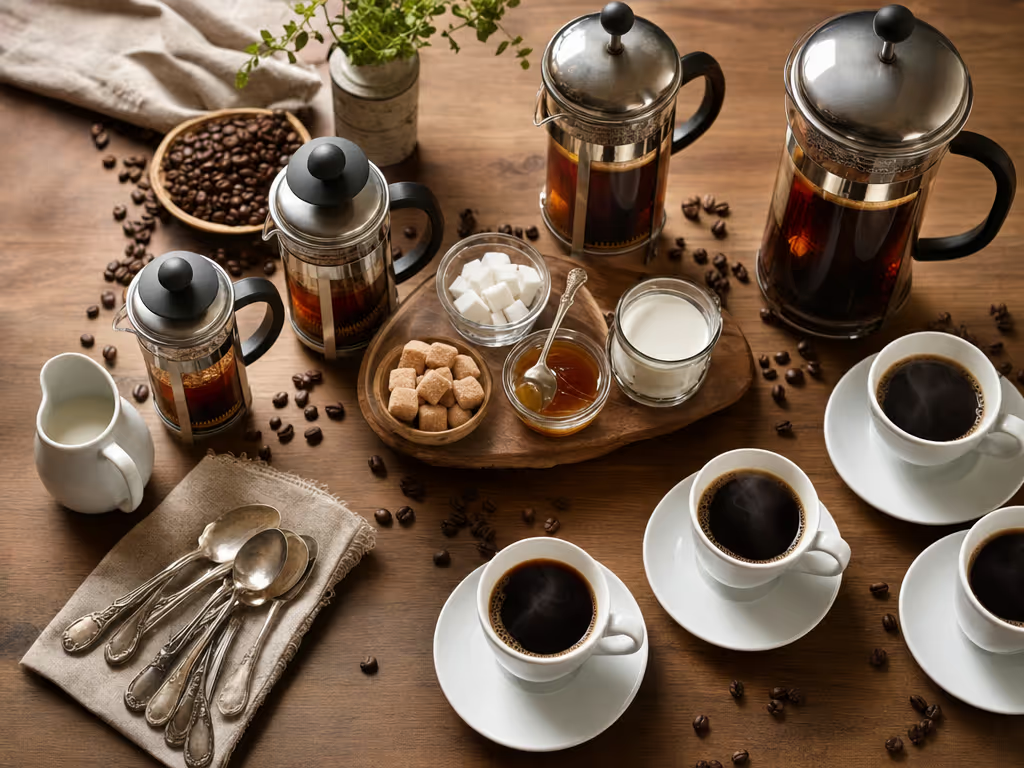
Keep brunch coffee presentation useful rather than fussy. Put these items together where guests can reach them:
- Cups, with saucers if you use them
- Spoons
- A sugar bowl or sweetener options
- A small pitcher of cream or milk, if you are offering it
That setup borrows from traditional coffee service without treating tradition as a rulebook. People's preferences vary: some take coffee black, some want milk, and some want a particular sweetener. A modest choice is more hospitable than a crowded counter full of half-used options.
For serving coffee at dinner, the same station works. The key is not an elaborate arrangement; it is making additions visible so guests do not need to interrupt you mid-pour to ask for a spoon or sweetener.
Set up the choices before the timer starts. Your attention belongs to the brew when the brew is underway.
Step 3: Choose One Ratio and Keep It Fixed
Time: 1 minute
Do not hunt for a single "golden ratio." Published French press recommendations differ, and that is normal. Methodical Coffee suggests a range from 1:12 to 1:16 coffee to water by weight; it describes 1:12 as more intense and 1:15 as a balanced starting point. Serious Eats recommends 60 to 70 grams of coffee per liter of water, roughly 1:16 to 1:14.
For guest service, use the exact recipe below for your first repeatable batch:
- 56 g coffee + 850 g water for an eight-cup press
- 82 to 88 g coffee + 1,350 g water for a twelve-cup press
Write the recipe down. Change only one variable on a later occasion (dose, water amount, or brew timing) so you can tell what improved the cup. That is how a modern French press ritual stays calm instead of turning into a debate over every bean.
Step 4: Preheat the Empty Press and Grind Coarsely
Time: 1 minute
Rinse the empty French press with hot water, then discard that water. Stumptown includes this preheating step to help maintain brewing temperature.
Next, add your measured coffee. Begin with a very coarse grind. Serious Eats describes the target as between coarse salt and steel-cut oats in appearance. This matters because the French press uses a mesh plunger: liquid passes through the mesh while it holds back the larger grounds.
Do not treat a muddy cup as a personal failure. It is usually a useful signal to simplify: keep the dose fixed, make the grind coarser next time, and stay gentle during the plunge.
Step 5: Brew on a Timer
Time: 0:00 to 4:00
Use water just off the boil (Stumptown specifies about 205°F) and follow a single timing path all the way through. For a host-friendly four-minute method with 56 grams of coffee and 850 grams of water:
- Begin - Add 450 g water.
- 1:00 - Stir the grounds into the water. Use a deliberate, simple stir.
- After stirring - Add water until the scale reads 850 g. Put the lid and plunger assembly in place without pressing yet.
- 4:00 - Begin plunging.
There is also a longer published approach: Serious Eats recommends a very coarse grind and a 6- to 8-minute target brew time. It is a valid alternative, not a correction to the four-minute method. Choose one method for the day. Do not combine a finer grind, a four-minute steep, and a six-to-eight-minute steep in the same "test"; that is how hosting turns into avoidable uncertainty.
Step 6: Plunge Gently, Then Pour the Coffee Off
Time: 4:00 to 4:30
Press the plunger down slowly and with light, steady pressure. Serious Eats recommends a gentle plunge so you do not violently agitate the grounds at the end of brewing.
If the plunger feels tight, pause. Raise it one or two inches, then resume the plunge. Do not force it.
Once you reach the bottom, serve right away. If some coffee will wait while guests settle in, pour that portion into a carafe rather than leaving it in the press. Both Stumptown and Serious Eats advise getting brewed coffee out of the press promptly; Stumptown specifically notes this helps avoid over-extraction and bitterness.
This is the quiet difference between a pleasant host moment and a pot that gets forgotten on the counter: brewing ends when you decant or serve, not when the timer beeps.
Step 7: Make Service Easy, Not Formal
Time: 30 seconds
Set the press or carafe near the prepared cups and invite guests to choose their additions. You do not need a formal serving order, and you do not need to pour every cup yourself. A clear, self-serve setup respects different preferences while allowing you to stay present in the room.
For an office or shared kitchen, add one short instruction card beside the brewer:
Measure. Brew on timer. Plunge gently. Pour coffee off.
That is enough training language for a newcomer to use. Keep any local cleanup routine equally short and visible. Reset the station; reset the mind. Keep the routine sustainable with this practical French press cleaning guide, including tips for removing sludge and maintaining the filter.
FAQ: Quick French Press Decisions
How much coffee do you put in a French press?
Use a measured ratio by weight. Published recommendations include 1:12 to 1:16 coffee to water. For a concrete eight-cup batch, use 50 to 56 grams of coffee with 784 to 850 grams of water. For a twelve-cup batch, use 82 to 88 grams with 1,350 grams of water.
Do you just put coffee grounds in a French press?
No. Add coarsely ground coffee, pour in measured hot water, stir according to your chosen method, steep on a timer, then plunge slowly. The mesh plunger separates the brewed coffee from the larger grounds.
What mistakes are most worth avoiding?
Avoid using an overly fine grind, forcing a resistant plunger, plunging aggressively, and leaving unserved coffee in the press. For a fuller checklist of French press mistakes to avoid, review the common causes of bitter or muddy coffee. These are manageable workflow issues, not signs that you are "bad" at French press coffee.
Your Next Host-Ready Move
Before your next gathering, make one eight-cup practice batch: 56 grams coffee, 850 grams water, four-minute timer. Set out cups, spoons, and two or three optional additions first. Then write the four brew actions on a card and keep it with the press. Once the sequence is visible, you can spend less time managing coffee and more time welcoming the people drinking it.
Related Articles
Basics, Care & Context
French Press Extraction Science: Why Your Cup Tastes This Way
6th May•11 min read