
French Press Broth Guide: Skip the Stove, Keep Flavor
By Amara Ndlovu • 4th Apr
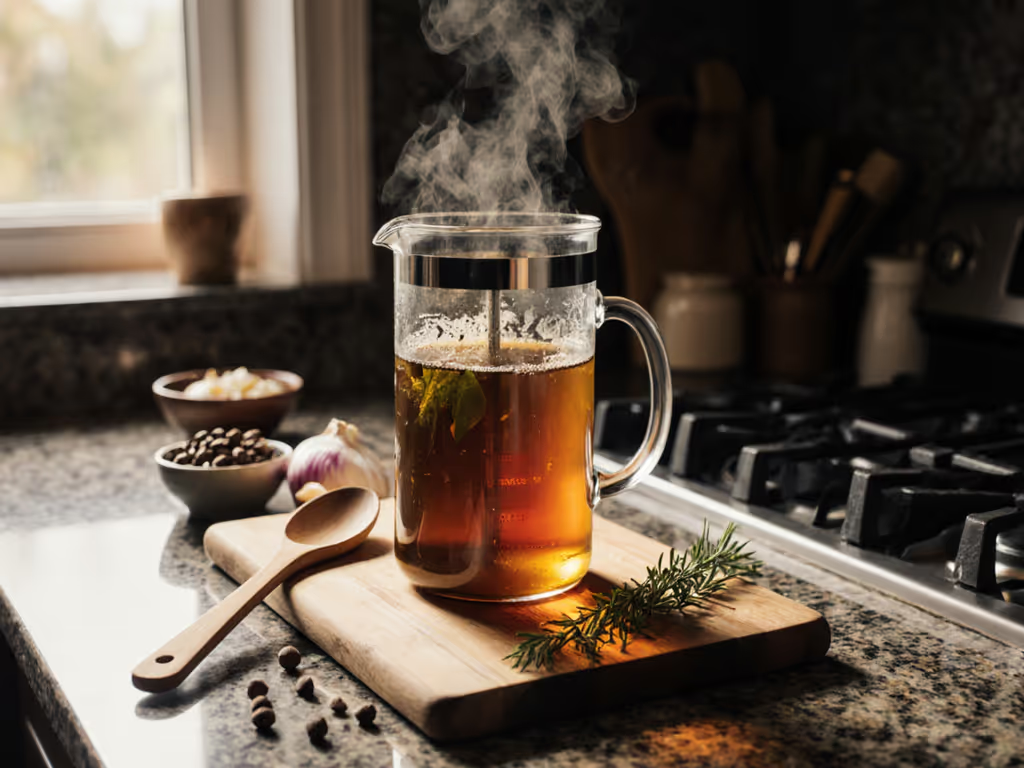
If you've been using your French press only for coffee, you're leaving serious flavor (and savings) on the table. A French press stock method transforms one appliance into a dual-duty workhorse, extracting deep, clean broths without heating your stove or babysitting a pot. This guide walks you through the why, the how, and the cost calculus that makes this technique worth adopting now.
Why This Matters: Cost-of-Ownership Thinking
I learned the power of a well-maintained French press from a neighbor who nearly threw one away. The carafe was gritty, the seal leaked, and she assumed the whole thing was done. Ten minutes, a $3 gasket, and a vigorous scrub later, it brewed clean and bold again. That fix sparked something: we started a monthly repair night, learning to replace screens, gaskets, and plunger seals ourselves. Tracking costs since then made one truth obvious: a durable, broth-capable press, treated right, becomes one of the cheapest flavor tools in your kitchen. Every dollar should brew better, not just buy thicker steel.
Bone broth, vegetable stock, and infused liquids normally demand stovetop real estate and close attention. For more alternative uses beyond coffee, see our French press tea and cold brew guide. A French press does the extraction work passively through steeping, using only hot water and time. No fuel burned. No pot tied up. One less thing on your radar.
1. Gather Your Baseline Supplies
Before you brew, confirm you have:
- French press carafe (glass or insulated steel; see durability notes below)
- Kettle (electric or stovetop; 200°F is your target)
- Measuring scale or standard kitchen spoon (for consistent ratios)
- Wooden or silicone stirring spoon (never metal on glass; avoid cracks)
- Fine-mesh strainer or cheesecloth (to catch fine particles post-press)
- Storage containers (glass jars; Mason jars work perfectly)
- Cleaning brush (long-handled, with soft bristles for mesh filter)
Key maintenance point: If your French press gasket is cracked, discolored, or doesn't seal snugly, order a replacement now. Suppliers like parts retailers and the original manufacturer stock them for $2-8. A failing seal lets grounds slip into your broth and makes the plunge harder (frustration disguised as wear).
2. Choose Your Broth Foundation
The beauty of a bone broth French press approach is flexibility. Start by deciding your flavor direction:
- Bone-based: Use collagen-rich bones (chicken, beef, pork). Pre-simmer them 10-15 minutes on the stove to remove initial impurities, then drain and transfer to the press with fresh water and aromatics. This hybrid approach yields cleaner, clearer broth.
- Vegetable-forward: Chop aromatics (onion, garlic, ginger, turmeric) into thumb-size pieces. Smaller cuts accelerate flavor release. Fresh carrot, celery, or kombu (dried seaweed) add umami without long cooking.
- Herb-infused: Use this method to brighten existing stock. Fresh basil, parsley, or dill steep for 1-2 minutes, delivering brightness without stewing into bitterness.
Cost reality: A pound of quality bones runs $1-3. A bunch of aromatics, $2-4. Your broth costs roughly $0.50-1.00 per serving. Compare that to packaged broths at $3-6 per quart. The press pays for itself in under six brewing cycles.
3. Master the Core Technique
Follow these steps for reliable, repeatable results:
Step 1: Heat water to 200°F (93°C). Use a kettle with a thermometer or bring water to a rolling boil and let it cool 30 seconds. Boiling water risks scorching delicate aromatics; 200°F extracts without destroying volatile compounds.
Step 2: Preheat your French press. Pour a small amount of hot water into the empty press, swirl, and discard. This stabilizes internal temperature and prevents heat shock to the glass (or wasteful heat loss in steel). If keeping liquids hot is a priority, our heat retention comparison shows which presses maintain temperature best.
Step 3: Add aromatics. Place chopped ingredients into the dry press. For a quart of broth, use roughly 2-3 cups of packed aromatics (onion, garlic, herbs, spices). Ratio is forgiving; taste and adjust next time.
Step 4: Pour water and stir gently. Add your 200°F water until the press is three-quarters full. Stir with a wooden spoon to submerge everything. You'll hear a soft sizzle; this is flavor release beginning.
Step 5: Steep for 5-15 minutes. Cover the press with the plunger cap (do not plunge yet). Shorter steeps (5 min) yield lighter, fresher broths. Longer steeps (10-15 min) develop deeper, more concentrated flavor. Set a timer; guessing leads to weak or bitter results.
Step 6: Press slowly. Once your timer sounds, place your hand on the plunger and press downward with steady, even pressure. Don't rush; this extracts the last flavor from the solids. If resistance is high, lift and press again rather than forcing. A stuck plunger signals either a clogged filter (see maintenance below) or grounds too fine for the mesh.
Step 7: Pour into a secondary strainer. Decant the broth through cheesecloth or a fine-mesh strainer into a clean container. This catches any fine particles that slipped past the press filter, giving you clarity.
4. Intensify Flavor: The Layering Approach
If your broth tastes thin or one-dimensional:
Use fresh herbs over dried. Dried herbs need long, slow cooking to hydrate and yield their oils. Fresh herbs shine with minimal heat and contribute brightness. Brew your base stock, then add a handful of fresh basil, cilantro, or parsley to the press and steep 1-2 minutes. The aroma will tell you when you're done.
Boost umami with pantry staples: A pinch of miso paste, tamari, or nutritional yeast added after pressing bridges the gap between a light infusion and a deeply savory broth. Stir these into the finished liquid; heat would destroy their subtle complexity.
Layer aromatics strategically: If making a vegetable stock you plan to use immediately, add milder aromatics first (carrot, celery), then punchier ones (garlic, ginger) in the final press. This prevents gentler flavors from drowning.
5. Manage Residual Flavors and Cross-Contamination
One real pitfall: flavors linger in the mesh filter and plunger seal.
Between broths: Rinse the press thoroughly under hot running water. Use a soft brush to dislodge stuck particles from the mesh. For stubborn residue (especially after garlic or ginger broths), soak the screen and plunger in a small bowl of hot water with a pinch of baking soda for 10 minutes, then scrub again. For step-by-step disassembly and deep-clean tips, use our French press cleaning guide.
Swapping between coffee and broth: If you use one press for both, commit to rinsing aggressively between uses. Coffee oils will impart bitterness to broth; stock aromas (fish, anise, deep savory) will haunt your morning cup. Many households find it worth buying a second, identical press (one for coffee, one for broth and other infusions). A standard 8-cup French press costs $20-50; split the difference and you have dedicated tools that last years without cross-flavor compromise. Spend where it saves.
6. Scale and Storage
French presses come in standard sizes: 3-cup, 8-cup, 12-cup. If you regularly serve a crowd, see our large-capacity French press picks. Choose based on your habits:
- Single-serve (3-cup): Ideal for daily personal broths or tea infusions. Takes little space and heats quickly.
- Household (8-cup): The sweet spot for couples, small families, or office use. Brews enough for a week of soups or gravy bases.
- Batch (12-cup): For entertaining, batch-cooking, or sharing. Requires more storage space and takes longer to heat water.
Storage: Cool broth to room temperature before refrigerating (transfer to Mason jars for clarity and stackability). Refrigerated broth keeps 4-5 days; frozen broth (in ice-cube trays or pint containers) lasts 3 months. Label jars with the date and ingredients so you know what's what.
Yield reality: One 8-cup French press produces roughly 1.5 quarts of finished broth after straining. That's 6-8 servings at $0.15-0.25 per serving, before seasonings.
7. Carafe Durability Test: Glass vs. Steel
Your French press carafe choice shapes long-term costs. Not sure which material fits you? See our glass vs stainless steel test.
Glass carafes ($15-35) are standard and affordable. They're easy to inspect for sediment, won't retain odors, and look elegant. The trade-off: they crack under thermal shock (pouring boiling water into a cold carafe) and chip if dropped. Office environments and travel are risky. Replacements run $10-20.
Insulated steel carafes ($40-80) keep broth hot longer (useful if you're sipping over an hour), resist breakage, and travel well. Downsides: you can't see sediment, they're harder to clean thoroughly (especially the mesh filter), and seals degrade. Replacements are pricier ($15-30 per gasket set) but are genuinely available for most major brands.
Cost verdict: A glass press that breaks after two years costs more per year than an insulated steel one you maintain for five years. Buy the glass if you're careful and stationary; buy steel if you're camping, commuting, or in a shared space.
8. Maintenance Checklist: Keep It Brewing
A well-kept French press outlasts laziness. Follow this monthly rhythm:
- Weekly: Rinse the carafe, plunger, and mesh filter under hot water immediately after use. Use a soft brush on the mesh.
- Bi-weekly: Deep clean the seal and plunger stem with a tiny brush or old toothbrush to remove any buildup.
- Monthly: Soak the entire assembly (carafe, plunger, filters) in a 1:1 white vinegar and hot water solution for 15 minutes. This dissolves mineral deposits and odor-causing residue. Scrub and rinse thoroughly.
- Annually or if sticking occurs: Replace the rubber gasket. It costs $3-8 and takes 60 seconds. Don't skip this; a worn seal ruins both broth clarity and coffee extraction.
Parts sourcing: Most French press manufacturers publish exploded diagrams on their websites. You'll find screen replacements, gaskets, and plunger rods on the brand's official store or through Amazon, eBay, or specialty coffee retailers. Bookmark your model's page now so you know where to order when you need it.
9. Troubleshooting: When Broth Goes Wrong
| Issue | Cause | Fix |
|---|---|---|
| Broth tastes weak or watery | Steep time too short; aromatics too large | Add 5 min to steep time; chop smaller next batch |
| Gritty texture; silty taste | Mesh filter clogged; grounds too fine | Clean filter thoroughly; use coarser aromatics or strain through cheesecloth |
| Bitter or stale flavor | Over-steeped; old aromatics or stored water | Reduce steep to 8-10 min; use fresh ingredients; store water in covered container |
| Plunger sticks or resists | Gasket swollen or mesh blocked | Clean filter and seal with vinegar solution; replace gasket if older than 1 year |
| Lingering flavor from previous brew | Inadequate rinsing | Soak in vinegar solution; inspect mesh for trapped particles |
| Broth cools too quickly | Glass carafe losing heat | Preheat carafe or switch to insulated steel; keep carafe covered with lid |
10. The Bottom Line: Cost-of-Ownership Math
Let's be clear about the value proposition. Assume you brew broth twice weekly:
- Ingredient cost: $3-5 per batch = $6-10 per week, $25-40 per month.
- Utility cost: Near zero (no stove fuel; kettle uses minimal electricity).
- Equipment amortization: Buy a $35 glass press. Assume it lasts three years with monthly maintenance. That's $11.67 per year, or $0.22 per batch.
- Maintenance cost: One $3 gasket replacement per year = $0.06 per batch; occasional vinegar solution = negligible.
Total cost per quart of broth: $0.60-1.00 (including all inputs).
Compare that to grocery-store broths at $3-6 per quart, and the press earns its keep in under four months. After that, every batch is nearly pure profit.
Summary and Final Verdict
A French press is a broth-making tool hiding in plain sight. It requires no stove, no pots, no oversight (just hot water, a timer, and patience). The technique scales from personal infusions to feeding a crowd. Cost-wise, it's unbeatable: fresh, flavorful stock for a fraction of store prices, with minimal cleanup and no waste.
The real win is the durability. A press with a replaceable gasket, a solid mesh filter, and proper maintenance becomes a ten-year appliance, not a three-year landfill candidate. You're betting on longevity, repairability, and low-fuss upkeep (the kind of gear that earns its place in your kitchen by working hard and staying out of your way).
Build the habit: brew your base broths on Sunday, store them in Mason jars, and use them all week in soups, grains, and sauces. Your kitchen will taste better, your budget will breathe easier, and your French press (the real MVP) will keep delivering clean, bold flavor for years to come.
Related Articles
Basics, Care & Context
French Press Extraction Science: Why Your Cup Tastes This Way
6th May•11 min read
Basics, Care & Context
French Press Coffee Neurochemistry: Brain Benefits Explained
17th Jan•5 min read